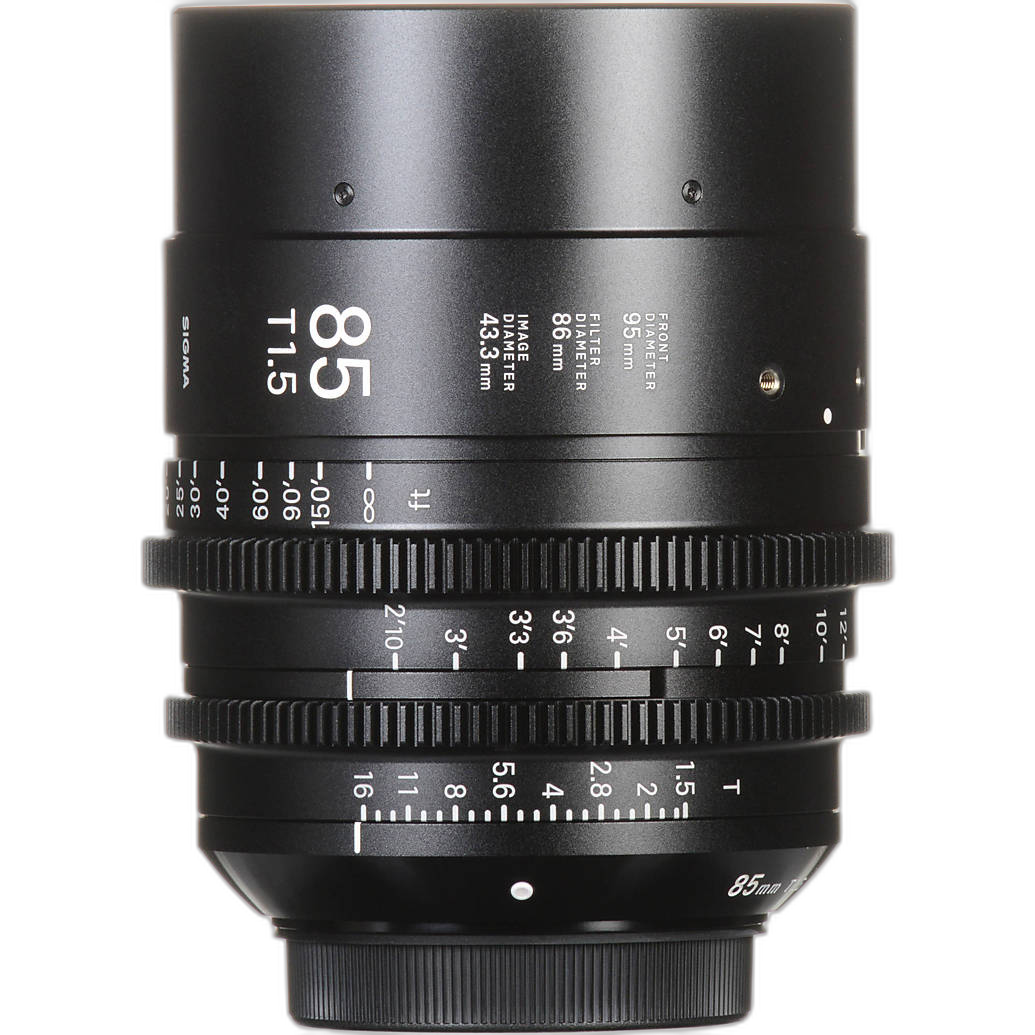
Choosing between a Sony-compatible zoom and a prime often comes down to one real-world question: do you value speed, consistency, and maximum image character more than focal-length flexibility? Based on Lens Compare beta-style thinking, the answer for many serious filmmakers leans strongly toward cinema primes when image control is the top priority. For Sony E-mount shooters building a narrative, commercial, or high-end documentary kit, Sigma’s FF High-Speed cine prime lineup makes a compelling case.
Rather than treating this as a simple zoom-versus-prime argument, it helps to frame these lenses by use case. Zooms win on convenience, faster coverage, and reduced lens swaps. Primes win when you want consistent T-stops, a more disciplined visual approach, cleaner low-light performance, and the kind of optical rendering cinematographers typically prefer for controlled productions. In the Sony ecosystem, Sigma’s cine primes stand out as a serious option for creators who want full-frame coverage and cinema-oriented mechanics.
Why Primes Often Win in Sony Cine Setups
If Lens Compare beta results are pointing you toward sharper separation, lower-light capability, and more deliberate framing, primes are usually the reason. Sigma’s T1.5 and T2 full-frame cine lenses for Sony E-mount are designed around consistency and production workflow rather than all-purpose convenience. That matters on set.
Compared with a typical zoom-based setup, these primes offer wider apertures, more predictable optical performance at specific focal lengths, and cinema housing features like geared focus and iris control. For operators pulling focus manually or using follow-focus systems, that is a major advantage over many stills-derived zooms.
Fast Apertures for Low-Light and Subject Separation
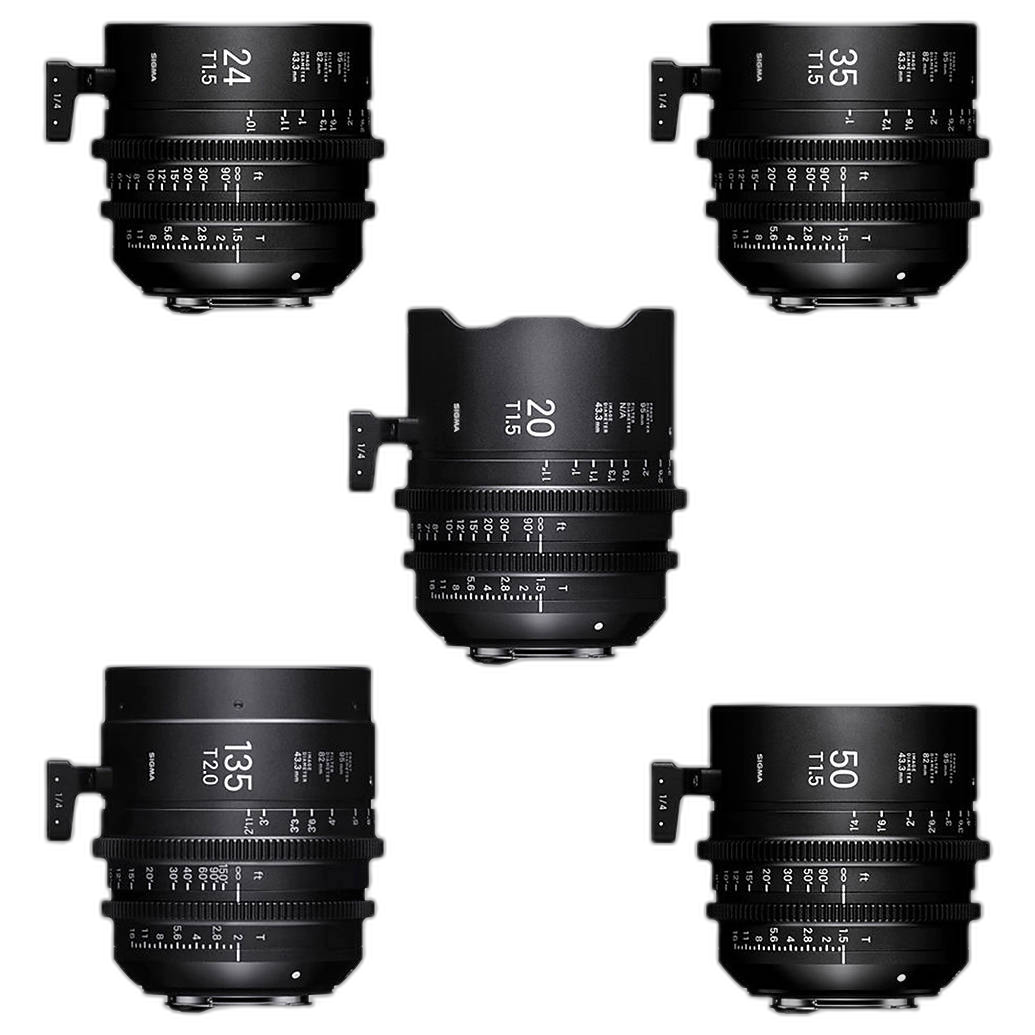
One of the clearest reasons to choose prime over zoom is speed. The Sigma T1.5 FF High-Speed 5 Prime Lens Kit with Case (Sony E) is especially attractive for productions that need strong low-light capability and shallow depth of field across multiple focal lengths. T1.5 transmission is a serious creative tool, not just a spec-sheet headline. It lets Sony shooters maintain exposure in darker scenes while preserving a cinematic look with strong subject isolation.
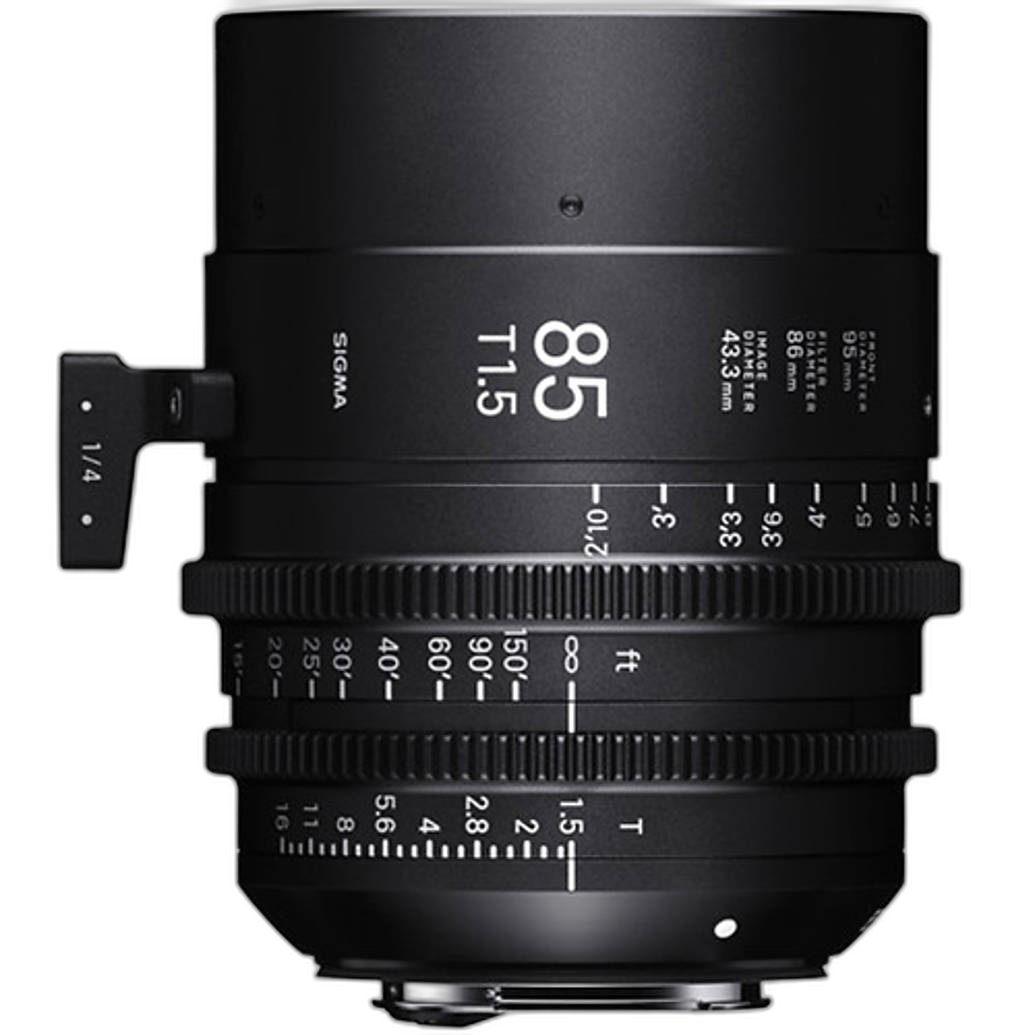
The Sigma T1.5 FF High-Speed 5 Fully Luminous Prime Lens Kit (Sony E, Metric) adds another layer of professional usability with a fully luminous design, improving readability of lens markings in dim production environments. For crews working on controlled sets, night shoots, or dark interior scenes, that usability feature can make a practical difference.
Consistency Across a Prime Kit
A zoom can cover multiple focal lengths, but a well-matched prime set offers something different: visual continuity. Sigma’s cinema prime kits are built for shooters who want lenses to behave similarly across focal lengths. Matching mechanics, similar housing dimensions, and coherent rendering all help speed up production. Lens swaps become less disruptive because your support gear, focus marks, and balancing needs remain more predictable.
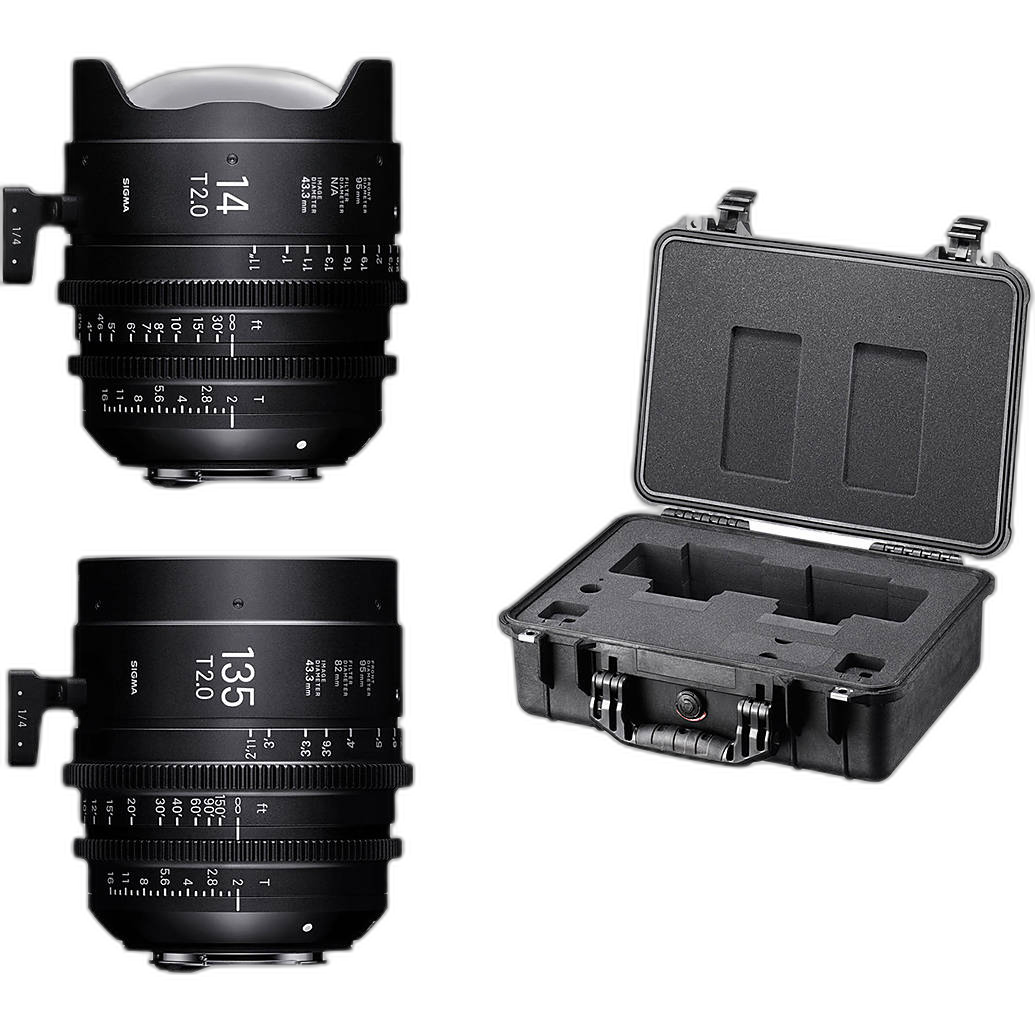
The Sigma 14mm/135mm T2 FF High-Speed Fully Lum. Prime Lens Kit (Sony E) is a good example of a set that spans from dramatic ultra-wide compositions to compressed telephoto portraiture while maintaining the advantages of a unified cine system. That wide-to-tele range gives Sony filmmakers powerful storytelling flexibility without sacrificing prime-lens discipline.
Best Prime Options from the Sigma Sony E Cine Lineup
If your Lens Compare beta results suggest that you shoot in a way that benefits from specialty focal lengths and maximum optical control, these Sigma options deserve close attention.
Sigma T1.5 FF High-Speed 5 Prime Lens Kit with Case (Sony E)
This kit is arguably the strongest all-around recommendation for filmmakers who already know they prefer prime-based shooting. The T1.5 speed is the headline, but the bigger story is system value: a coordinated set of fast full-frame cine lenses in Sony E-mount. For productions that demand low-light versatility, dramatic depth of field, and a professional cinema handling experience, this kit makes a lot of sense.
It is particularly well suited to narrative filmmakers, music video crews, and commercial teams who want a deliberate visual language rather than the convenience-first style of a zoom workflow.
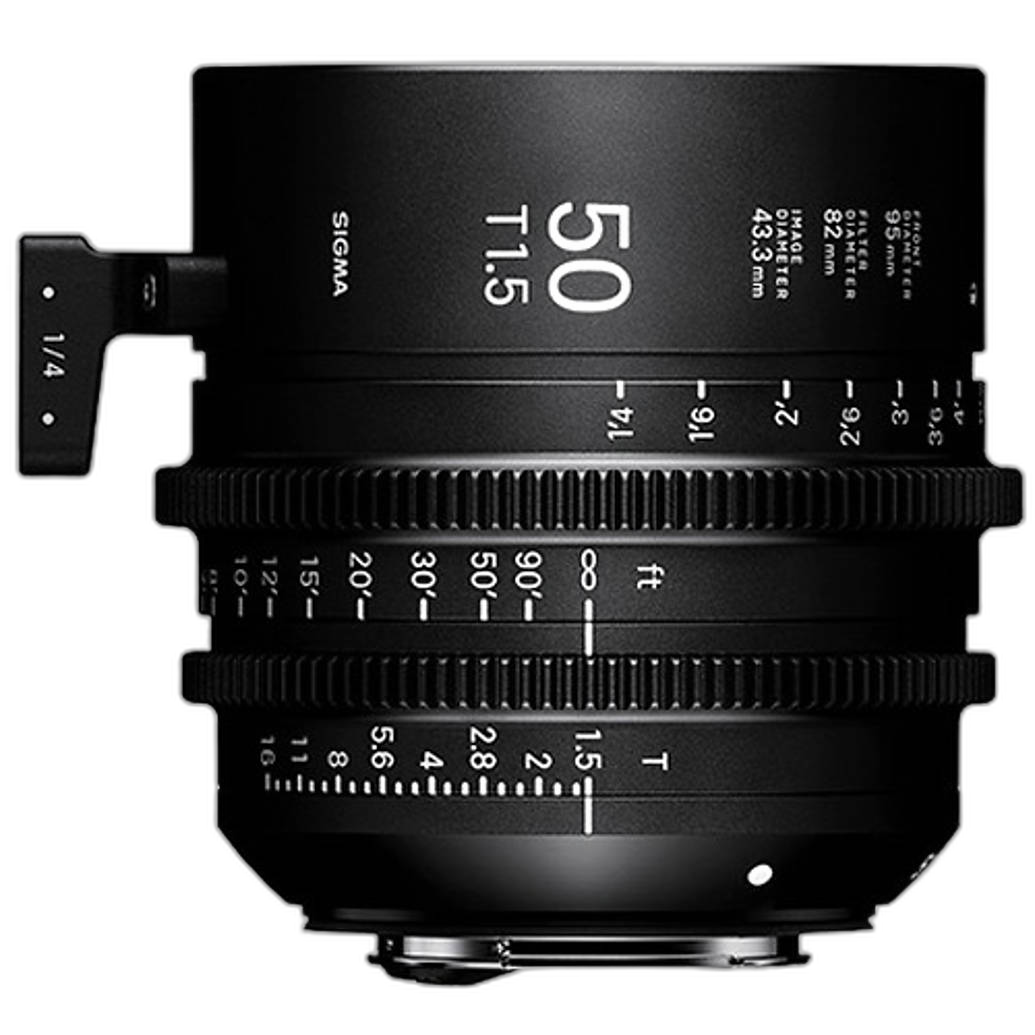
Sigma T1.5 FF High-Speed 5 Fully Luminous Prime Lens Kit (Sony E, Metric)
This version is ideal for professional productions that prefer metric markings and want luminous engraved scales. If your work includes focus pulling in low-light environments, night exterior setups, or studio builds where visibility matters, this kit has a practical edge. It is less about changing image quality and more about making on-set operation smoother and more dependable.
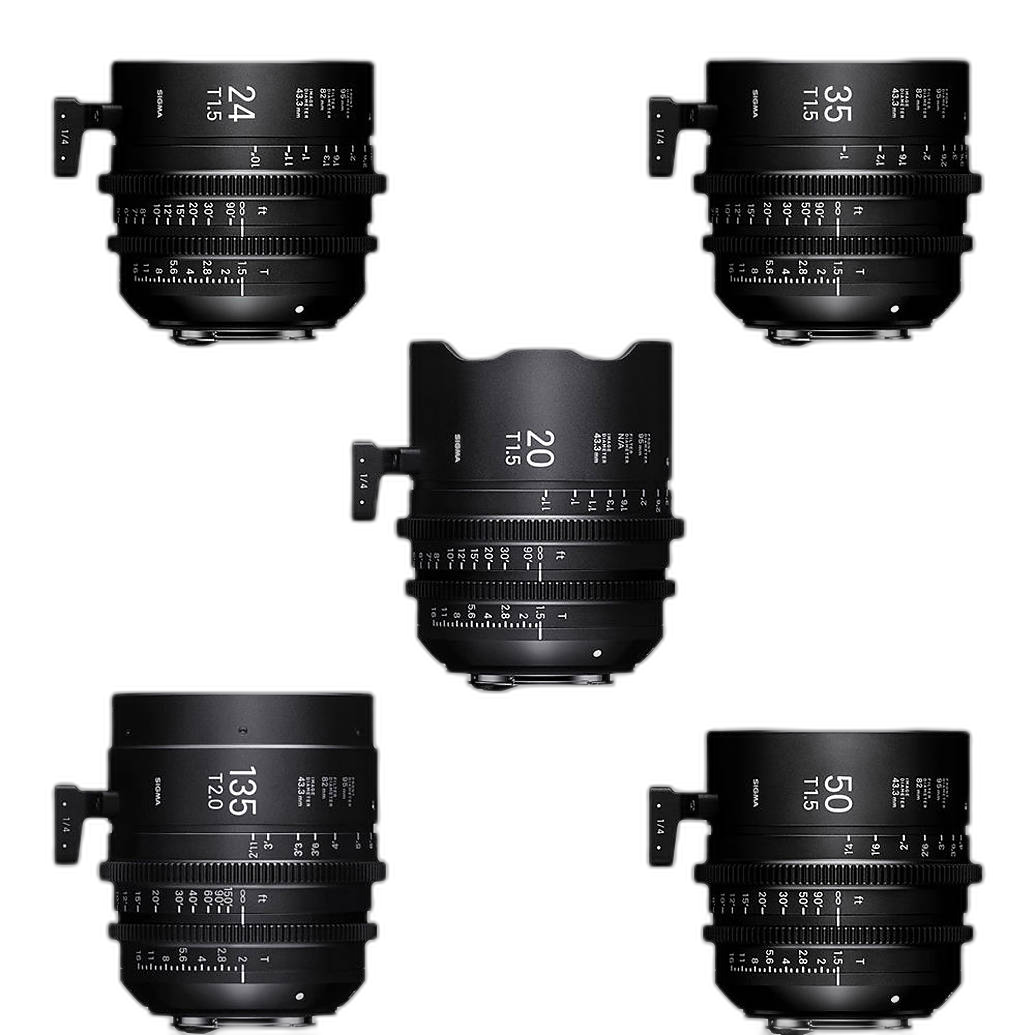
Sigma 14mm/135mm T2 FF High-Speed Fully Luminous Prime Lens Kit (Sony E)
For filmmakers who want strong specialty coverage at both ends of the visual spectrum, this kit is especially interesting. A 14mm is a dramatic storytelling tool for architecture, environmental wides, gimbal movement, and stylized perspective. A 135mm gives you elegant compression, separation, and portrait-driven framing. Together, they create a compact but creatively powerful package for Sony cinema users.
This is not the substitute for an all-purpose zoom. It is the alternative for shooters who already know exactly why they want ultra-wide and telephoto primes in their bag.
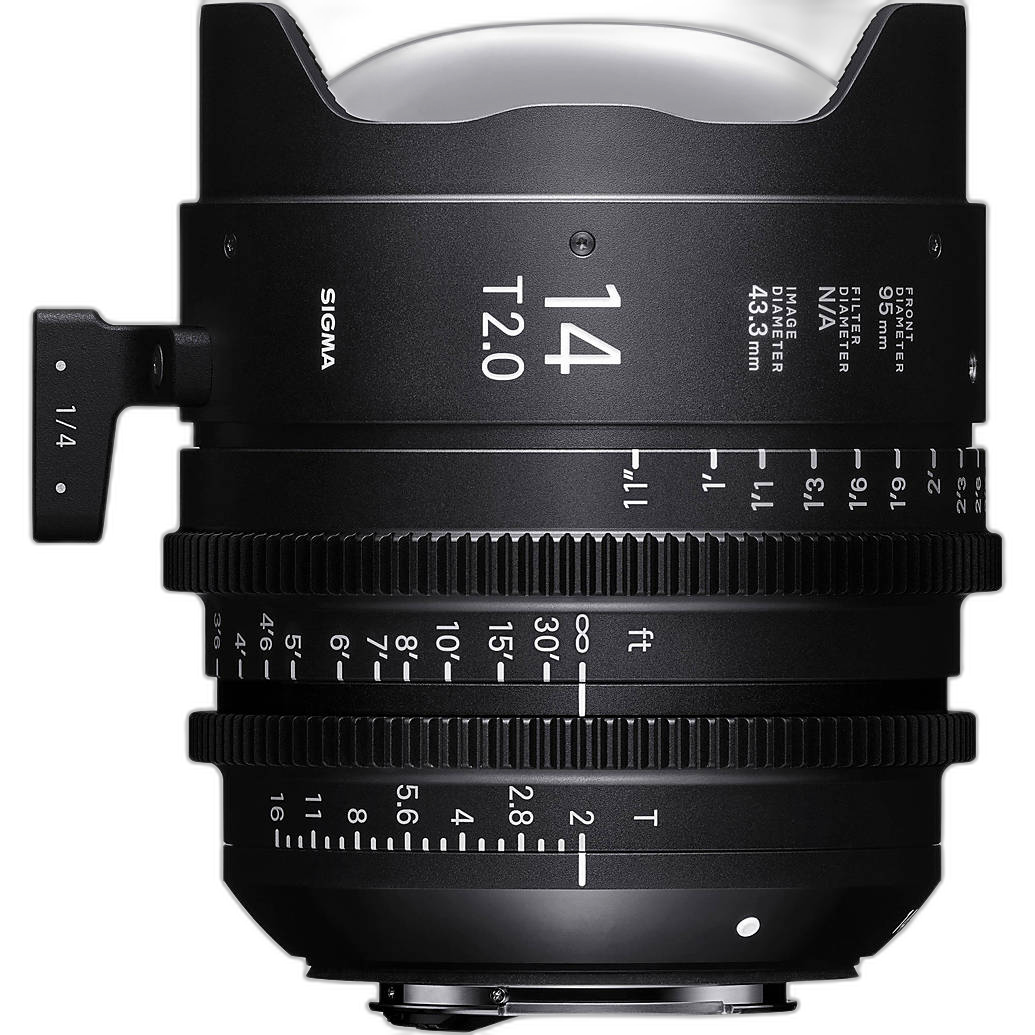
Sigma 135mm T2 Fully Luminous FF High-Speed Prime Lens (Sony E)
The standalone 135mm T2 Fully Luminous version is a standout choice if your Lens Compare findings favor telephoto compression and dramatic isolation. On Sony full-frame cinema bodies, 135mm is a beautiful focal length for close-ups, interviews, commercial beauty work, and emotionally intimate insert shots. The T2 aperture keeps it creative in lower light while giving you that polished, cinematic separation many zooms cannot replicate as easily.
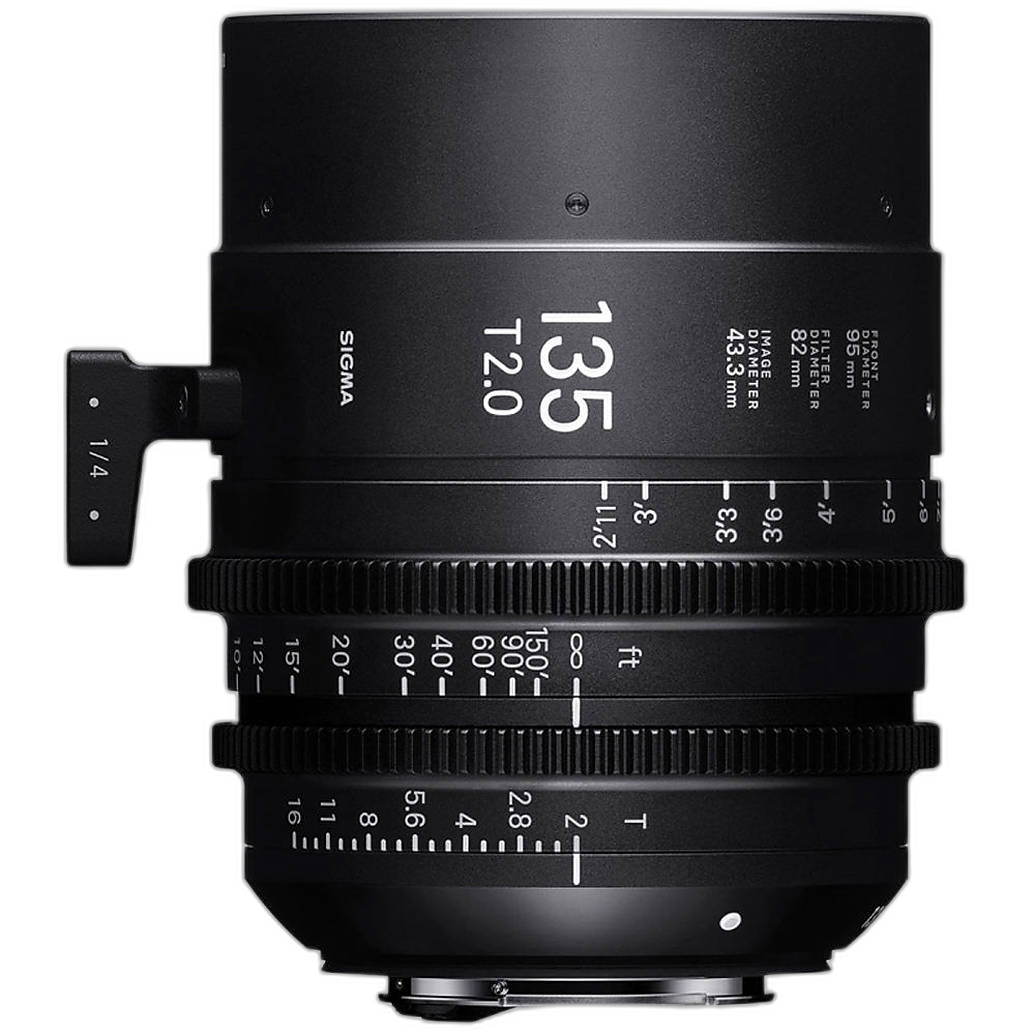
Sigma 85mm T1.5 Fully Luminous FF High-Speed Prime Lens (Sony E)
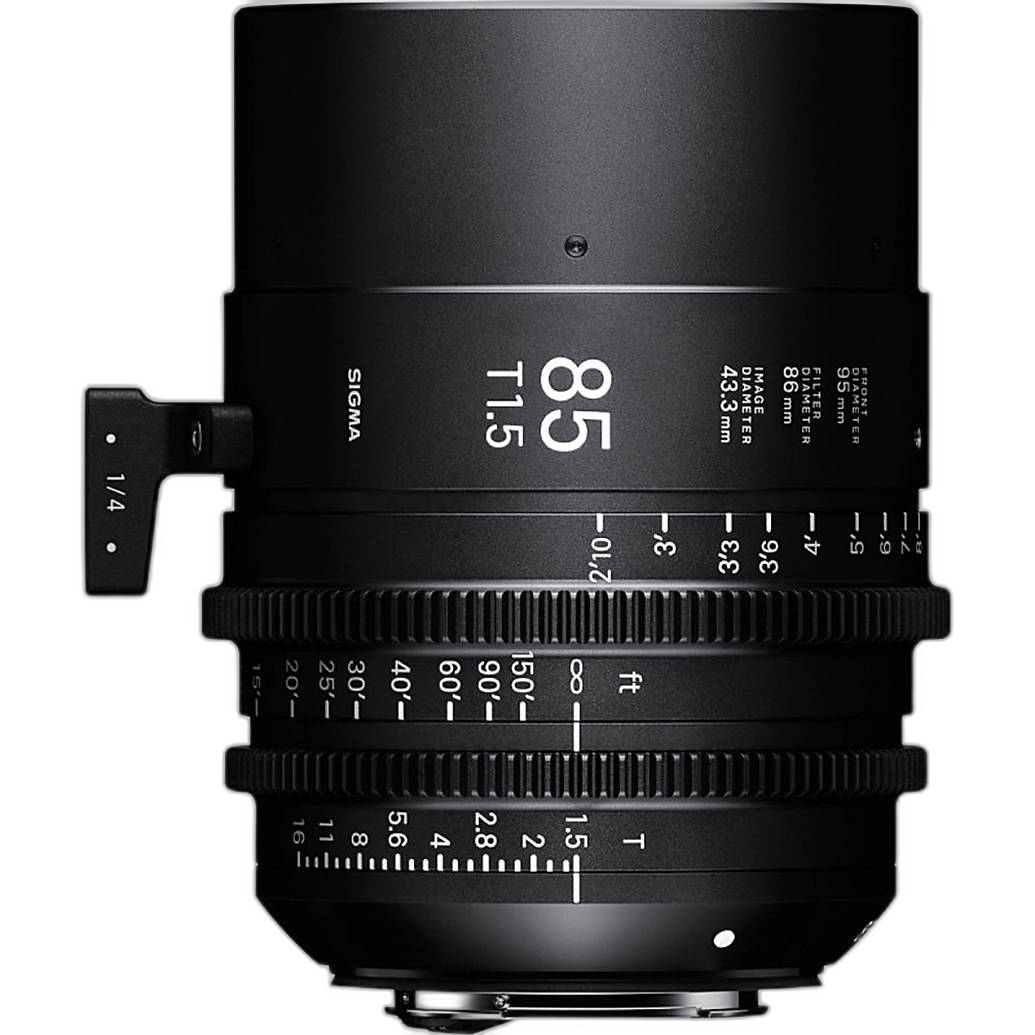
If there is one focal length that often convinces zoom users to embrace primes, it is 85mm. The Sigma 85mm T1.5 Fully Luminous FF High-Speed Prime Lens (Sony E) delivers the classic portrait and medium-telephoto look with exceptional speed. For interviews, dramatic coverage, fashion, and music videos, 85mm T1.5 can produce a premium cinematic aesthetic that is hard to ignore.
For many Sony shooters, this is the first prime that reveals the practical advantage of choosing a fixed focal length over a zoom: the image simply has more intentionality to it.
How These Compare Against Zoom Logic
To be fair, zooms still have clear strengths. Event shooters, run-and-gun operators, and solo creators may still benefit more from a high-quality zoom because speed of reframing matters more than absolute lens speed or rendering. If your Lens Compare beta results emphasize versatility, fewer lens changes, and faster coverage, a zoom-first setup remains valid.
But when the comparison shifts to cinematic intent, Sigma’s Sony E cine primes become more persuasive. They are not trying to do everything. They are designed to do specific jobs exceptionally well. That is exactly why prime lenses continue to dominate narrative and commercial production.
When to Choose a Prime Instead of a Zoom
- You shoot narrative, commercial, branded, or music video work.
- You want faster T-stops for low light and shallow depth of field.
- You rely on manual focus and cinema lens gearing.
- You value matched lens behavior across a set.
- You prefer intentional framing over convenience.
When a Zoom May Still Be Better
- You shoot events, live productions, or documentary work with minimal crew.
- You need to reframe quickly without changing lenses.
- You prioritize efficiency over maximum speed.
- You often work in unpredictable environments.
Pros and Cons
Pros
- Fast T1.5 and T2 apertures provide strong low-light performance.
- Full-frame coverage pairs well with Sony cinema and mirrorless systems.
- Cinema-style housings improve focus control and on-set usability.
- Matched kits create a more consistent visual and operational experience.
- Fully luminous versions are especially practical for low-light productions.
- Specialty focal lengths like 14mm, 85mm, and 135mm offer strong creative character.
Cons
- Prime workflows require more lens changes than zoom setups.
- These lenses are best suited to deliberate production environments, not all run-and-gun scenarios.
- Specialized cine primes can be more investment-heavy than a single all-purpose zoom.
- Newer shooters may need time to adapt to fixed focal-length discipline.
Verdict
If your Lens Compare beta results suggest you are drawn to stronger image character, faster glass, and more cinematic control, Sigma’s Sony E cine primes are the better answer than a zoom for many serious productions. The Sigma T1.5 FF High-Speed 5 Prime Lens Kit with Case (Sony E) is the most complete recommendation for filmmakers building a professional prime-based system, while the Sigma 85mm T1.5 Fully Luminous FF High-Speed Prime Lens (Sony E) and Sigma 135mm T2 Fully Luminous FF High-Speed Prime Lens (Sony E) stand out as particularly compelling single-focal-length choices.
For Sony shooters who care most about flexibility, a zoom still has its place. But for those chasing cinematic precision and repeatable image quality, these Sigma primes are the stronger creative investment. If you are ready to buy, Unique Photo is an excellent place to shop for these Sony E-mount Sigma cine lenses and kits.