Beginner Recommendations: Choosing Your First Prime Lens Kit from Sigma Cine
If you're stepping into prime lenses for the first time, the biggest decision often is not just which lens, but which system and which version makes the most sense for your camera and workflow. In this comparison, we're looking at several Sigma Cine prime lens kits that are built around fast full-frame coverage, consistent cine-style handling, and professional mounting options. While these are premium cinema-oriented kits rather than casual stills primes, they illustrate an important beginner buying lesson: your first prime setup should match your mount, your measurement preference, and your future upgrade path.
For new filmmakers, the practical choice usually comes down to Canon EF, Sony E, or PL mount, plus whether you prefer standard or metric focus markings. Below, we compare the available Sigma kits side by side and break down which type of beginner each one fits best.
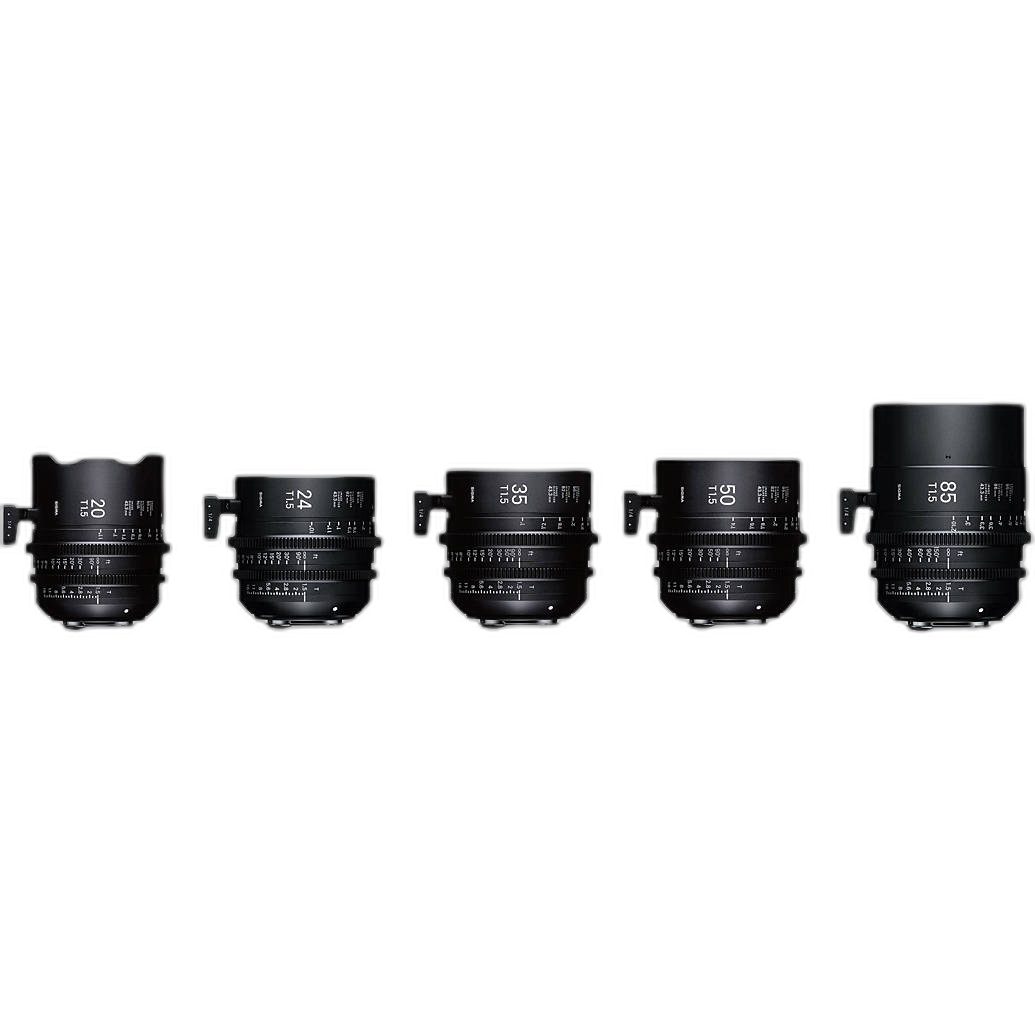
Side-by-Side Specs Comparison
| Product | SKU | Mount | Markings | Series / Kit Type | Best For |
|---|---|---|---|---|---|
| Sigma T1.5 FF High-Speed 5 Fully Luminous Prime Lens Kit w/ Case (Canon EF) | SGC214 | Canon EF | Standard | 5-lens fully luminous FF kit | Canon EF cinema users wanting a premium starter set |
| Sigma T1.5 FF High-Speed 5 Fully Luminous Prime Lens Kit with Case (Sony E) | SGC215 | Sony E | Standard | 5-lens fully luminous FF kit | Sony mirrorless filmmakers building a first cine-prime set |
| Sigma T1.5 FF High-Speed 5 Fully Luminous Prime Lens Kit (PL, Metric) | SGC257 | PL | Metric | 5-lens fully luminous FF kit | Beginners entering dedicated cinema camera ecosystems |
| Sigma T1.5 FF High-Speed 5 Fully Luminous Prime Lens Kit (Canon EF, Metric) | SGC255 | Canon EF | Metric | 5-lens fully luminous FF kit | EF users working in metric-based productions |
| Sigma T1.5 FF High-Speed 5 Fully Luminous Prime Lens Kit (Sony E, Metric) | SGC256 | Sony E | Metric | 5-lens fully luminous FF kit | Sony E users preferring metric focus scales |
| Sigma T1.5 FF High-Speed 5 Prime Lens Kit with Case (Canon EF) | SGC132 | Canon EF | Standard | 5-lens FF high-speed kit | EF shooters seeking a straightforward entry into cine primes |
| Sigma T1.5 FF High-Speed 5 Prime Lens Kit with Case (Canon EF, Metric) | SGC173 | Canon EF | Metric | 5-lens FF high-speed kit | EF users who prefer metric consistency |
| Sigma 14mm/135mm T2 FF High-Speed Fully Luminous Prime Lens Kit (PL) | SGC219 | PL | Not specified | Specialized 14mm/135mm FF kit | PL users needing dramatic wide and tele extremes |
What Makes a Good First Prime Lens Kit?
For beginners, a strong first prime kit should do three things well: fit the camera you already own, cover the most useful focal lengths, and keep operation consistent from lens to lens. That is where these Sigma cine kits stand out. Rather than buying one lens at a time and mixing handling characteristics, a kit gives you a matched set built around the same cine philosophy.
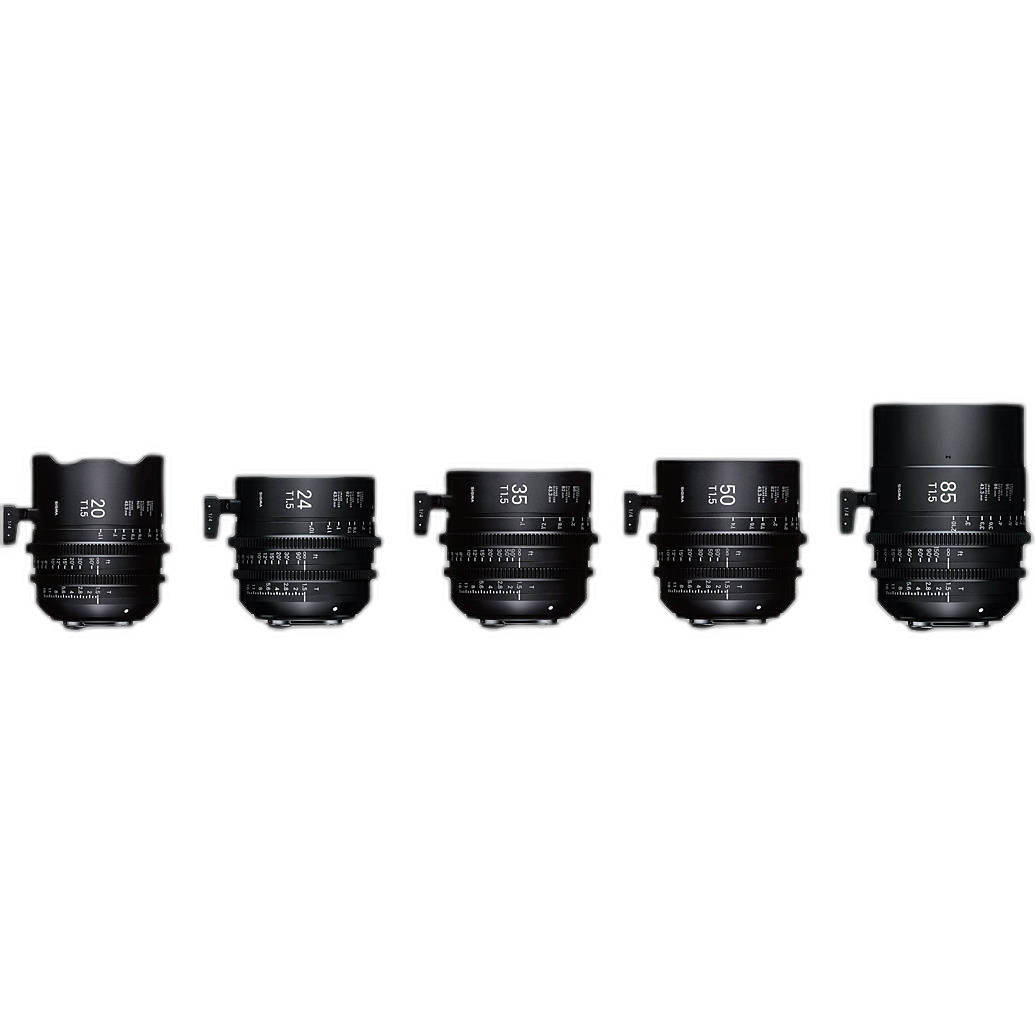
Mount Choice: Canon EF vs Sony E vs PL
The first and most important buying decision is mount compatibility.
Canon EF options like SGC214, SGC255, SGC132, and SGC173 make the most sense for users already shooting on EF-mount cinema cameras or adapted EF-friendly systems. For many beginners, EF remains attractive because of its broad compatibility across older cinema bodies and production accessories.
Sony E options like SGC215 and SGC256 are ideal for beginners using Sony mirrorless cameras and E-mount cinema bodies. If your first serious video camera is from Sony, these are the most straightforward path because they avoid adaptation complexity.
PL options like SGC257 and SGC219 are geared more toward dedicated cinema users. PL is a professional standard, but for a true beginner it is usually best only if you already know your camera platform supports it and your workflow is cinema-first.
Standard vs Metric Markings
Several of these Sigma kits come in both standard and metric versions. This does not change optical intent as much as it changes usability on set. If you're in a U.S.-based production environment and want the most familiar experience, standard-marking versions are often the easy recommendation. If you work with crews using metric distances, the metric kits offer better consistency.
For a beginner buying their first prime set, this is a practical choice rather than a performance one. Pick the scale that matches how you focus, measure, and collaborate.
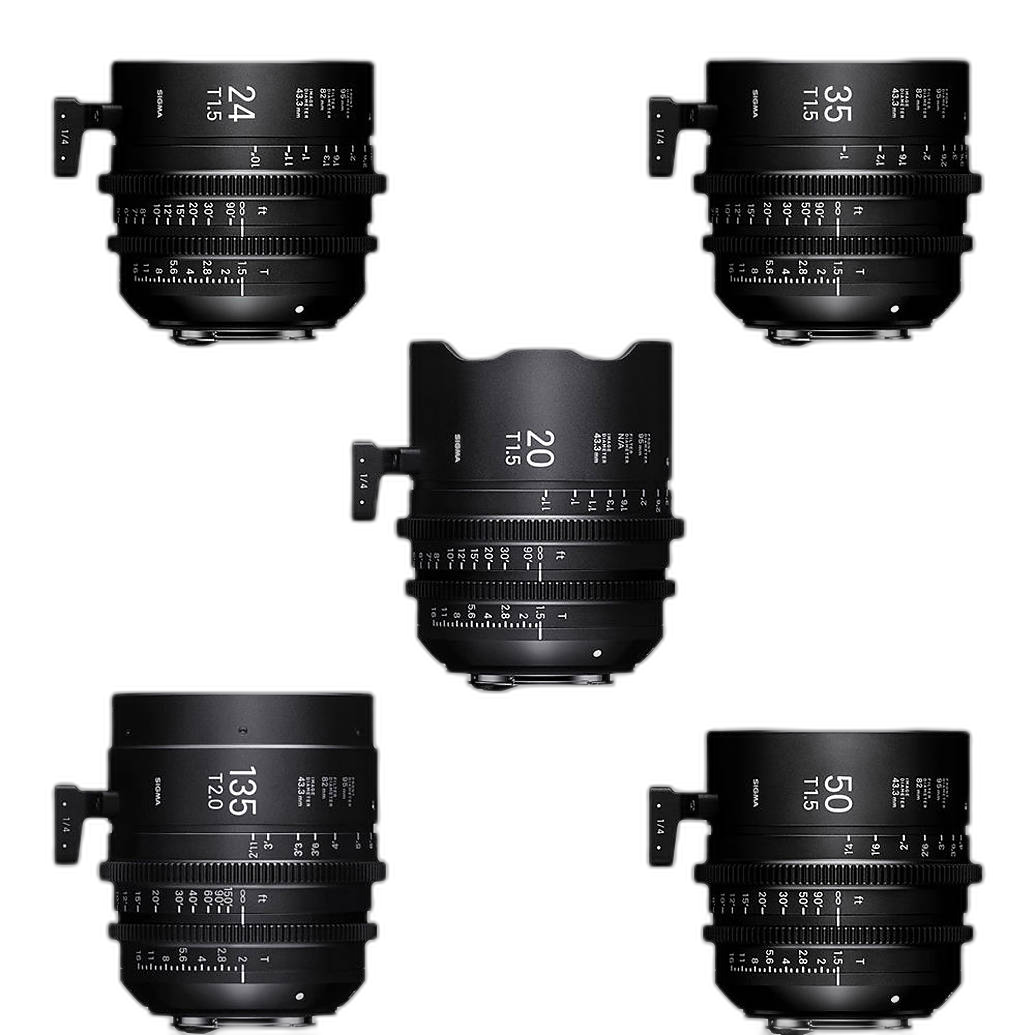
Why the 5-Lens Kits Make Sense for New Filmmakers
A five-lens kit gives a beginner room to learn framing without immediately outgrowing the system. Instead of being locked into a single focal length, you can experiment with wider environmental compositions, standard interview shots, and tighter portrait-style coverage while maintaining the same general cine handling across the set.
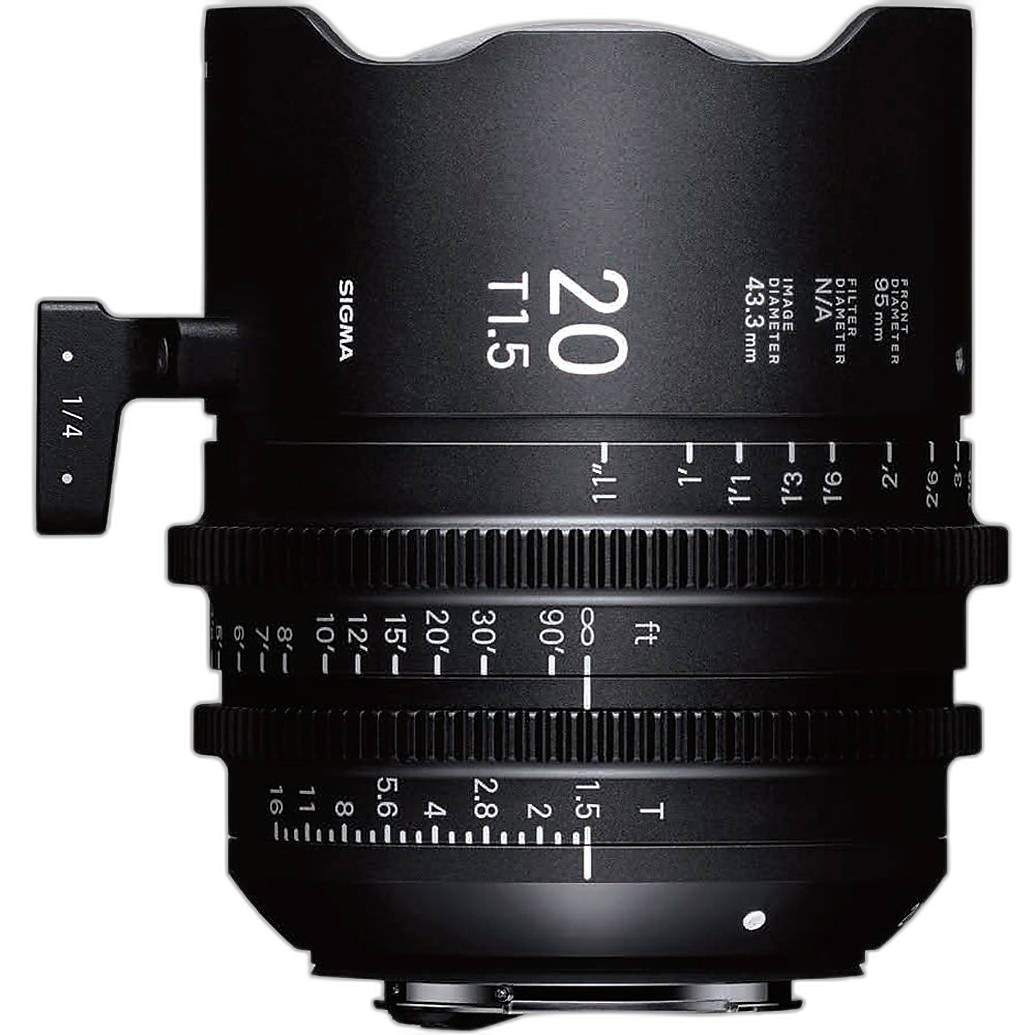
The Sigma T1.5 FF High-Speed 5-lens kits are especially appealing because they emphasize fast apertures and full-frame coverage. For beginners who want a cinematic look, that means more creative control over depth of field and greater flexibility as camera systems evolve.
Fully Luminous vs Standard Kit Naming
You'll notice that some products are labeled Fully Luminous while others are simply listed as Prime Lens Kit. In the context of cine gear, luminous markings are typically a workflow convenience feature, especially helpful when working in lower-light set environments. For a beginner, that can be a meaningful usability advantage if you expect to work on controlled productions, sets, or dark locations where lens markings need to remain visible.
If your budget allows, the fully luminous variants are easier to justify as a long-term investment because they support more professional working conditions from day one.
The Specialized Option: Sigma 14mm/135mm T2 FF High-Speed Fully Luminous Prime Lens Kit (PL)
The outlier in this comparison is the Sigma 14mm/135mm T2 FF High-Speed Fully Luminous Prime Lens Kit (PL), SKU SGC219. This is not the most natural first choice for most beginners because it focuses on more extreme focal lengths rather than a broad all-purpose spread. That makes it excellent for dramatic visual storytelling, architecture, stylized wides, or compressed telephoto looks, but less ideal as a general first prime purchase.
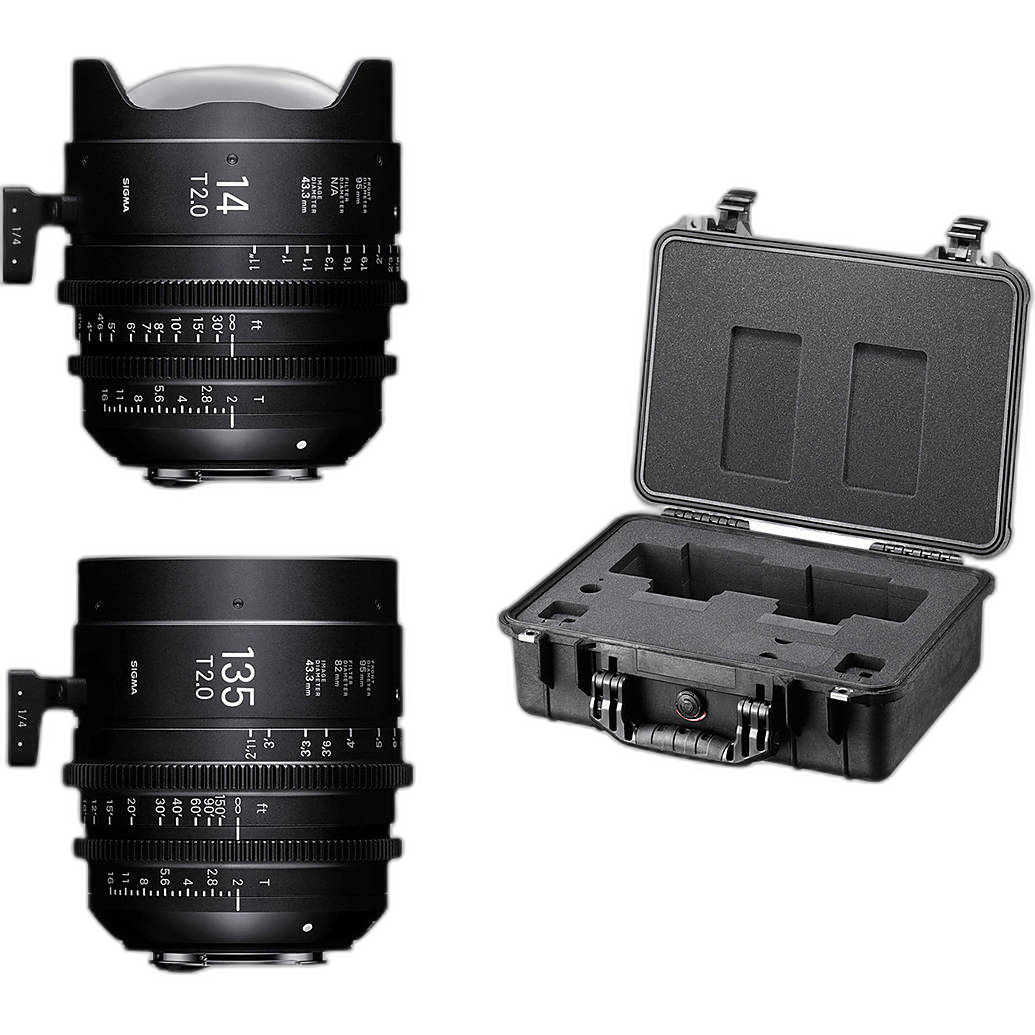
If you're just learning coverage and composition, a standard 5-lens kit is usually the better educational and practical investment.
Our Pick
Our Pick for most beginners: Sigma T1.5 FF High-Speed 5 Fully Luminous Prime Lens Kit with Case (Sony E) — SKU SGC215.
Why this one? Sony E is one of the most common entry points for modern hybrid shooters and filmmakers, and this kit offers a matched, full-frame, fast-aperture cine solution with the convenience of a complete five-lens set. For a beginner who wants to start with a serious system and avoid piecing together lenses later, SGC215 is the most broadly approachable option in this group.
If you shoot Canon EF, the closest parallel recommendation is SGC214. If you already work in a PL-based cinema environment, SGC257 is the more beginner-friendly PL pick than the specialized SGC219.
Final Thoughts
Choosing your first prime lens kit is really about choosing the right foundation. For most beginners, that means prioritizing mount compatibility, matched handling, and a versatile focal-length spread over niche specialization. In this Sigma lineup, the 5-lens T1.5 FF kits are the smartest place to start, while the metric and mount variants help you tailor the system to your workflow.
If you're ready to invest in your first serious cine prime setup, Unique Photo is a great place to compare options and choose the Sigma kit that best fits your camera and production needs.