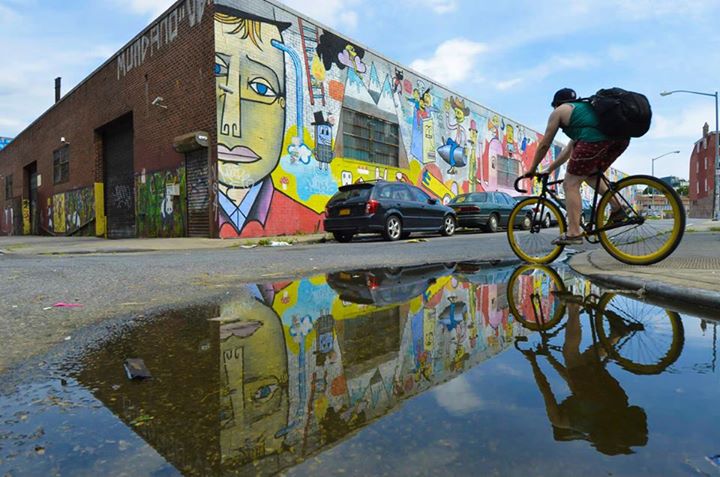
A well-clicked photograph deepens the thought behind the essence of photography. More precisely, it showcases the parity between observation and conception. The famous quote by Alfred Eisenstaedt, “It is more important to click with people than to click the shutter,” explains the crucial role of street in photography. Street photography features the human condition within public places and does not require the presence of a street. The subject of the photograph can be absent from people and may include an object or environment. The origin of the term ‘street’ is related to time, rather than place. It began at the time when women achieved freedom and people started interacting with each other, hence creating the opportunity for photographers. Street photographers shoot the emotions of people on the street and capture these moments through their lenses. There are some secrets behind clicking good street photos. It is crucial to look at minute details while shooting on the street. Plan the photographs and look for emotions. Street photography is a part of travel photography, and one should include people in the frame by noticing their emotions. You can capture the eyes, as this will give an edge to your photograph. For making the pictures more real and striking, click them at night with artificial lights. The photographs clicked at night are more gorgeous than their counterparts.

Courtesy - Chase Guttman
One of the iconic names in the field of street photography is Chase Guttman. Guttman is an award-winning, internationally published, and exhibited photographer, whose adventures span more than 45 countries and all 50 U.S. states. Guttman was named a Top Travel Photographer by the New York Institute of Photography, and one of the 3 Best Travel Photography Bloggers by USA Today. He twice won the Young Travel Photographer of the Year, as well as the Young Photographers Alliance’s Emerging Talent Award, and a Grand Prize in National Geographic’s International Photography Competition for Kids. Guttman has lectured at the George Eastman House International Museum of Photography, and has been published in a National Geographic Publication, ESPN, and Photo District News, among others. His work has thrice been exhibited at the Royal Geographical Society in London and at a solo exhibition at New York’s Municipal Building. The following are the expert opinions of this street photography professional.
- Why did you choose street photography as your niche?
I am a travel photographer, because I want to pursue and capture the beauty of the earth and better understand the world around me by turning the camera on others. Travel photography allows me to genuinely portray humanity’s underlying commonality.
- What are the new and untouched trends in the world of street photography?
The future of travel photography is already manifesting itself today, with the rise of drone-photography technology. I think drones are an exciting new medium for photographers to explore, especially as the technology becomes more commercial and mainstream.
- Which camera do you feel has been specially designed for street photography?
I don’t know if there’s a camera in circulation that was specifically built for travel photographers, but the Nikon D7000 is my favorite camera, as it’s a professional-grade camera body at a consumer price.
- Name a special place where you would like to shoot and why?
Norway’s Lofoten Islands is a photographer’s paradise—its beautiful landscapes and coastal fishing villages are truly out of a dream.
- Which is your dream location to shoot?
I’d love to photograph Papua New Guinea’s indigenous tribes and Antarctica’s barren landscapes.

Courtesy - Chase Guttman
For a more life-like photograph, the art of street photography should be manifested in a tactful way. Bring out the best in your pictures by attaining accuracy through better camera handling and knowledge. Consider reading magazines, articles, and blogs that are related to the art of street photography. Add a hint of artistry magic to your skills while capturing the street and people.