If you want cleaner dialogue and better vlogs without blowing your budget, a compact on‑camera shotgun mic is the fastest upgrade you can make. This guide covers what to look for, the best budget-friendly options, and setup tips—so you can capture crisp, directional sound with your DSLR or mirrorless camera. Shop in-store or online at Unique Photo for microphones, wind protection, cables, and audio accessories.
What is a shotgun mic—and why it matters for DSLR/mirrorless video
A shotgun mic uses a highly directional interference tube (usually supercardioid or hypercardioid) to focus on your subject and reduce surrounding noise. Compared with your camera’s tiny built-in mic, even an affordable on‑camera shotgun will deliver clearer speech, punchier presence, and less room echo—especially if you keep the mic close to your subject.
Key features to prioritize on a budget
- Directionality: Look for supercardioid patterns that reject sound from the sides. Short tubes keep rigs compact; longer tubes offer more isolation when properly aimed.
- Power and compatibility: Many budget mics run on your camera’s plug‑in power via 3.5 mm TRS. Some offer internal battery or USB‑C power for higher output and extra features.
- Self-noise and sensitivity: Lower self-noise and higher sensitivity help keep your camera’s preamps (often noisy) at lower gain.
- Shock mount: An elastic or Rycote-style mount reduces handling noise from camera movements.
- Wind protection: A foam cover is the bare minimum; an included furry windshield (a “deadcat”) is ideal for outdoor shooting.
- Controls: High‑pass filters (80–150 Hz), pad or gain controls, and safety channels are useful for dialog and run‑and‑gun work.
- Cables: Verify the cable type—TRS for cameras, TRRS for smartphones. Some mics include both; you can add adapters if needed.
Best affordable shotgun mics for DSLR & mirrorless (by budget)
These picks reflect popular, widely available models that deliver strong performance for the price. Check current availability at Unique Photo.
Entry-level compact mics (great under-100 class)
- Movo VXR10: Tiny and travel‑friendly, works off plug‑in power, includes TRS/TRRS cables and furry windshield—excellent for phones and cameras.
- Deity V‑Mic D4 Mini: Dual‑capsule flexibility with rear input for wireless receivers or lavs; compact size with solid off‑axis rejection for vlogs.
- Boya BY‑MM1: Ultra‑budget crowd‑favorite; simple, directional, and a big step up from built‑in mics.
Midrange on‑camera mics (value around the 100–200 tier)
- Rode VideoMic GO II: Lightweight, USB‑C and 3.5 mm output, integrates with Rode apps for control; a versatile on‑camera and desktop mic hybrid.
- Sennheiser MKE 200: Super compact with built‑in wind protection and internal shock mounting; clean sound for travel and everyday shooting.
- Deity V‑Mic D3 Pro (often near the top of this range): Excellent signal‑to‑noise, stepless gain knob, and auto‑sensing TRS/TRRS for plug‑and‑play use.
Upper‑budget compacts (still affordable but feature‑rich)
- Rode VideoMic NTG: Broadcast‑leaning sound in a compact body, digital USB audio, safety track, pad, and HPF. Great all‑rounder for hybrid creators.
- Sennheiser MKE 400 (newer version): Highly directional with integrated wind screen and shock isolation, plus headphone monitoring in some kits.
Tip: Unique Photo carries a wide range of affordable shotgun mics from brands like Rode, Sennheiser, Deity, Movo, and Comica. Visit the microphones section to compare specs, kits, and bundles.
On‑camera vs. boomed shotgun on a budget
On‑camera mics are quick and portable, but physics still rules: the closer the mic to your subject, the cleaner the dialog. Booming a compact shotgun just out of frame often beats mounting it on the camera shoe.
- Try a lightweight boom pole or even a mic arm just off camera.
- Use a quality 3.5 mm extension cable and secure it to avoid handling noise.
- If your camera preamp is noisy, consider recording to a small external recorder and sync in post.
Setup tips to get pro sound from a budget mic
- Get close: Aim the mic at the speaker’s chest or mouth, ideally within 1–2 feet indoors.
- Use HPF: Engage an 80–150 Hz high‑pass filter to reduce rumble and handling noise.
- Gain staging: Raise mic output (if available) and lower camera input gain to minimize hiss.
- Tame the room: Shoot in smaller spaces, use soft furnishings, and avoid bare, reflective walls.
- Wind control: Use a furry windshield outside—even a light breeze can ruin takes.
- Safety track: If your mic offers it, record a -10 dB safety channel to prevent clipping on sudden peaks.
Compatibility checks: TRS vs. TRRS, power, and camera settings
- Cable type: DSLR/mirrorless inputs typically need 3.5 mm TRS. Smartphones often need TRRS. Many mics include both cables; otherwise add an adapter.
- Plug‑in power: Most compact mics run on camera plug‑in power. If your mic has its own battery/USB power, you’ll usually get higher output and more features.
- Menus: Disable auto‑gain when possible, set input to “external mic,” and start levels around -12 dB peaks. Adjust for your talking volume.
When you need more reach (and when a lav might be better)
No small shotgun can ignore room echo or reach across a noisy street. If you can’t get the mic close, consider a lavalier (wired or wireless) to keep the capsule near the talent. In larger, untreated spaces, a boom + shotgun close to the subject will outperform any on‑camera setup.
Looking ahead: Pro video cameras with stronger audio
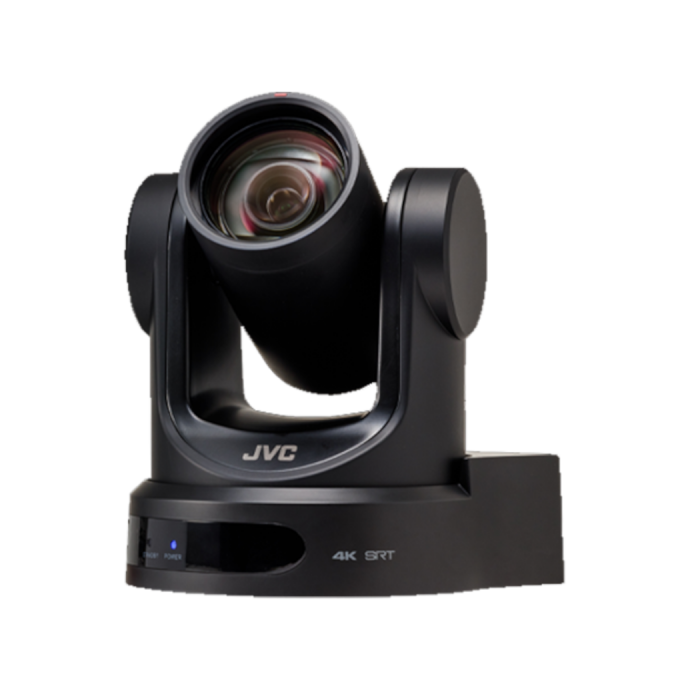
If you find yourself adding preamps, recorders, and adapters to chase better sound, a camcorder with pro audio I/O can be a clean upgrade. Unique Photo carries connected camcorders and PTZ solutions from JVC that integrate XLR inputs, phantom power, and robust audio controls, simplifying your rig.
- JVC GY‑HC500U: A handheld 4K connected camcorder with professional audio features—ideal for documentaries, events, and ENG workflows.
- JVC KY‑PZ400N 4K PTZ: Great for live streams and multi‑cam studios; pair with external mics or mixers for polished broadcast sound.
Quick FAQ
- Are cheap shotguns worth it? Yes. Even entry‑level models are a massive upgrade over built‑in mics when placed correctly and used with wind protection.
- Best for vlogging? Compact supercardioid mics with good wind protection (e.g., MKE 200, VideoMic GO II) are easy to mount and travel with.
- Do I need XLR? Not for basic DSLR/mirrorless setups. 3.5 mm mics work well; XLR is helpful for long runs, phantom power, and pro mixers.
- How do I fix wind noise? Always use a furry windshield outdoors and enable a high‑pass filter if available.
Next steps and internal links
Ready to upgrade your audio? Explore these sections at Unique Photo:
- Microphones – Compare on‑camera shotguns from Rode, Sennheiser, Deity, Movo, and more.
- Cables & Adapters – TRS/TRRS adapters, extension cables, and splitter accessories.
- Audio Recorders – For cleaner preamps and dual‑system sound.
- Wind Protection & Shock Mounts – Deadcats, foams, and vibration isolation.
- Pro Video – Explore camcorders and PTZ cameras like JVC’s connected lineup.
- Classes & Workshops – Learn audio fundamentals and on‑set technique with Unique Photo educators.
Have questions? Contact Unique Photo’s team for personalized mic recommendations for your DSLR or mirrorless camera and shooting style.