
[caption id="attachment_3507" align="alignright" width="300" caption="A photo I took while attending the 2008 All-Star game at Yankee Stadium"]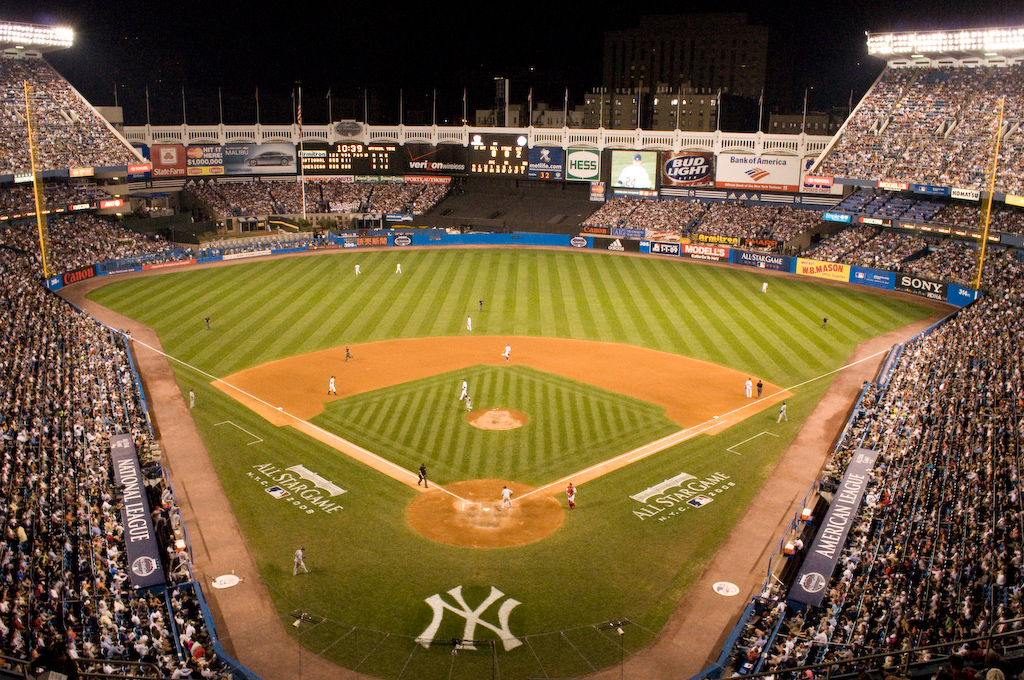 [/caption] This is my favorite time of year. The weather is starting to get warmer, or at least it is supposed to be getting warmer. More importantly baseball is back! Part of the American "right of passage" is attending a baseball game and having a hot dog with a cold drink. Going to the ballpark with my dad, friends, ex-girlfriends, etc... are some of my most fond memories as a child, teen, and now adult. If only I was a photo-nerd back then, I would have so many more keepsakes of these great memories. Even if you're just taking snapshots with your phone or point and shoot camera, always take at least one picture when you do something important. So what if you just dropped $1,000,000 on some Yankees tickets (a slight exageration, but not by much) and you want to take more than just snapshots at the game you're going to? I know some people aren't interested in baseball, but this pertains to a several sports. Photographing at a ballpark is very different than photographing your run of the mill high school or college sporting events where you have much freer access to the action. Here are my tips on how to take memorable moments of your next trip to the ballpark! Be sure to check out our University website frequently for updates on when we will be offering classes on sports photography.
[caption id="attachment_3517" align="alignright" width="200" caption="credit: Sports Illustrated"] [/caption] 1. What should you bring?
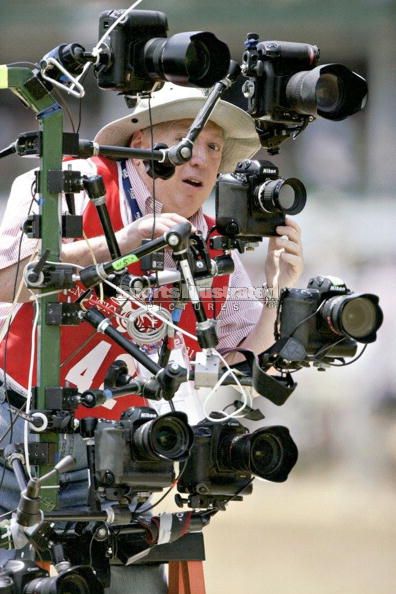
This is the toughest question you'll have to ask yourself when going to a sporting event to take photographs. If you're going to be consuming a large amount of alcohol prior to or during said event, your Canon 5D Mark II may not be the wisest of choices. If you have an older DSLR or a point and shoot camera, bring that instead and don't even think about bringing another lens or it will end up tumbling down the bleachers by accident. However if your focus is to actually take good photographs and remember the event (via your memory and through images) you should bring your DSLR or the best camera you own. In the world we live in today, everyone seems to be absolutely terrified of cameras, but don't fret, you're still allowed to bring them inside to sporting events, I promise. Each ballpark is going to have different guidelines for what you can and can't bring to a game. However depending on who checks your bag (and how thoughroughly they do), you can usually bring a slightly longer lens inside. Depending on how you position your camera in your bag/backpack you may be able to get a 70-200 f/2.8 lens inside. When I went to the 2008 MLB All-Star game at the Old Yankee Stadium, I was able to somehow smuggle in a 70-200 f/2.8G VR, 80-400 f/4-5.6 VR, and a 12-24 f/4 DX with my Nikon D300. I was very lucky to get away with this and I have heard others with similar stories. However if you can't get in with said gear, it means you might be leaving thousands of dollars of gear in your car on some street in the Bronx or Queens at night. Not the best plan. So this is really a risk and is totally up to you if you want to take it, I am not encouraging it, but it is possible. If you only could only bring one lens to a game I would recommend any variant of a 70-300 f/4-5.6 stabilized lens. When I went to a Yankees game last year I brought the Tamron 70-300 f/4-5.6 VC SP lens and got some really nice shots! Anything shorter should be fine to bring, it just becomes a matter of how much you are willing to carry and keep track of.
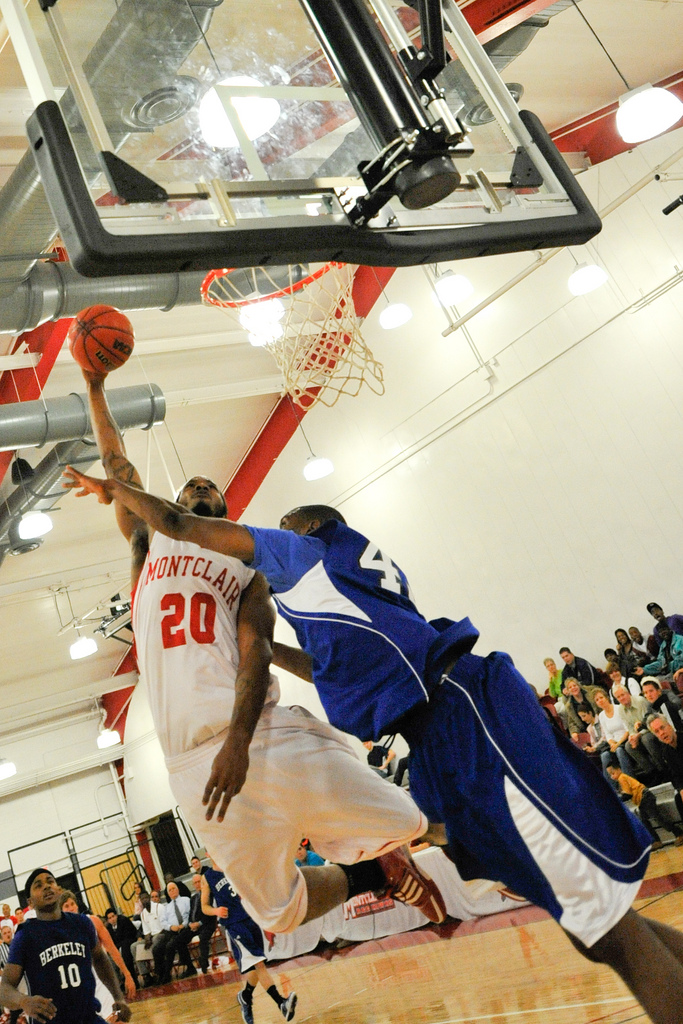 D700 at ISO 6400
2. Don't be shy about High ISO and shoot RAW!
If you're trying to capture the action at sporting event, you're probably going to want to use fast shutter speeds such as 1/500, 1/1000, etc... in order to freeze the action and capture detail without blurs. If you're going to a day game this should be no problem. Even during the day I tend to bump my ISO up to 320 or 400 if I want a really fast shutter speed. If you are going at night, don't be afraid of those high numbers. A sharp picture with noise is better than a blurry picture at a lower ISO setting. If you want to avoid noise issues, take proper exposures! For example let's say you are just barely getting by at ISO 800 with a 1/500s exposure. Your pictures are coming out, but they're dark and you'll figure "Oh i'll just brighten them up in post!" Stop right there! Underexposed images that are adjusted in post-production have the absolute worst noise. Try this at even your lowest ISO settings of 100/200 and you will see the ugly stuff show up like you wouldn't believe. Trust me a properly exposed photo at even ISO 3200 will look much better than any under-exposed and adjusted photograph at lower ISO settings. Shooting RAW files will always allow you to adjust your white balance later on which will be important. At high ISO settings, white balance is very fickle and hard to predict with stadiums using such a variety of lighting fixtures. I typically don't recommend products such as ExpoDisc, but it would actually come in handy in these conditions. As always, turn OFF in-camera high ISO noise reduction! Software like Adobe Lightroom 3 will do a much better job than even the most expensive cameras.
3. Know the Sport
Knowing your sport will help you greatly. If you're going to a game, chances are you know a little bit about it. If you don't ask your friends about it, don't worry about bothering them, it's important! Let's use baseball for an example. If a fast player like Jose Reyes or Brett Gardner gets a single and they're standing on 1st base, chances are they're going to try stealing a base. So this means you're going to want to take your eyes away from the "action" for a little bit and focus on "potential action" So if a player is going to try stealing second, keep your camera aimed at 2nd base! It may seem like a lot of extra work at first, but it will be worth it. There's nothing like being ready for the action before it happens. Even a slightly lethargic (why do you think I like it so much?) sport like baseball moves way faster than you're used to. Pointing your camera at the pitcher, hitter, and then the runner trying to track where the ball is going is going to result in you always being just a bit too late! It's all about anticipation.
3. Look for emotion
[caption id="attachment_3527" align="alignright" width="199" caption="There are many powerful shots to be found off the field as well. Photo by Mike Zawadzki 2008"]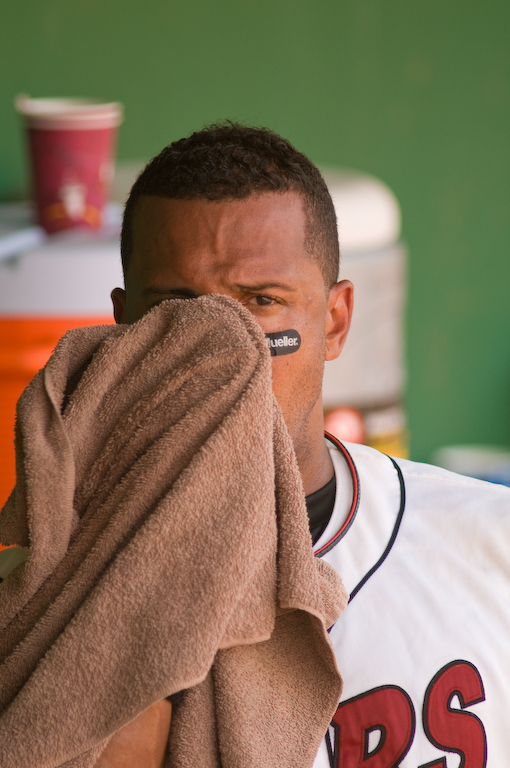 [/caption] Just like knowing the sport is important, having emotion in sports photographs is what makes them interesting. The back of a player's jersey while they swing a bat or throw a pitch is only interesting so many times. I am just as guilty as anyone else when it comes to this, but don't be afraid to look for other things during the game. Is there someone famous sitting in the front row? If you're at a Knicks game the answer is probably yes! What about the players not in the game and the coaches on the bench? Although they aren't the superstars that everyone else takes pictures of, their reactions to the game can be very powerful and narrative to what was happening at the time. Whether its a manager screaming about a bad call or the back-up to the back-up catcher yawning with his feet up spitting sunflower seeds, there are endless interesting photos to be had "outside of the lines". Don't forget about the crowd either, the fans are the most passionate people at sporting events! Don't feel weird because you're taking pictures of strangers, its all part of the experience! To get these kind of shots you will probably want to bring a wider angle lens.
5. Remember to get a picture of yourself and company
Perhaps the best advice I can give you is something totally not technical or even aesthetically related. I try to not get too mushy and nostalgic on the blog here, but maybe I should more often. Remember why you are going to these games! You are more than just a photographer looking to take amazing action shots. You will probably get some decent ones, but there's a reason the guys with the mega-telephotos are down on the sidelines. Those spots are really the best to shoot from for capturing the action. Don't forget to get a picture of yourself and whoever else you are attending with. One of my biggest regrets is not getting someone to take a quick snap of my Dad and I at the 2008 MLB All-Star game. I was so caught up in being the "photographer" and walking around trying to get good shots that I totally forgot to get a simple shot of us with the stadium in the background. In the future you will need photographs to remind you of your past and you won't want to forget who (not only what) made those events special.