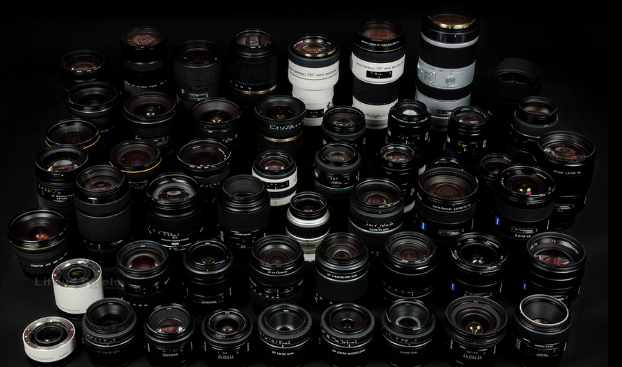
Anybody who owns a camera, especially a high-end DSLR camera, should be well-versed in taking proper care of their lenses – both the ones that are already attached to the camera and the ones that are purchased later. Camera lens cleaning is a delicate and thorough process that needs to be done intermittently. However, you should also make note that it isn't done too often, as excessive cleaning of your lenses could damage them. Expensive DSLR lenses do require a degree of meticulousness while cleaning, but there isn't any need to be overtly tentative and careful. Let's go through a few handy pointers on cleaning camera lenses effectively.
1. Make it a Habit to Continually Utilize a UV or Skylight Filter: This is a very vital tip and one that should be religiously followed by all DSLR camera owners. Every one of your DSLR lenses should have a UV filter, also known as a skylight filter attached to them at all times. Besides performing their primary function of negating all kinds of UV light and radiation, it also safeguards your lens from scratches, smudges, cracks, or even breakage. Another advantage of keeping a UV filter attached at all times is that while cleaning, you'll just need to be concerned with the filter instead of the lens, thus protecting your lens from any kind of scratches through your fingernails. Only under very rare and extreme circumstance is there a chance of dust breaching the filter's parameter and settling on your lens. Also, remember that filters are available in varying degrees of quality, so ideally, a high-end lens should be attached with an even higher-end UV filter.

Photo Credits - Digital camera world
2. Lens Cleaning Fluid: An alcohol based lens cleaning fluid is the best variety to use on your DSLR lenses. It can be easily found in any reliable camera outlet. A good lens cleaning fluid successfully eradicates fingerprints and other forms of smudges without leaving behind any streaks or residual marks on your filter or lens. Just two drops of lens cleaning fluid suffices in properly cleansing your lens, as long as you employ a mild cleaning tissue to gently rub it in a circular motion over the lens or filter body. A smart tactic is to first apply the fluid to the tissue and then progress to the camera lens cleaning process itself. There are quite a few photographers who are of the opinion that simply blowing on your lens and wiping it with a gentle cloth or cleaning tissue is a much easier and safer bet that exposing the lens to unknown and potentially hazardous lens cleaning fluids. No doubt this is a safer method, but in the longer scheme of things, lens cleaning fluids are also required. The best way is to begin by blowing on your lens and then gradually proceeding to using a lens cleaning fluid for more stubborn stains.
3. Cleaning Tissues: As mentioned above, cleaning tissues constitute a vital part of a camera lens cleaning process. While using lens cleaning fluid, always squeeze out a drop or two onto one of these tissues, so that the purpose of cleaning your lens or filter is better served. These tissues are made of an unbelievably thin and flimsy material, so that they are immensely gentle on your lens. Even by accident never commit the grave error of substituting lens cleaning tissues with regular facial tissues, as their material is quite rough and there's every bit of a chance of your lens surface being scratched in the event that you do use facial tissues.
4. Cleaning Cloth: A better alternative to cleaning tissues is the more contemporary lens cleaning cloth. Choosing the right type of cleaning cloth is imperative while using a lens cleaning fluid. They should be made of an incredibly soft and supple microfiber fabric that would be gentle on your lens or filter. Cleaning cloths of such kind are useful in getting rid of tiny dust particles and even those miniscule ones that aren't visible to the naked eye. They are also helpful in obliterating any oily residues that gather on lens or filters after a period of prolonged usage. Ensure that you purchase a washable form of cleaning cloth, as it is important to keep the cloth clean its if it is going to be put to use during your camera lens cleaning procedure. Otherwise, you could just get yourself a new lens cleaning cloth, as they are pretty inexpensive. This would avoid any trace of water or other residual matter left after cleaning your cloth from being deposited onto your lens or filter. Another important thing to remember while utilizing a cleaning cloth is to first check that there aren't any vestiges of larger and somewhat tougher dirt matter on your lens or filter. If you don't remove such matter prior to cleaning your lens, there is a higher chance that your lens could get scratched in the process of wiping it with the cloth. A blower or brush could be used to safely displace such grittier dust particles. The usefulness and applications of blowers and brushes are mentioned below.
5. Blowers and Brushes: Blowers should only be used for cleaning the outer surface of your camera, lens or filters. Since they have a tendency of blowing out dust at times instead of blowing the dust away, they should never be used to clean the inside of a camera or the back surface of a lens or filter. If you absolutely must use a blower for cleansing the inside of your camera or the back portion of your lens, ensure that you first squeeze it a couple of times to get rid of any dust that might be left inside the blower. A brush is an even better tool to clean the lens and other sections of your camera, even though it has to be operated manually as opposed to a blower's mechanical operation. It easily dusts off all kinds of dirt, big or small, without any dirt particles finding their place back into the camera or onto the lens. Always buy a brush made of really soft bristles such as camel hair, in order to avoid any scratches. The only drawback of a brush is that it’s not very useful for eradicating the fine, minute dust particles that aren't visible to us. This is where your lens cleaning fluid and cleaning tissue or cleaning cloth enter the picture.
Now that you've gained some really valuable pointers on taking effective care of your lenses, it's crucial that you implement them every step of the way to guarantee that your costly DSLR lenses have a long life and provide you with high quality photographs and videos.
Featured Image Credits - LifeisPixels by Paramit Zhang