A Doors-Off Helicopter Experience Over NYC with AIP
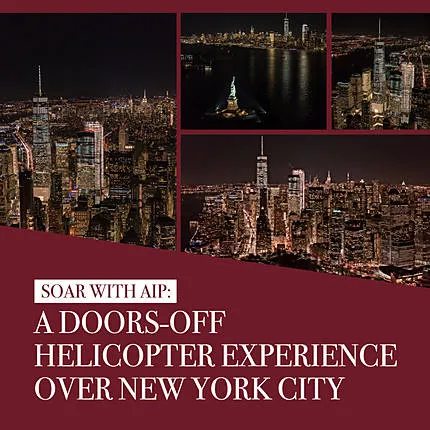
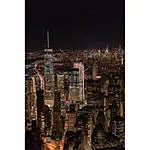
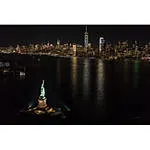
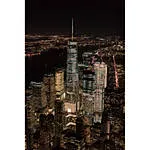
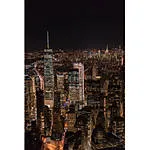
Fly with Unique and Adventures in Photography over New York City in a chartered, three passenger helicopter! It's an experience you'll never forget!
We'll begin with training and prep over some wine and cheese (not too much wine, of course). Safety, shooting techniques, camera settings, and stabilization will be discussed. We'll also have some rental cameras and fast lenses that you can use in addition to your own gear. You'll learn how to shoot with everything so that you'll be ready to get the very best shots in the air!
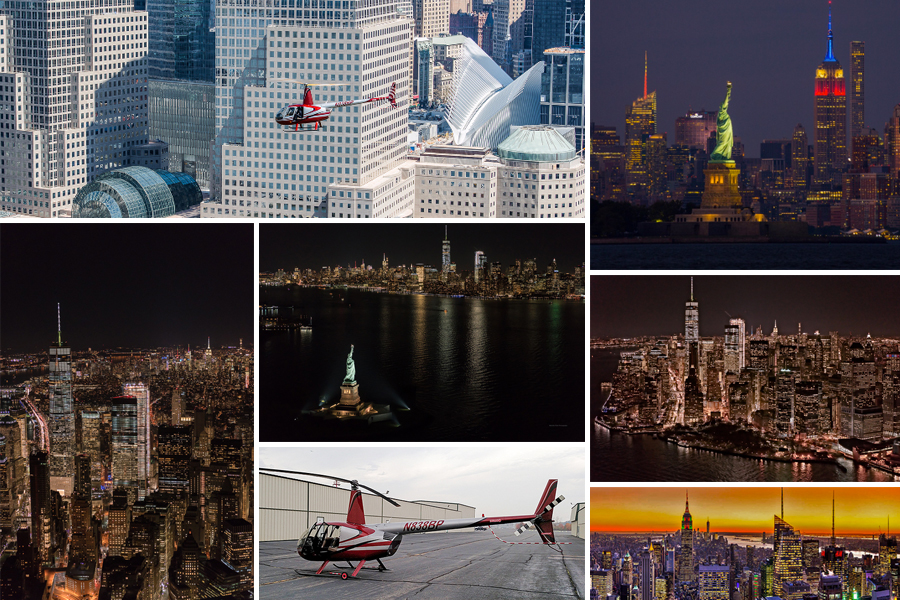
You'll then board the helicopter for the experience of your life! The flight will cover lower Manhattan, Midtown, and around the Statue of Liberty in approximately an hour. We've identified the best shooting locations around the city and have instructed our pilots where to fly and where to hover.
We'll return to the hangar and have some more wine while we transfer the pictures from the rental camera(s) to your own memory cards. We'll also have some time to take a look at some of your shots (you'll probably take about 800) and discuss the best processing techniques.
If you're interested in registering or have already registered, please note that your flight date/time is not yet determined! It could be March 24th or a few weeks later. You may only find out your scheduled flight date/time a few days prior. It will depend on weather, other participants, and other factors. Please email [email protected] so that we can get you in touch with AIP's organizer.
* Helicopter has enough room for a pilot, 3 photographers, and 6 cameras.
* THE DOORS WILL BE OFF! You will be strapped in and have a headset to communicate with the pilot in case you want him to hover a bit longer.
* AIP plans on offering afternoon and evening flights. The afternoon flight will lift off around 45 minutes before sunset. The evening flight will lift off near the end of blue hour. Your selected time may slide one way or another.
HOW WEATHER CAN AFFECT OUR FLIGHTS:
As you can imagine, weather conditions will have a major affect on our decision to fly or not. If its raining or windy, we don't fly. If conditions for flying and/or photographing are anything less than ideal, we don't fly. A cloud cover won't stop us because, generally, we'll be photographing under the cloud cover. Not only that, but if we do have a cloud cover, the city's lights will probably reflect off the clouds creating a very pleasing glow. So why, you may ask, are we starting this program in the winter? Well, it's all about the haze and getting crystal clear shots, which is helped by the dryer winter air. Will it be cold? You'll find it about as cold as it is on the ground since the bubble of the helicopter keeps the wind from coming inside. The only time there is wind is when the pilot turns sideways to help you get a particular shot if, and only if, the winds are significant. So, wear your woolies, a hat, gloves and a scarf. Since we can't predict the weather with any accuracy outside of say a 48 hour window, our flight plans will only be made on Wednesday night for a Friday flight and on Thursday for Saturday.
MOST EFFECTIVE EQUIPMENT FOR DAY AND/OR NIGHT TIME PHOTOGRAPHY:
Daytime photography: Almost any DSLR will do as long as it's capable of shooting in bursts. Most effective lenses are between 16 and 100mm. We think that shooting at ~50mm and ~35mm would be ideal. Anything shorter or longer than this range is pretty ineffective and won't produce the best results, especially if you're a first-timer. Generally speaking, fast glass is best and your lens of choice should be capable of opening up to at least f2.8. Note that fast glass is usually of higher quality and sharper as well. The most effective way of shooting from a helicopter is to come prepared with 2 camera bodies and a different lens for each body. (You can't change lenses and or fumble around with equipment while in flight.)
Nighttime photography: Photographing at night from a helicopter is a completely different matter with its own set of parameters. Your DSLR(s) need(s) to handle noise very effectively since you'll need to shoot at a high ISO... probably around ISO 3200. (Don't worry, noise reduction in Lightroom or other NR programs handle the noise very well.) Your lenses should be capable of f1.8 - f1.4... can you say FAST! Ideal settings are an aperture of f1.4 - f1.8, and a shutter speed of 320th of a second or faster and an ISO that enables you to use the recommended aperture and shutter speed. Using the suggested setting above, the most effective method of shooting is to shoot a maximum burst on one camera then put that camera down (it must be strapped around your neck) and pick up your second camera and shoot away. The reason behind the burst approach is that the helicopter vibrates and many of your pictures will be blurry. So, you're really taking 5-12 shots to get one great one in that particular set. Switching between cameras will maximize your photo ops and increase the number of "keepers" that you'll get. As we noted before, you will likely walk away with ~800 pictures for the flight.
EXAMPLE OF THE SCHEDULE:
1st Flight: Arrival & Training 3:30pm - 4:15pm; Flight 4:30pm - 5:30pm; Post Flight 5:30pm - 6:30pm
2nd Flight: Arrival & Training 5:00pm - 5:45pm; Flight 6:00pm - 7:00pm; Post Flight 7:00pm - 8:00pm
3rd Flight: Arrival & Training 6:30pm - 7:15pm; Flight 7:30pm - 8:30pm; Post Flight 8:30pm - 9:30pm
4th Flight: Arrival & Training 8:00pm - 8:45pm; Flight 9:00pm - 10:00pm; Post Flight 10:00pm - 11:00pm
Unique University® is the highly acclaimed education component of Unique Photo®, NJ’s only camera and video superstore. There is over 2000 sq. ft. of learning space, including our start-of-the art, 1000 sq. ft. main presentation hall. Unique University’s mission is to help our visitors “Create Better Pictures” by providing photography education for beginners to pros. With events daily, it is the place where photography groups such as local camera clubs, ASMP, PPA and others meet. We have a full curriculum of classes and seminars from world famous speakers such as Art Wolfe, Rick Sammon, Michael Yamashita, Tyler Stableford, Lindsay Adler, and Will Crockett. We offer photography experiences to such places as the Prudential Center for Seton Hall Men's Basketball, Meadowlands Horse Racetrack, Lakota Wolf Preserve, NJ Jackals Baseball, Rutgers Football, Botanical Gardens, Festival of Ballooning, and much more. Our technical classes include such topics as basic D-SLR photography, lighting techniques, Adobe Photoshop, Elements, and Lightroom, macro photography, composition, editing and printing, wedding photography, HDR photography, working with speedlites, how to use social media, digital organization, one-on-one instruction, and much more.
FAQ UNIVERSITY
Where are classes held?
Unless stated otherwise, classes are held in the Unique University classroom within the Unique Photo SuperStore (123 US Highway 46 West, Fairfield, NJ 07004).
What should I bring to class?
You're encouraged to bring your camera and a notebook and pen to most classes. Some classes will require additional equipment, so please check the class descriptions.
Will lunch or refreshments be included?
Lunch and refreshments are not provided for any classes under 6 hours unless noted.
How do I register for a class?
You can register online, in-store at the concierge, or by phone at either 973-377-6454 or 973-377-2007. Please note that you will need to provide payment information.
Can I register at the door?
For most classes, you're free to register at the concierge desk prior to the start of the class. Please note that there are some classes that offer "Early Bird Special" rates and others that have limited seating, so it would be in your best interest to register prior to the dates of such classes.
I wanted to register for ______ class, but it is now sold out. Is there a waiting list?
Please contact Pamela at 973-377-6454 or email [email protected] with the following information: your name, phone number, email address, and the class name and date.
My question has not been addressed here. Is there someone I can contact?
Please contact Pamela at 973-377-6454 or email [email protected] with any additional inquiries.
Unique University Class Cancellation Policy
Classes costing less than $99 may be canceled up to 48 hours in advance for a full refund. For classes costing $100 or more, advanced notice of seven days before the class is necessary for a full refund.
Requests for cancellation made after these deadlines will be awarded store credit in the amount paid for registration towards a future Unique University seminar or workshop.
Cancellations made within 24 hours of the beginning of a class will not be honored and no refund or credit will be given.
Cancellations of any class utilizing models will be subject to a cancellation fee of 50% of the purchased price (up to $100).
HOW WEATHER CAN AFFECT OUR FLIGHTS:
As you can imagine, weather conditions will have a major affect on our decision to fly or not. If its raining or windy, we don't fly. If conditions for flying and/or photographing are anything less than ideal, we don't fly. A cloud cover won't stop us because, generally, we'll be photographing under the cloud cover. Not only that, but if we do have a cloud cover, the city's lights will probably reflect off the clouds creating a very pleasing glow. So why, you may ask, are we starting this program in the winter? Well, it's all about the haze and getting crystal clear shots, which is helped by the dryer winter air. Will it be cold? You'll find it about as cold as it is on the ground since the bubble of the helicopter keeps the wind from coming inside. The only time there is wind is when the pilot turns sideways to help you get a particular shot if, and only if, the winds are significant. So, wear your woolies, a hat, gloves and a scarf. Since we can't predict the weather with any accuracy outside of say a 48 hour window, our flight plans will only be made on Wednesday night for a Friday flight and on Thursday for Saturday.
MOST EFFECTIVE EQUIPMENT FOR DAY AND/OR NIGHT TIME PHOTOGRAPHY:
Daytime photography: Almost any DSLR will do as long as it's capable of shooting in bursts. Most effective lenses are between 16 and 100mm. We think that shooting at ~50mm and ~35mm would be ideal. Anything shorter or longer than this range is pretty ineffective and won't produce the best results, especially if you're a first-timer. Generally speaking, fast glass is best and your lens of choice should be capable of opening up to at least f2.8. Note that fast glass is usually of higher quality and sharper as well. The most effective way of shooting from a helicopter is to come prepared with 2 camera bodies and a different lens for each body. (You can't change lenses and or fumble around with equipment while in flight.)
Nighttime photography: Photographing at night from a helicopter is a completely different matter with its own set of parameters. Your DSLR(s) need(s) to handle noise very effectively since you'll need to shoot at a high ISO... probably around ISO 3200. (Don't worry, noise reduction in Lightroom or other NR programs handle the noise very well.) Your lenses should be capable of f1.8 - f1.4... can you say FAST! Ideal settings are an aperture of f1.4 - f1.8, and a shutter speed of 320th of a second or faster and an ISO that enables you to use the recommended aperture and shutter speed. Using the suggested setting above, the most effective method of shooting is to shoot a maximum burst on one camera then put that camera down (it must be strapped around your neck) and pick up your second camera and shoot away. The reason behind the burst approach is that the helicopter vibrates and many of your pictures will be blurry. So, you're really taking 5-12 shots to get one great one in that particular set. Switching between cameras will maximize your photo ops and increase the number of "keepers" that you'll get. As we noted before, you will likely walk away with ~800 pictures for the flight.
EXAMPLE OF THE SCHEDULE:
1st Flight: Arrival & Training 3:30pm - 4:15pm; Flight 4:30pm - 5:30pm; Post Flight 5:30pm - 6:30pm
2nd Flight: Arrival & Training 5:00pm - 5:45pm; Flight 6:00pm - 7:00pm; Post Flight 7:00pm - 8:00pm
3rd Flight: Arrival & Training 6:30pm - 7:15pm; Flight 7:30pm - 8:30pm; Post Flight 8:30pm - 9:30pm
4th Flight: Arrival & Training 8:00pm - 8:45pm; Flight 9:00pm - 10:00pm; Post Flight 10:00pm - 11:00pm
Unique University® is the highly acclaimed education component of Unique Photo®, NJ’s only camera and video superstore. There is over 2000 sq. ft. of learning space, including our start-of-the art, 1000 sq. ft. main presentation hall. Unique University’s mission is to help our visitors “Create Better Pictures” by providing photography education for beginners to pros. With events daily, it is the place where photography groups such as local camera clubs, ASMP, PPA and others meet. We have a full curriculum of classes and seminars from world famous speakers such as Art Wolfe, Rick Sammon, Michael Yamashita, Tyler Stableford, Lindsay Adler, and Will Crockett. We offer photography experiences to such places as the Prudential Center for Seton Hall Men's Basketball, Meadowlands Horse Racetrack, Lakota Wolf Preserve, NJ Jackals Baseball, Rutgers Football, Botanical Gardens, Festival of Ballooning, and much more. Our technical classes include such topics as basic D-SLR photography, lighting techniques, Adobe Photoshop, Elements, and Lightroom, macro photography, composition, editing and printing, wedding photography, HDR photography, working with speedlites, how to use social media, digital organization, one-on-one instruction, and much more.
FAQ UNIVERSITY
Where are classes held?
Unless stated otherwise, classes are held in the Unique University classroom within the Unique Photo SuperStore (123 US Highway 46 West, Fairfield, NJ 07004).
What should I bring to class?
You're encouraged to bring your camera and a notebook and pen to most classes. Some classes will require additional equipment, so please check the class descriptions.
Will lunch or refreshments be included?
Lunch and refreshments are not provided for any classes under 6 hours unless noted.
How do I register for a class?
You can register online, in-store at the concierge, or by phone at either 973-377-6454 or 973-377-2007. Please note that you will need to provide payment information.
Can I register at the door?
For most classes, you're free to register at the concierge desk prior to the start of the class. Please note that there are some classes that offer "Early Bird Special" rates and others that have limited seating, so it would be in your best interest to register prior to the dates of such classes.
I wanted to register for ______ class, but it is now sold out. Is there a waiting list?
Please contact Pamela at 973-377-6454 or email [email protected] with the following information: your name, phone number, email address, and the class name and date.
My question has not been addressed here. Is there someone I can contact?
Please contact Pamela at 973-377-6454 or email [email protected] with any additional inquiries.
Unique University Class Cancellation Policy
Classes costing less than $99 may be canceled up to 48 hours in advance for a full refund. For classes costing $100 or more, advanced notice of seven days before the class is necessary for a full refund.
Requests for cancellation made after these deadlines will be awarded store credit in the amount paid for registration towards a future Unique University seminar or workshop.
Cancellations made within 24 hours of the beginning of a class will not be honored and no refund or credit will be given.
Cancellations of any class utilizing models will be subject to a cancellation fee of 50% of the purchased price (up to $100).