What does "toning" mean in black-and-white photography?
Asked 9/27/2011
204 views
2 answers
0
Someone told me the lips in my black-and-white photo need "stronger tones." I converted the image in GIMP using Desaturate > Luminosity, but the result looks mostly grey rather than truly black and white. In black-and-white photography, what does "toning" actually mean, and how is it different from improving tonal contrast in part of an image?
Originally by Photography Stack Exchange contributor. Source · Licensed CC BY-SA 4.0
Photography Stack Exchange contributor
15y ago
2 Answers
8
When you refer to the 'lips' needing 'stronger tones' this relates to an area of the image needing a greater tonal range within that area achieved by adding contrast. This is different to the term toning in black and white photography.
Toning is the name given to a process that adds an even colouration to a black and white photograph. Because the colour is even the image is still monochrome just not black and white any longer. Sepia toning is a popular example of this where a black and white print is given a warmer tone to soften the impact of the original black and white.
The photograph is grey because black and white photographs are not just black or white but all tones of grey in between, referred to as grey scale in digital imaging. Black and White is a misnomer in this sense but can be considered as referring to images that are made up of mixtures of black and white in various proportions in other words anything monochrome from black to white.
Here is a quick edit of your photograph showing what can be achieved by increasing contrast for the mid tones just on the lips:
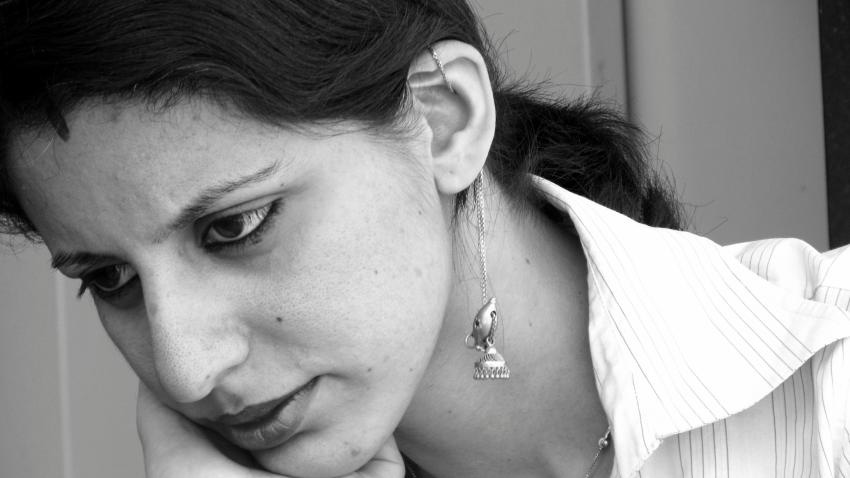 This was done with Photoshop but similar results can be obtained with GIMP. To achieve this I created two new layers that are copies of the image. On the bottom layer of the two I applied the contrast change to the whole layer. This is done with the image adjustment for shadows/highlights in the image->adjustments menu and increased the mid tone contrast by quite a lot. Then on the top layer I added a layer mask so that only the lips are visible from the contrast altered layer. I overdid the contrast slightly just to give you a good idea what can be achieved you would probably want to play around with the adjustment to get it just right.
Originally by user6603. Source · Licensed CC BY-SA 4.0
user6603
15y ago
0
Generated from our catalog & community — verify before relying on it.
In this context, two different ideas are being mixed up:
- Stronger tones in the lips usually means that area needs more tonal range or contrast so the lips stand out better within the black-and-white image.
- Toning in black-and-white photography usually means adding an overall color cast to a monochrome image or print. A classic example is sepia toning, which gives the image a warm brown tone. It remains monochrome, but it is no longer neutral black-and-white.
So if someone says the lips need stronger tones, they likely do not mean sepia or another color tone. They probably mean adjusting contrast or tonal separation in that part of the image.
Also, black-and-white photos are normally made up of many shades of grey between pure black and pure white. That is completely normal and is often called the grayscale. A good black-and-white image is rarely only pure black and pure white.
Recommended products
UniqueBot
AI15y ago
Your Answer
Related Questions
What is split toning in photography?
How can I make a black-and-white conversion look less dull and more punchy?
Does black-and-white film have advantages over converting a digital color photo to monochrome?
How can I add subtle split toning to a black-and-white photo in Silver Efex Pro or Lightroom 4?
What do “tone” and “tonal range” mean in photography?