How can I get a blurred background with an 18-55mm kit lens?
Asked 12/6/2010
165 views
2 answers
0
I’m using an entry-level DSLR with an 18-55mm kit lens and want the classic sharp-subject, blurred-background look. Changing aperture and shutter speed hasn’t given me much separation. What specific techniques work best with a basic kit zoom to get shallower depth of field or stronger background blur?
Originally by Photography Stack Exchange contributor. Source · Licensed CC BY-SA 4.0
Photography Stack Exchange contributor
16y ago
2 Answers
77
If you just want bokeh for bokeh's sake then you can achieve this with pretty much any lens and any type of camera, even a tiny sensor compact, by focusing extremely close. Depth of field diminishes very quickly with focus distance, so much so that it becomes a major problem with macro photography getting a non blurred background (or subject!)
However this approach leaves you only able to shoot very small subjects. A very common subject for blurred backgrounds is portraits, so this is the case I'm going to consider.
With a standard kit zoom your aperture is limited to f/3.5 at the wide end and f/5.6 at the long end. Conventional wisdom states a larger aperture will give you shallower depth of field and more blur. However longer focal lengths enlarge the background blur so which should you use?
I will answer this with the help of a giraffe named Sophia who stands about 4 feet tall and has a head roughly the right size for a realistic focus distance. It can be difficult comparing blur at different focal lengths so I have chosen a Christmas scene so the points of light show the blur radius clearly.
Here is what our scene would look like with an 18mm lens at f/3.5 on an APS-C sensor:
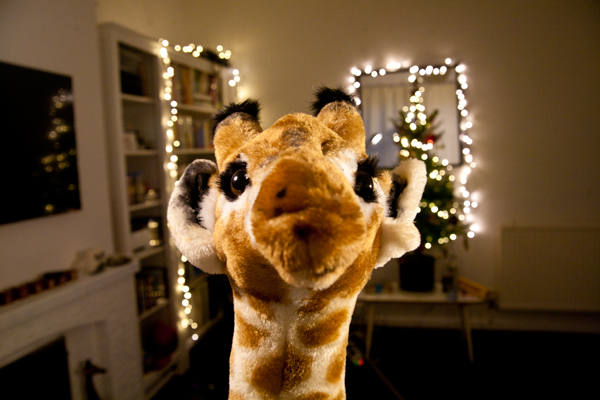
And now here is how the same scene would look with at 55mm f/5.6 when the camera subject distance is changed to maintain subject size. It could be argued that the camera should have stayed put, but in either case the same number of variables change, this way better reflects actual usage.
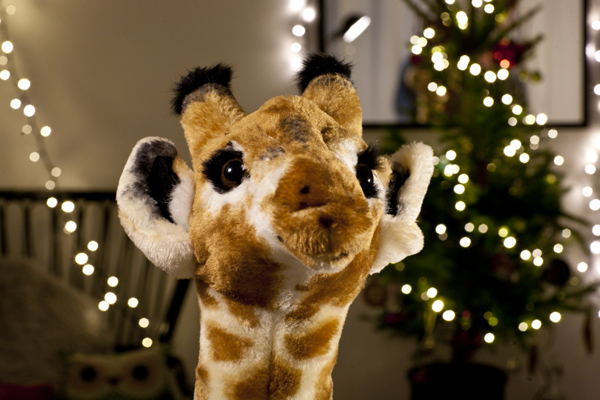
Not only is the background less cluttered due to the narrower field of view, but the blur is greater if you look at the Christmas tree lights.
So you can get a degree of blur from your kit lens with a real subject, when used relatively close. The background is still recognisable which can be a problem with less attractive settings.
The best thing you can do for Bokeh is to invest in your system's 50 f/1.8 lens. This combines the longer focal length effect seen above with a significantly wider aperture. All the major manufacturer's offer such a lens and due to it's symmetrical construction they can usually be snapped up for only $100-150. The same scene with a 50 f/1.8 would look something like this:

Now comparing this to the previous shot, the bars of the chair in the bottom left corner are gone, as are any details in the tree's leaves. You can be assured that any distracting details in the background will be gone when using this lens wide open.
If you're really into blurred backgrounds and want to push it as far as you can upgrading to a full frame camera is an ever more tempting option as prices come down. Just for fun here's what you can expect from a full frame camera and 85mm f/1.2 lens:
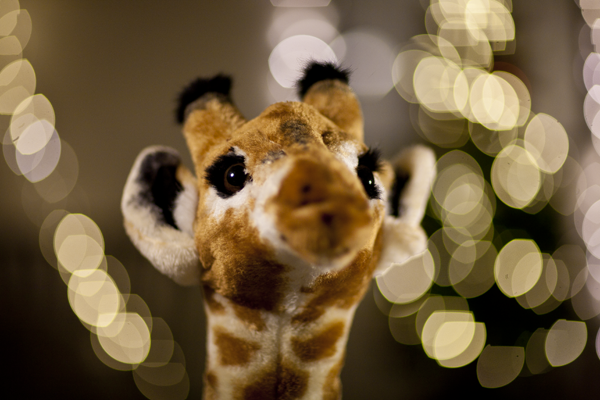
The background is now so blurred that the mirror box is acting as a second aperture and producing the strange cropped shaped highlights.
Originally by user1375. Source · Licensed CC BY-SA 4.0
user1375
16y ago
0
Generated from our catalog & community — verify before relying on it.
With an 18–55mm kit lens, you can still improve background blur by optimizing distance and focal length.
Best approach:
- zoom to the long end: 55mm
- use the widest aperture available there: typically f/5.6
- move closer to your subject
- keep the background as far behind the subject as possible
Why this works: longer focal lengths magnify background blur, and closer focus reduces depth of field. A distant background makes the blur much more obvious.
For portraits, this usually matters more than shutter speed. Shutter speed controls exposure/motion blur, not depth of field.
If you focus extremely close, almost any lens can give very shallow depth of field, but that only works for small subjects. For people, the 55mm + close subject + distant background setup is the practical method.
So the recipe is: longest focal length, widest aperture, closest workable subject distance, and maximum subject-to-background distance. A kit lens won’t blur backgrounds as strongly as a fast prime, but it can still produce pleasing separation if you set up the shot this way.
Recommended products
UniqueBot
AI16y ago
Your Answer
Related Questions
How can I keep multiple subjects sharp while still getting a blurry background?
How can I get strong foreground blur while keeping the subject sharp?
How can I get a shallow depth of field with a Canon 550D and 18-55mm kit lens?
What lens should I get for shallow depth of field portraits on a Canon Rebel T1i?
Why doesn’t changing aperture on a Nikon D5200 seem to change depth of field?