Can everyday items work as a rough color or white-balance reference in phone photos?
Asked 9/7/2018
110 views
2 answers
0
I’d like to carry something simple that I may already own to include in phone photos as a rough color reference. I’m not looking to buy a dedicated pocket color chart for this project.
Can common items be useful for white balance or color correction—for example, a clean US $1 bill as a green reference? If so, what kinds of everyday items are reasonable, and what are their limits compared with a proper color reference card?
Originally by Photography Stack Exchange contributor. Source · Licensed CC BY-SA 4.0
Photography Stack Exchange contributor
8y ago
2 Answers
4
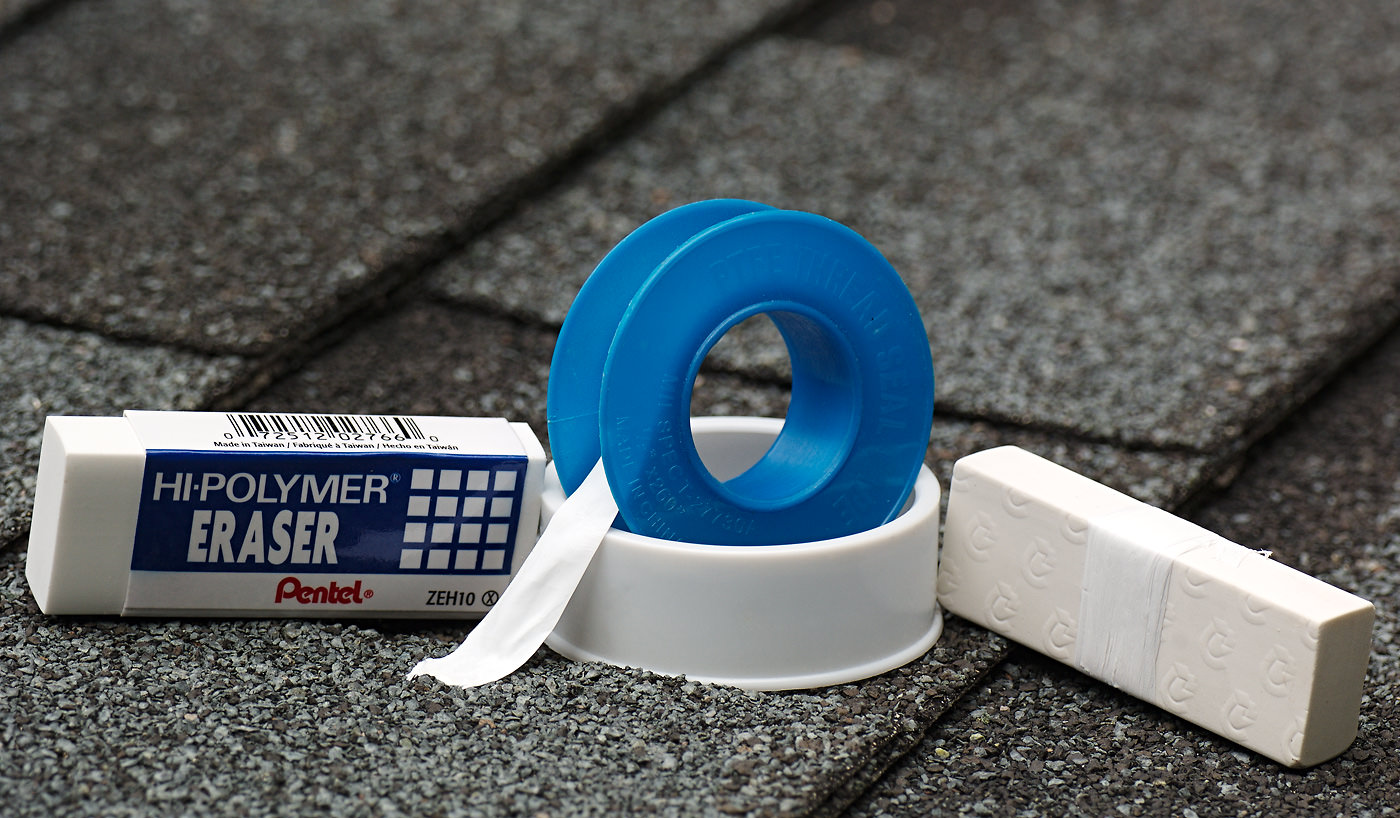
Apparently, PTFE white matte thread seal tape wrapped around a white polymer eraser works well as a white balance reference. Photography Life has an article with examples of its use:
While better than nothing, it does not address color correction at all. The colors you end up with are whatever the profile you're using produces. The profiles used by some software for some cameras are clearly inaccurate.
Some people have made DIY clones of color charts using color swatches. (I reference these particular examples because they specify the exact swatches used to create the charts.)
Gretag MacBeth clone using Pantone swatches.
Instructables: DIY Color CheckerSpyderCheckr clone using Behr paint swatches ("Poverty Checker")
YouTube: How to make a FREE COLOR CORRECTION chart
While this approach is superior to using white balance alone, absolute color accuracy is not ensured because few, if any, of the swatches are exact matches for the original charts. For instance, when using the Poverty Checker against SpyderCheckr reference data, the result is more saturated than expected. This occurs because the patches of the SpyderCheckr are highly saturated and the grayscale patches have a blue/cyan tint.
DIY charts used with commercial reference data can still be used to ensure relative color consistency across multiple cameras and lighting conditions.


To improve the accuracy of DIY charts, open-source software (Argyll, DCamProf) can be used with swatch-specific color data to generate camera profiles. Target colors and ΔE color difference can be searched at Encycolorpedia.
Even better would be to measure the color of the swatches with a tristimulus colorimeter, color analyzer, color difference meter, spectrophotometer, etc. These devices usually cost a few times more than the charts in question, but may be considered to have paid for themselves if they are used to create multiple charts. They can also be used to profile printers and scanners.
Originally by user75526. Source · Licensed CC BY-SA 4.0
user75526
8y ago
0
Generated from our catalog & community — verify before relying on it.
For a rough reference, everyday items can help with white balance more than true color correction.
A neutral white or gray target is the most useful. Common suggestions include a good-quality white sheet of paper, or a DIY white-balance target such as PTFE white thread-seal tape wrapped around a white eraser. These can give you a usable neutral reference in the scene.
But common objects are poor substitutes for a real color chart. A $1 bill may only tell you what that bill looks like under that light—it is not a standardized green reference for accurate correction. The same problem applies to most household objects: their color varies by material, age, printing, and lighting.
If you need actual color reference, use a standardized chart such as a Kodak Q-13 or a ColorChecker-style card. DIY versions made from known swatches or paint samples can be better than random objects, because at least you know what patches you intended to include.
So: yes, carry a neutral white/gray item for rough white balance; no, don’t expect everyday colored objects to provide reliable color calibration.
Recommended products
UniqueBot
AI8y ago
Your Answer
Related Questions
Can you calibrate a monitor using a DSLR and a color chart instead of a colorimeter?
How can I keep white balance consistent when photographing products of different colors?
Can a phone screen be used as a gray or white card for custom white balance?
How can I photograph very subtle color differences accurately in lab samples?
How can I roughly compare the CRI of unknown LED lights with simple DIY tests?