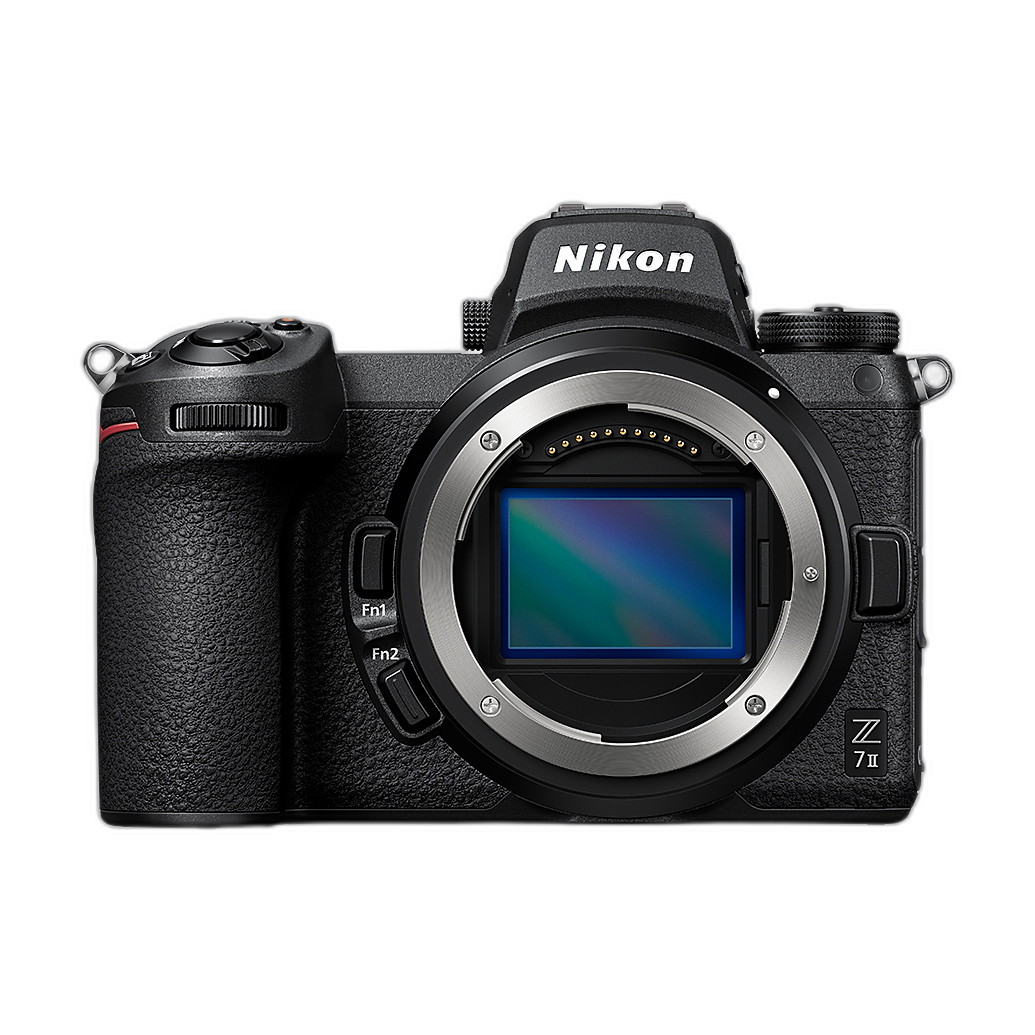
When Nikon introduced the Z mount in 2018, it marked one of the most consequential transitions in the company’s modern history. For decades, Nikon had been defined by the F mount and the DSLR era that grew around it. But on August 23, 2018, the company formally launched a new full-frame mirrorless system built around a fresh mount, a new family of lenses, and a roadmap intended to carry Nikon into the next generation of imaging. The first bodies, the Nikon Z7 and Z6, did more than begin a product line. They established the foundation for what would become a broad system spanning entry-level full-frame models, high-resolution flagships, speed-oriented professional cameras, APS-C options, and specialized video-focused tools.
Seen in hindsight, the Nikon Z story is not just a list of camera announcements. It is a record of how Nikon evolved its mirrorless strategy: first proving the concept, then refining autofocus and handling, then expanding downward for accessibility and upward for professional demands, and finally building out the mount into a complete system. This release-history hub follows that progression chronologically, helping orient readers to where each Z-mount camera fits in the lineage and how the system matured from its 2018 debut to the present day.
The Beginning of Nikon Z in 2018
Nikon’s Z mount debuted as the company’s new mirrorless platform, and its launch immediately signaled a long-term commitment rather than a tentative experiment. The headline was simple: a new mount, Nikon Z, and two inaugural full-frame cameras, the Z7 and Z6. These first bodies established the visual language, ergonomics, and performance expectations of the system.
From the outset, the Z line was clearly aimed at serious photographers. Nikon did not begin with a stripped-down consumer body. Instead, it launched with two enthusiast and professional-oriented models that paralleled familiar DSLR categories. The Z7 was the higher-resolution option, designed for photographers who prioritized detail, landscape work, commercial imaging, and studio applications. The Z6 was the more all-around body, positioned as the versatile choice for hybrid creators, event photographers, and users who wanted strong still and video capabilities in one package.
As first-generation products, the Z7 and Z6 had an outsized role. They had to demonstrate that Nikon could translate its core strengths into mirrorless form: image quality, handling, lens design, and dependability. At the same time, they needed to introduce users to the advantages of the new system, especially the Nikon Z mount itself and the lens possibilities it created. For Nikon shooters weighing the move from DSLR to mirrorless, these two cameras were not just new products. They were a statement of direction.
Z7 and Z6: The Founding Bodies
The Nikon Z7 and Nikon Z6 are properly regarded as the first chapter of the entire Z-mount story. Their importance lies in what they established. They set the body design philosophy for the line: substantial handgrips, a control layout familiar to Nikon users, integrated electronic viewfinders, and weather-conscious construction intended to reassure photographers accustomed to robust DSLR bodies.
They also defined the naming logic that would shape early expectations around the system. In broad historical terms, the Z7 was the high-resolution body and the Z6 the more general-purpose model. This pairing mirrored a strategy Nikon users could quickly understand. Rather than flooding the market with many variants at once, Nikon began with a concise lineup that communicated purpose clearly.
Just as significantly, the launch of these cameras announced the Z system as a mount-first ecosystem. The bodies mattered, but so did the lenses. A new mirrorless line could only succeed if Nikon built confidence in the optics roadmap behind it. The Z7 and Z6 therefore functioned not as isolated cameras but as anchors for a system intended to grow over years.
Early System Expansion and Refinement
Once the initial Z7 and Z6 established the platform, Nikon’s next task was to widen the appeal of the system and refine it in response to real-world use. That is a common arc in camera history: the first generation proves the platform, and the next waves make it more practical, more accessible, and more complete. Nikon followed that pattern in the years immediately after launch.
Chronologically, the early expansion of Nikon Z can be understood in three broad directions. First, Nikon sought to make the system accessible to more users, including photographers who wanted an entry point into full-frame mirrorless without starting at the top of the range. Second, it broadened the mount beyond full frame, using APS-C bodies to attract enthusiasts, travelers, and newer photographers. Third, it iterated on the original concepts with updated versions that improved operation and helped mature the platform.
Z5: A More Accessible Full-Frame Entry
One of the most important steps in the Z lineage was Nikon’s introduction of the Z5. Historically, the significance of the Z5 lies less in headline-grabbing novelty than in what it represented for the market. Nikon needed a full-frame Z camera that lowered the barrier to entry. The Z5 filled that role, giving photographers a more affordable way into the Nikon Z system while preserving the appeal of full-frame image quality and lens compatibility within the mount.
In system history, cameras like the Z5 are often crucial because they turn a promising platform into a sustainable one. A mount cannot thrive on premium bodies alone. It needs a broad user base, and that requires approachable models. The Z5 helped Nikon move the Z system from an early-adopter phase toward wider adoption.
Z50 and the Move to APS-C
Nikon’s expansion of the Z mount into APS-C was another pivotal moment. The Z50 brought the Z system to users who wanted a smaller, lighter camera and a more accessible price point while remaining within the same mount family. This mattered strategically. It meant Nikon Z was no longer only a full-frame mirrorless system. It was becoming a multi-tier ecosystem.
The Z50’s role in the release history is easy to appreciate. It created a bridge for photographers moving up from smartphones, compact cameras, or older entry-level interchangeable-lens systems, and it gave existing Nikon users a more compact companion body within the Z lineup. In broader historical terms, the Z50 showed Nikon understood that mirrorless success depended on breadth as much as on top-end prestige.
Z fc: Heritage Design Meets Modern Mirrorless
Among Nikon’s most distinctive Z releases, the Z fc stands out for giving the system a strong heritage-inspired branch. Nikon has one of the richest design legacies in camera history, and the Z fc tapped into that visual tradition while remaining a modern Z-mount camera underneath. Cameras like this do more than diversify a lineup; they expand the emotional reach of a system.
Historically, the Z fc demonstrated that Nikon was willing to let the Z line carry multiple identities. It could be professional and utilitarian. It could be compact and approachable. It could also be nostalgic and style-conscious without abandoning contemporary functionality. That flexibility helped broaden the cultural appeal of the Z system.
Z30: A Simpler Creator-Oriented APS-C Option
As the mirrorless market evolved, creators increasingly expected cameras designed not only for traditional photography but also for video, vlogging, and social-media production. In the Z release history, the Z30 is important because it reflects Nikon’s effort to address that audience more directly. It expanded the APS-C branch further and gave the system a body aimed at users who valued simplicity, compactness, and creator-friendly operation.
The Z30’s place in the chronology underscores a wider truth about the Z system: Nikon was no longer building only around conventional enthusiast categories. It was responding to changing creator habits and acknowledging that the future of interchangeable-lens cameras would be increasingly hybrid.
The Second Generation: Z6II and Z7II
One of the clearest signs that a new camera system is maturing is the arrival of second-generation core models. With the Z6II and Z7II, Nikon revisited the original full-frame pair and refined the concept. Historically, these cameras represent Nikon’s transition from launch-era experimentation to platform consolidation.
The significance of the Z6II and Z7II was not that they redefined the system from scratch. Rather, they strengthened it. In many camera families, second-generation bodies are where manufacturers absorb feedback from working photographers and committed enthusiasts, then improve responsiveness, usability, and confidence in the platform. That was the role these cameras played in the Nikon Z lineage.
The Z6II continued the all-around mission of the original Z6, while the Z7II maintained the high-resolution emphasis established by the Z7. In release-history terms, they affirmed that Nikon’s initial segmentation still made sense. But they also suggested that Nikon understood the importance of iteration. A successful mirrorless system is not built only on bold first launches. It is built on listening, refining, and making the cameras feel more complete over time.
The Professional Leap: Z9
If the Z7 and Z6 were the foundation of the Nikon Z era, the Z9 was the camera that announced the system had fully arrived at the top tier of professional imaging. In the chronology of Nikon Z, few releases carry as much symbolic weight. The Z9 was not simply another body in the lineup. It was a flagship, intended to stand at the summit of Nikon’s mirrorless ambitions.
Historically, flagship cameras have always mattered disproportionately. They are statements of engineering confidence. They shape brand perception. They reassure professionals that a system is ready for the most demanding assignments. In the Z system, the Z9 served exactly that purpose. It signaled that Nikon mirrorless was not merely an alternative to DSLR for enthusiasts. It was now the platform on which Nikon would compete at the highest professional level.
The Z9 also marked an important stage in the broader market shift from DSLR to mirrorless. By the time of its arrival, the question was no longer whether mirrorless could be taken seriously by professionals. The question was how completely flagship mirrorless cameras would replace traditional professional DSLRs. The Z9 answered that question in Nikon’s lineup with unusual clarity. It made the Z mount impossible to view as provisional.
High Resolution Refined: Z8
The Z8 occupies a crucial position in Nikon’s release history because it translated much of the excitement and authority surrounding the flagship tier into a more compact body style. In historical perspective, the Z8 can be seen as one of the cameras that helped democratize top-end Z-system performance for a wider group of advanced users.
That made it a particularly important bridge model. Not every photographer wants or needs the largest flagship form factor, but many do want flagship-level capability. The Z8 addressed that demand and, in doing so, became one of the key cameras for understanding the maturity of the Z system. Nikon was no longer just building isolated category leaders. It was distributing its most advanced mirrorless thinking across the lineup more effectively.
Release histories often hinge on these moments of trickle-down evolution. First, the flagship proves the concept. Then a later model brings that philosophy to a broader audience. The Z8 fits that pattern neatly in the Nikon Z chronology.
Full-Frame Accessibility Revisited: Zf
With the Zf, Nikon extended its heritage-inspired design language into full frame, creating a camera that connected the retro appeal of the Z fc with the broader ambitions of the full-frame Z system. Its importance in the historical arc lies in how it fused brand legacy and current mirrorless development.
Nikon has long benefited from a recognizable visual and mechanical heritage, and the Zf made that lineage central to its appeal. Yet in the context of the Z mount, the camera also showed that heritage design was not a side experiment. It could sit meaningfully within the core full-frame family. That made the Zf more than a stylistic variation. It represented another way Nikon was broadening the identity of the Z system while keeping it rooted in the same mount and ecosystem.
Specialization Within the System: Video and Beyond
As the Nikon Z line matured, the system naturally developed more specialization. This is what mature camera ecosystems tend to do. Once the foundational categories are covered, manufacturers begin addressing more distinct user groups: dedicated video creators, hybrid professionals, style-conscious enthusiasts, entry-level buyers, and users who want top-end performance in more than one form factor.
Within Nikon Z history, this phase is important because it shows the platform moving beyond simple catch-up. Early on, any new mirrorless system must answer basic questions: Is it viable? Are there enough lenses? Does it cover the core needs of photographers? Later, the questions become more nuanced: Which Z camera is best for travel? Which for weddings? Which for video production? Which for sports? Which for a first full-frame body? A release-history hub is useful precisely because Nikon Z evolved to the point where those distinctions now matter.
That growing specialization also reflects confidence in the Nikon Z mount itself. The system’s identity became broad enough that Nikon could introduce cameras with distinct personalities without diluting the platform. Instead, those cameras made the mount more appealing to more kinds of users.
Understanding the Nikon Z Lineage by Category
For readers trying to orient themselves within the release history, it can help to think of Nikon Z not only chronologically but by family branches.
The Original Full-Frame Core
The Z7 and Z6 formed the original full-frame branch, creating the basic high-resolution-versus-all-around distinction. The Z7II and Z6II then refined that same division, reinforcing Nikon’s commitment to a two-track core lineup.
The Accessible Full-Frame Path
The Z5 expanded the system downward by offering a more approachable entry into full-frame Z. Later, cameras like the Zf showed that accessibility in the lineup did not have to mean plainness; Nikon could also make full-frame Z appealing through design character and different handling philosophies.
The APS-C Branch
The Z50 established Nikon Z DX as the smaller and often more approachable side of the system. The Z fc diversified that branch with heritage styling, while the Z30 emphasized creator-oriented simplicity. Together, these cameras ensured that the Nikon Z mount would not be restricted to one sensor format or one kind of buyer.
The Professional and Advanced Performance Tier
The Z9 redefined the top end of Nikon mirrorless, and the Z8 extended that high-performance philosophy into a more compact format. In the historical arc, these cameras represent the moment Nikon Z became unquestionably mature at the professional level.
What Each Generation Advanced
Looking back across the Nikon Z release history, each phase of the system’s growth advanced the platform in a distinct way.
The 2018 launch generation established the mount and proved Nikon’s seriousness about mirrorless full frame. The Z7 and Z6 created the foundation.
The early expansion period broadened the user base. Cameras such as the Z5 and Z50 made the system more accessible, while the Z fc and Z30 diversified its appeal.
The second-generation core models refined the original concept. The Z6II and Z7II represented Nikon’s response to field experience and user expectations.
The flagship and high-performance era elevated the system’s prestige and professional credibility. The Z9 was a turning point, while the Z8 spread that momentum into a more versatile body style.
The identity-expansion phase showed that the Z system could accommodate multiple design languages and creator priorities. Cameras like the Zf demonstrated that the mount had become a broad, confident platform rather than a narrowly defined line.
Why the Nikon Z Launch Mattered Historically
It is worth returning to the significance of August 23, 2018, because that date is the hinge on which this entire story turns. Nikon’s launch of the Z mount was not simply a product refresh. It was the introduction of a new long-term platform in one of the most competitive transitions the camera industry had faced in years. The mirrorless shift was already well underway, and Nikon needed a system capable of carrying its reputation forward.
By launching with the Z7 and Z6, Nikon made clear that it intended to compete seriously from day one. Those cameras may now be seen as the beginning of a much longer lineage, but at the time they carried the burden of proving the company could build a compelling mirrorless future. Everything that followed, from accessible APS-C bodies to flagship professional tools, rests on that first step.
From an archival standpoint, that makes the initial Z7/Z6 release especially important. It was the moment Nikon’s next chapter began.
The Nikon Z System as an Ongoing Story
No release-history hub is ever truly finished, because camera systems continue to evolve. New bodies shift the balance of the lineup. Older models take on new meaning in retrospect. Entry-level cameras become gateways to advanced work. Flagships influence features throughout the range. The Nikon Z system has already gone through several such stages since 2018, and its chronology reveals a mount that has steadily become more complete and more confident.
For photographers looking back historically, the line from the first Z7 and Z6 to today’s broader Nikon Z family is remarkably coherent. Nikon began with a strong full-frame statement, expanded thoughtfully into different price points and formats, iterated on its core models, and then established undeniable professional authority with later high-end bodies. Along the way, it allowed the system to express more than one identity, balancing utility, heritage, portability, and specialization.
That is what makes the Nikon Z release history worth studying. It is not just a timeline of product launches. It is the story of how Nikon built a modern mirrorless system around the Nikon Z mount and turned a bold 2018 debut into a lasting platform.
If you are exploring Nikon Z cameras, researching the system’s development, or deciding where to start within the lineup, Unique Photo is a great place to buy Nikon gear or learn more about the Nikon Z system and its history.