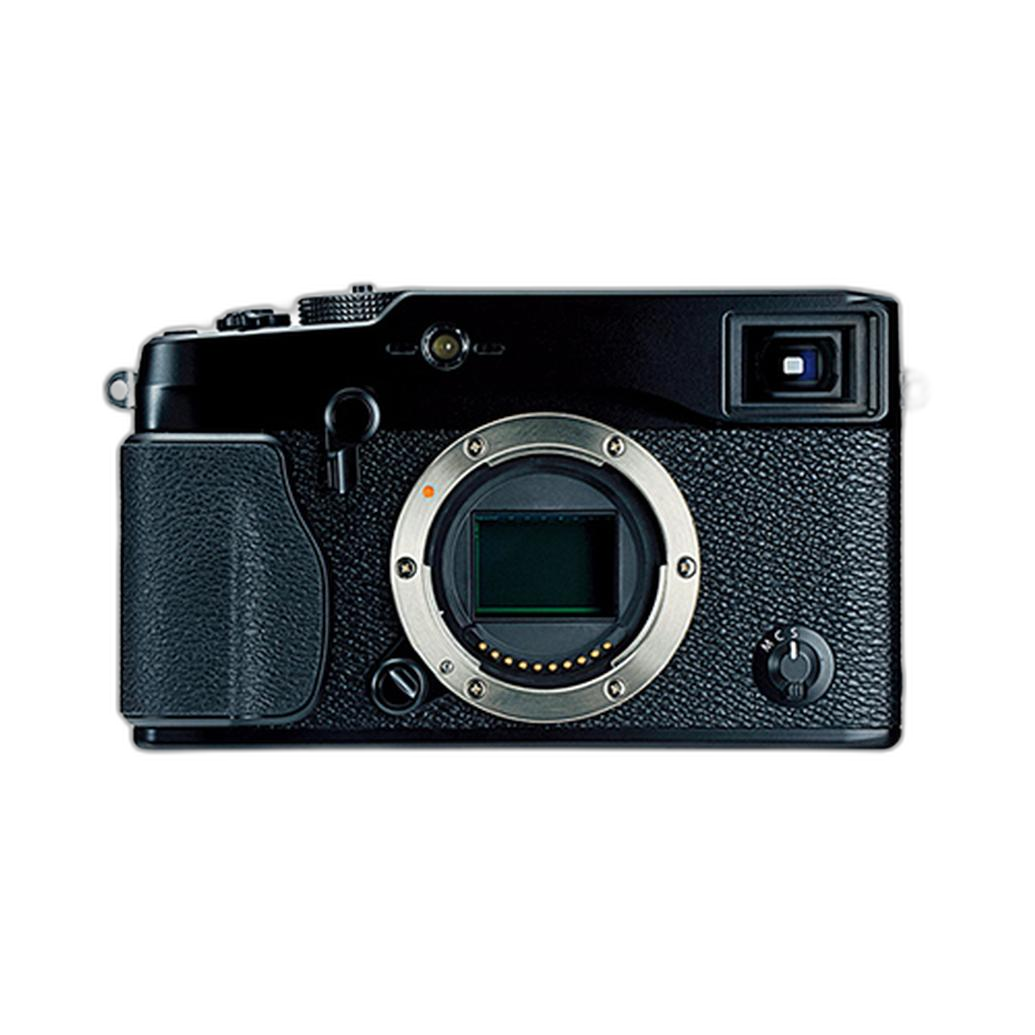
When Fujifilm introduced the X-Pro1 in early 2012, it did more than launch a new interchangeable-lens camera. It established the foundation for what would become one of the most distinctive mirrorless ecosystems in modern photography: the Fujifilm X Series built around the Fujifilm X mount. At a moment when photographers were still asking whether mirrorless cameras could truly satisfy serious enthusiasts and professionals, Fujifilm entered the conversation with a clear point of view—one rooted in tactile controls, compact design, strong color science, and a sensor strategy that deliberately diverged from the mainstream.
This archival hub traces the release history of every Fujifilm X-mount camera family from the debut of the X-Pro1 in 2012 through the generations that followed. Rather than treating the line as a single sequence, it is best understood as a branching system: rangefinder-style flagships, DSLR-style all-rounders, compact midrange bodies, affordable entry models, and specialist high-speed or cinema-oriented branches. Together, these cameras chart Fujifilm’s steady refinement of the X system and explain why the mount has remained central to the company’s APS-C strategy.
The Beginning of Fujifilm X Mount
The Fujifilm X mount made its debut with the Fujifilm X-Pro1, announced in 2012. That camera is the essential starting point for any release history of the system, because it set many of the themes that Fujifilm would continue to revisit: premium construction, a photographic interface shaped by dedicated dials, compact bodies paired with high-quality primes, and an identity aimed at photographers who valued both image quality and shooting experience.
From the outset, Fujifilm positioned X mount as a serious system rather than an experimental side branch. The company backed the first body with native lenses and a strong aesthetic philosophy. In historical terms, that matters. Many early mirrorless systems were still defining themselves in broad, practical terms—smaller than DSLR, more convenient than DSLR, and so on. Fujifilm’s message was more specific. The X system was presented as a photographer’s tool, and that distinction helped it stand apart.
The X-Pro1’s release also mattered because it launched the system at a time when APS-C was still a major battleground. Full frame remained aspirational for many users, but APS-C offered clear advantages in cost, lens size, and portability. Fujifilm recognized that if APS-C cameras were going to compete at the enthusiast and professional levels, they could not simply mimic entry-level DSLR thinking in a smaller shell. They had to feel deliberate, premium, and coherent. The X mount line grew directly from that idea.
The Founding Generation: X-Pro1 and the Early System Era
X-Pro1 (2012)
The X-Pro1 stands as the first X-mount body and the symbolic cornerstone of the system. Its rangefinder-inspired shape immediately distinguished it from centrally-viewfinder mirrorless cameras and DSLR-style bodies. This was not just an industrial-design exercise. It reflected Fujifilm’s attempt to build a camera that appealed to photographers steeped in documentary, street, and travel traditions.
Historically, the X-Pro1’s significance goes beyond being first. It announced Fujifilm’s long-term confidence in APS-C and in a premium mirrorless lens mount. In an era when many photographers still judged serious cameras by DSLR standards, the X-Pro1 made the argument that handling, lens character, and image quality could be reimagined rather than simply miniaturized.
As the original X-mount body, the X-Pro1 also established the system’s chronology: everything that followed—whether the compact X-E line, the versatile X-T line, or the accessible X-A and X-M branches—can be traced back to the architecture and ambitions introduced here.
The Importance of the Early X Identity
In looking back at the first years of the system, one of the most important developments was not a single specification but the formation of a recognizable Fujifilm X identity. Early X cameras quickly became associated with traditional controls, strong JPEG output, and a shooting experience designed to feel photographic rather than purely electronic. That identity helped create user loyalty and made later releases easier to understand. Buyers knew that Fujifilm was not simply refreshing models; it was building a family with a shared philosophy.
The Rangefinder-Style Branch: X-Pro and X-E
One of the clearest ways to understand Fujifilm’s release history is to look at the line by form factor and intended user. The rangefinder-style branch includes the flagship X-Pro series and the more compact X-E series. These models kept the offset finder aesthetic that linked them, visually and ergonomically, to the original X-Pro1.
X-Pro Series: The Flagship Heritage Line
The X-Pro series remained the spiritual heart of the X system. As successors followed the X-Pro1, the line represented Fujifilm’s most direct continuation of the original concept: a premium interchangeable-lens camera for photographers who valued deliberate composition, tactile operation, and a body shape particularly well suited to compact prime lenses.
Each X-Pro generation can be understood as a refinement rather than a reinvention. That is historically consistent with Fujifilm’s broader approach. Rather than discarding the line’s identity, the company generally improved responsiveness, autofocus performance, sensor technology, processor speed, and operational polish while preserving the central appeal of the original camera. In practical terms, the X-Pro line became the place where Fujifilm demonstrated how far the founding concept could be modernized without losing its character.
For collectors and historians, the X-Pro branch is especially important because it provides the clearest continuity from 2012 forward. If the X mount began as a proposition about what mirrorless photography could feel like, the X-Pro series has served as the long-running proof of that proposition.
X-E Series: A More Compact Rangefinder Alternative
The X-E line emerged as a more accessible and compact expression of the same offset-viewfinder philosophy. Where the X-Pro line carried flagship symbolism, the X-E series often acted as a bridge for photographers who wanted the rangefinder-style handling of the system in a smaller or more affordable package.
This branch played a crucial role in broadening the appeal of X mount. Not every user wanted or needed the flagship body, but many were attracted to the same shooting stance, design language, and lens pairing possibilities. The X-E cameras helped bring the Fujifilm look and feel to a wider audience without abandoning the system’s core identity.
Chronologically, the X-E line also illustrates Fujifilm’s release strategy well. The company was not building a single ladder where every user moved upward toward one ultimate model. Instead, it created parallel families that served different priorities. For some photographers, the X-E series was not a stepping stone away from the X-Pro concept—it was the ideal endpoint.
The SLR-Style Expansion: X-T Becomes the Mainstream Core
If the X-Pro line established the system’s soul, the X-T series became its broadest center of gravity. With a central viewfinder hump and an SLR-style silhouette, X-T models expanded the appeal of X mount for photographers coming from DSLR systems and for users who preferred a more symmetrical body layout.
Why the X-T Line Mattered
The importance of the X-T series in Fujifilm’s release history cannot be overstated. It gave the X system a body style that many photographers found instantly familiar while retaining the tactile control philosophy that set Fujifilm apart. This made the X mount more approachable for event, portrait, travel, and general-purpose shooters who liked the idea of mirrorless but wanted handling that felt more conventionally balanced.
As generations progressed, the X-T family increasingly came to represent the practical center of the system. While X-Pro remained iconic and specialized lines emerged around speed or compactness, the X-T branch often served as the all-around answer: the body family many users would first consider when entering the system or upgrading within it.
X-T Flagship and Midrange Layers
Within the X-T branch, Fujifilm eventually developed both flagship and smaller-body interpretations. This was a smart evolutionary move. It allowed the company to preserve the central-viewfinder concept across multiple price points and feature tiers. In release-history terms, it shows Fujifilm maturing from a young system with a handful of ideas into a well-structured ecosystem with internal segmentation.
Each generation typically moved the line forward through better autofocus, faster shooting, improved video credibility, and greater overall refinement. These changes reflected wider shifts in the camera industry. Mirrorless cameras were no longer merely alternatives to DSLRs; they were becoming primary tools. The X-T line was where Fujifilm most visibly answered that transition.
The Compact and Accessible Branches: X-M and X-A
No release-history hub would be complete without acknowledging the lines that made X mount more accessible. The X-M and X-A families helped Fujifilm reach photographers who wanted interchangeable-lens flexibility and Fujifilm styling without necessarily starting at the premium end of the system.
X-M Series: Compact Simplicity
The X-M line represented one of Fujifilm’s efforts to distill the X system into a more compact, streamlined form. Historically, this mattered because early mirrorless growth depended not only on enthusiasts but also on users moving up from compact cameras and seeking something small, modern, and capable.
In the structure of the X mount family, X-M models served as lighter-weight companions or lower-cost entry points. They broadened the system’s reach and showed that Fujifilm understood the importance of flexibility in body design. Not every X-mount user wanted a flagship, and not every first-time buyer was looking for the most advanced control layout.
X-A Series: Entry-Level Access to the Mount
The X-A line further extended the reach of the X mount. These bodies were significant less for redefining the system than for expanding it. Their role was straightforward and important: give newer photographers, casual users, and budget-conscious buyers a simpler way into Fujifilm’s interchangeable-lens world.
Historically, that accessibility helped the ecosystem. Lens mounts do not thrive on prestige alone. They need a broad installed base, and they benefit when entry-level users can grow into more advanced bodies without replacing lenses. The X-A series contributed to that growth by lowering the barrier to entry while keeping users within the Fujifilm orbit.
The Specialist High-Performance Branch: X-H
As the mirrorless market matured and user expectations rose, Fujifilm also developed more specialized high-performance bodies. The X-H series marked one of the clearest signs that the company intended X mount to serve not only enthusiasts and traditional still photographers, but also demanding hybrid and professional users.
A Different Kind of X Camera
The X-H line stands apart historically because it signaled a more modern, performance-oriented interpretation of the Fujifilm philosophy. Where the earliest X cameras often emphasized classic photographic feel, the X-H series suggested a willingness to prioritize speed, power, ergonomics, and broader multimedia capability where needed.
This was not a break from the system’s roots so much as an expansion of them. By the time X-H bodies arrived, the X mount had already proven that it could attract passionate still photographers. The next challenge was to show that the same mount could anchor bodies designed for heavier-duty workflows and more specialized demands.
For release-history purposes, the X-H family is one of the best examples of Fujifilm adapting to a changing market. As the industry increasingly valued advanced autofocus, stabilization, and video capability, Fujifilm responded not by abandoning the X system but by stretching it into new territory.
The Rangefinder-Compact Specialist: X-Pro’s Legacy and the Niche Strength of Character
One of the most fascinating parts of the Fujifilm X release story is that some of its most beloved models were never intended to dominate by volume. The X-Pro line and related rangefinder-style bodies remained important partly because they expressed something increasingly rare in digital camera design: a willingness to embrace character as a product strength.
In many camera systems, progress flattens identity. Bodies become more similar over time as design converges around technical optimization. Fujifilm often resisted that tendency. Its release history shows a repeated effort to preserve distinct lines with clear personalities. The result is that X-mount history is not just a list of upgrades. It is a record of differentiated camera concepts evolving in parallel.
How Fujifilm Advanced the X Series Across Generations
Although individual X-mount families differ in shape and audience, several broad patterns define how the system advanced from generation to generation.
1. Refinement Over Disruption
Fujifilm generally evolved the X Series through steady refinement rather than abrupt redesign. This continuity helped users feel secure investing in the mount. Cameras improved, but the underlying philosophy remained recognizable.
2. Expansion by Use Case
The company did not rely on one master model to satisfy everyone. Instead, it expanded by use case: flagship rangefinder, compact rangefinder, SLR-style generalist, affordable entry model, compact simplified body, and later high-performance specialist. This branching release strategy is one reason the X mount matured so successfully.
3. A Consistent Commitment to APS-C
Historically, Fujifilm’s sustained commitment to APS-C within the X system is one of its defining traits. Rather than treating APS-C as merely an entry point on the way to full frame, Fujifilm treated it as a legitimate format worthy of premium lenses and premium bodies. That strategic consistency shaped every generation of X-mount releases.
4. The Importance of System Thinking
Because the X mount launched with the X-Pro1 as a complete-system concept, later releases benefited from a strong ecosystem logic. Bodies were not isolated products; they were invitations to invest in a lens mount with long-term value. That system thinking helped Fujifilm maintain momentum across many body generations.
Reading the Fujifilm X Timeline as a Buyer or Collector
For today’s reader, the release history of Fujifilm X mount can be approached in several ways. If you are interested in lineage and philosophy, start with the X-Pro1 and follow the rangefinder-style branch. If you want to understand how Fujifilm became a mainstream mirrorless contender, track the rise of the X-T line. If your focus is market expansion, pay attention to X-M and X-A. And if you want to see how the system matured into a serious professional and hybrid platform, examine the arrival of X-H.
Collectors often value the earliest models because they capture the founding identity of the system most vividly. Working photographers may be more interested in the generations where autofocus, speed, and hybrid capability reached new levels. Enthusiasts entering the used market can benefit from understanding which branch best aligns with their style, because Fujifilm’s lines are meaningfully different in feel—not just in feature hierarchy.
Why the X-Pro1 Still Matters in the Full History
Even after many generations and multiple branches, the X-Pro1 remains the key historical reference point because it defined the system’s first principles. It was the first Fujifilm X-mount body, released in 2012, and it established the visual, ergonomic, and philosophical DNA that shaped everything that followed.
In hindsight, its importance becomes even clearer. Launching a new mount is always risky, but launching one with such a distinct identity is riskier still. Fujifilm did not hedge by making the X-Pro1 anonymous. It made the camera unmistakably its own. That confidence gave the X Series a narrative from day one, and a system with a strong narrative is often better positioned to survive technological shifts than one built only on incremental advantages.
The Ongoing Legacy of Fujifilm X Mount
From the X-Pro1 onward, the Fujifilm X Series has been one of the most coherent mirrorless systems in photography. Its release history is not merely a chronology of new bodies. It is the story of a mount that grew by staying recognizable while broadening its reach. The line began with a premium rangefinder-style camera in 2012 and expanded into a family that could serve enthusiasts, travelers, street photographers, portrait shooters, hybrid creators, and professionals.
That coherence is what makes the X-mount story especially compelling in historical terms. Many systems evolve; fewer manage to evolve while preserving a strong sense of self. The Fujifilm X Series did exactly that, and the result is a release history with unusual continuity from its first body to the present day.
If you are exploring the Fujifilm X system, researching its history, or considering which generation best fits your photography, Unique Photo is a great place to buy Fujifilm gear or learn more about the cameras and lenses that define the X mount legacy.