Sony has announced the ZV-E10, a new APS-C mirrorless camera aimed squarely at creators who want the flexibility of interchangeable lenses without stepping away from the streamlined, video-first approach that helped define the company’s vlogging line. Revealed on July 27, 2021, the ZV-E10 brings together a 24.2MP APS-C sensor, 4K video, and the broad Sony E-mount lens ecosystem in a compact body introduced at a $699 launch price.
Historically, the ZV-E10 arrived at an important moment in Sony’s camera strategy. By 2021, the company had already established itself as a major force in hybrid imaging, with successful Alpha mirrorless bodies serving enthusiasts and professionals, while the compact ZV-1 had gained traction with vloggers and online creators. The ZV-E10 effectively bridged those worlds: it offered a larger APS-C sensor and lens interchangeability, but kept its focus on ease of use, self-recording, and creator-friendly operation.
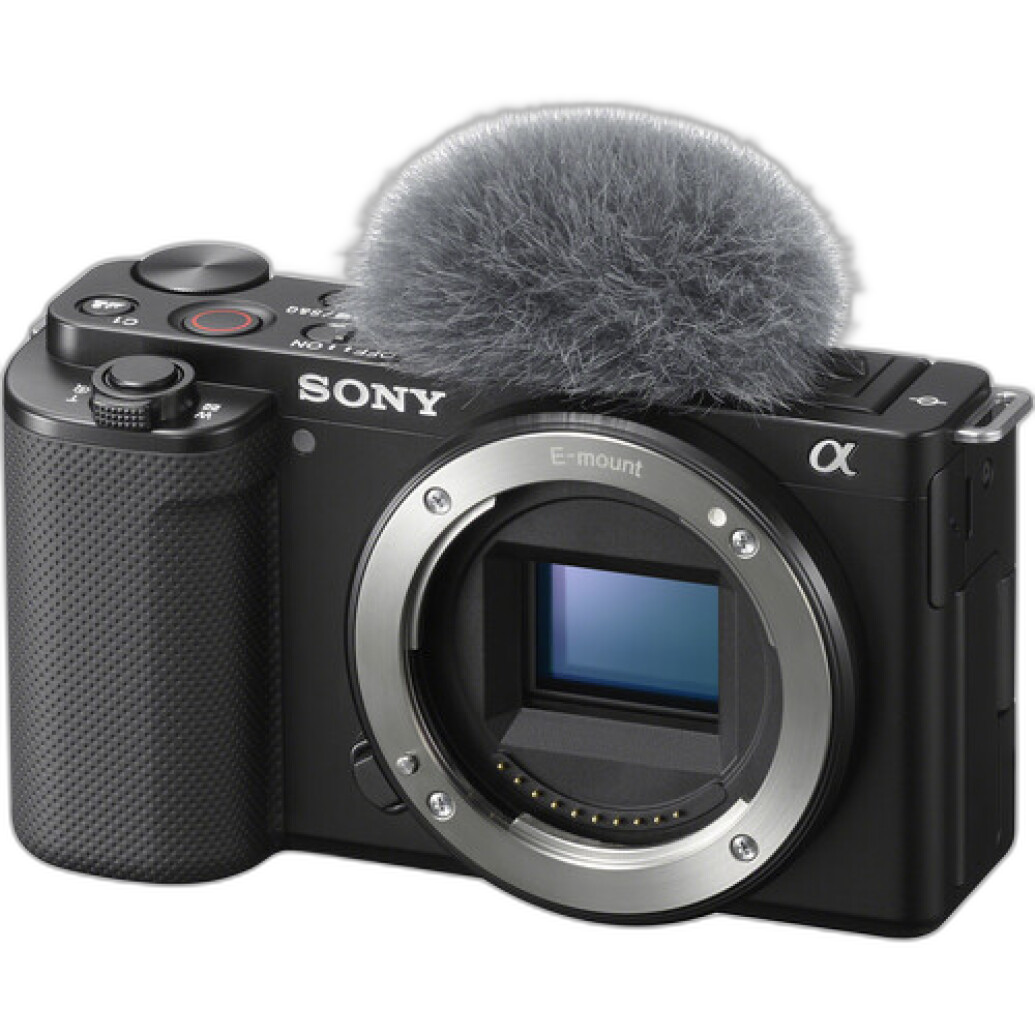
A Creator-Focused Expansion of the ZV Concept
The ZV name had already become associated with simple, direct tools for online video production. With the ZV-E10, Sony extended that concept into the Alpha E-mount system, giving creators access to a far wider range of lenses than a fixed-lens compact could offer. That was the camera’s central promise at launch: not just a vlogging camera, but an entry point into a more expandable visual toolkit.
For first-time buyers, that meant the ability to start with a compact standard zoom or lightweight prime and then grow into more specialized optics over time. For existing Sony users, the ZV-E10 represented a secondary body or a lightweight dedicated video option that could still share lenses across the broader E-mount lineup. In practical terms, this was one of the camera’s biggest historical selling points in 2021: it made the creator upgrade path much clearer.
24.2MP APS-C Sensor and the Appeal of a Larger Format
At the heart of the ZV-E10 is a 24.2-megapixel APS-C sensor. In the context of 2021’s creator market, that specification mattered. Many casual users were coming from smartphones or compact cameras, and APS-C represented a meaningful step up in image quality, low-light performance, and control over depth of field.
The larger sensor format also aligned the ZV-E10 with Sony’s proven APS-C Alpha heritage. While the camera was designed with vlogging in mind, its sensor specification gave it credibility beyond social video alone. It could serve users interested in still photography, livestreaming setups, travel content, and short-form filmmaking. Sony’s decision to pair a creator-oriented interface with an APS-C sensor helped position the camera as more than a niche product; it was a versatile mirrorless model tailored to the changing demands of content creation.
4K Video for the Modern Content Era
By the time of the ZV-E10’s release, 4K video had become a key expectation for new creator cameras, and Sony made sure this model met that standard. Just as important as the headline resolution was what 4K signaled in the market: this was not an entry-level camera in the old sense of the term. Even though the launch price was accessible, the ZV-E10 was clearly designed for users who expected professional-looking output for YouTube, social media, and branded content.
In Sony’s 2021 lineup, the ZV-E10 fit into a growing category of cameras built for hybrid creators rather than traditional photographers alone. The company recognized that many buyers were choosing cameras primarily for video, with stills as a secondary concern, and the ZV-E10’s messaging reflected that shift. It was introduced at a time when creators increasingly needed one camera capable of handling everything from talking-head clips and product demonstrations to travel footage and everyday stills.
Sony E-Mount: The Real Long-Term Advantage
Perhaps the most historically significant aspect of the ZV-E10 announcement was its use of the Sony E mount. Sony’s mirrorless lens ecosystem had matured substantially by 2021, and introducing a creator-focused body into that system gave the ZV-E10 a major advantage over closed or fixed-lens alternatives.
Interchangeable lenses are especially important for creators because they change not just image quality but style. A wide lens can make handheld self-recording easier. A fast prime can create a more cinematic look for interviews or studio segments. A telephoto can support lifestyle and travel shooting. By choosing E mount, Sony ensured the ZV-E10 was not simply a beginner camera with limited room to grow, but a platform camera with access to a wide variety of Sony and third-party options.
That flexibility also made the ZV-E10 historically notable within Sony’s APS-C range. While previous Alpha APS-C bodies had certainly been used for video, the ZV-E10 was among the clearest examples of Sony designing an interchangeable-lens APS-C camera specifically around creator needs from the outset.
Launch Price and Market Position
With a launch price of $699, the ZV-E10 entered the market at a compelling point. It undercut many more advanced hybrid bodies while offering a larger sensor and lens flexibility beyond compact vlogging cameras. In 2021, that pricing was central to Sony’s pitch. The ZV-E10 was affordable enough for aspiring creators and students, yet capable enough to attract serious attention from users who wanted to begin building a system.
That balance between price and expandability was one of the camera’s strongest archival talking points. Sony was not merely releasing another APS-C body; it was aiming at a generation of buyers who saw a camera as both a creative tool and an online business asset. The ZV-E10’s pricing acknowledged that audience directly.
Why the ZV-E10 Mattered in 2021
Looking back at its introduction, the ZV-E10 stands as a marker of where the camera industry was heading in the early 2020s. Traditional distinctions between still cameras and video cameras were continuing to blur, while the creator economy was reshaping product design priorities. Sony responded with a camera that emphasized simplicity, portability, and direct appeal to vloggers, but without abandoning the image quality and lens choice that made mirrorless systems attractive in the first place.
It also reflected Sony’s broader confidence in its ecosystem. A company only introduces a product like the ZV-E10 when it believes its lens lineup, brand identity, and video reputation are strong enough to support a new kind of entry point. In that sense, the ZV-E10 was not just a product launch; it was a strategic statement about how Sony saw the future of interchangeable-lens cameras.
An Accessible Gateway to the Alpha System
For many users in 2021, the ZV-E10 was likely to be their first “serious” camera. That made it especially important as a gateway into the Alpha family. Sony’s challenge was to make that first step feel approachable, and the ZV-E10’s concept did exactly that: creator-first design, APS-C image quality, 4K capability, and the versatility of E-mount lenses in a compact package.
As an archival announcement, the camera remains easy to understand in hindsight. The ZV-E10 was built for a world in which creators wanted better quality than a phone, more flexibility than a compact camera, and less complexity than a traditional enthusiast model. Sony’s 2021 answer was to combine those needs into a single interchangeable-lens body at an aggressive price.
Final Thoughts
The Sony ZV-E10’s 2021 debut marked an important moment in the evolution of creator-focused cameras. With its 24.2MP APS-C sensor, 4K video, Sony E-mount compatibility, and $699 launch price, it was positioned as a practical, expandable, and timely tool for modern content production. For vloggers, streamers, and first-time mirrorless users, it offered a compelling path into Sony’s broader system at a moment when the creator market was becoming impossible for camera makers to ignore.
To learn more about the Sony ZV-E10 and the broader history of Sony camera gear, or to shop current Sony cameras and lenses, visit Unique Photo.