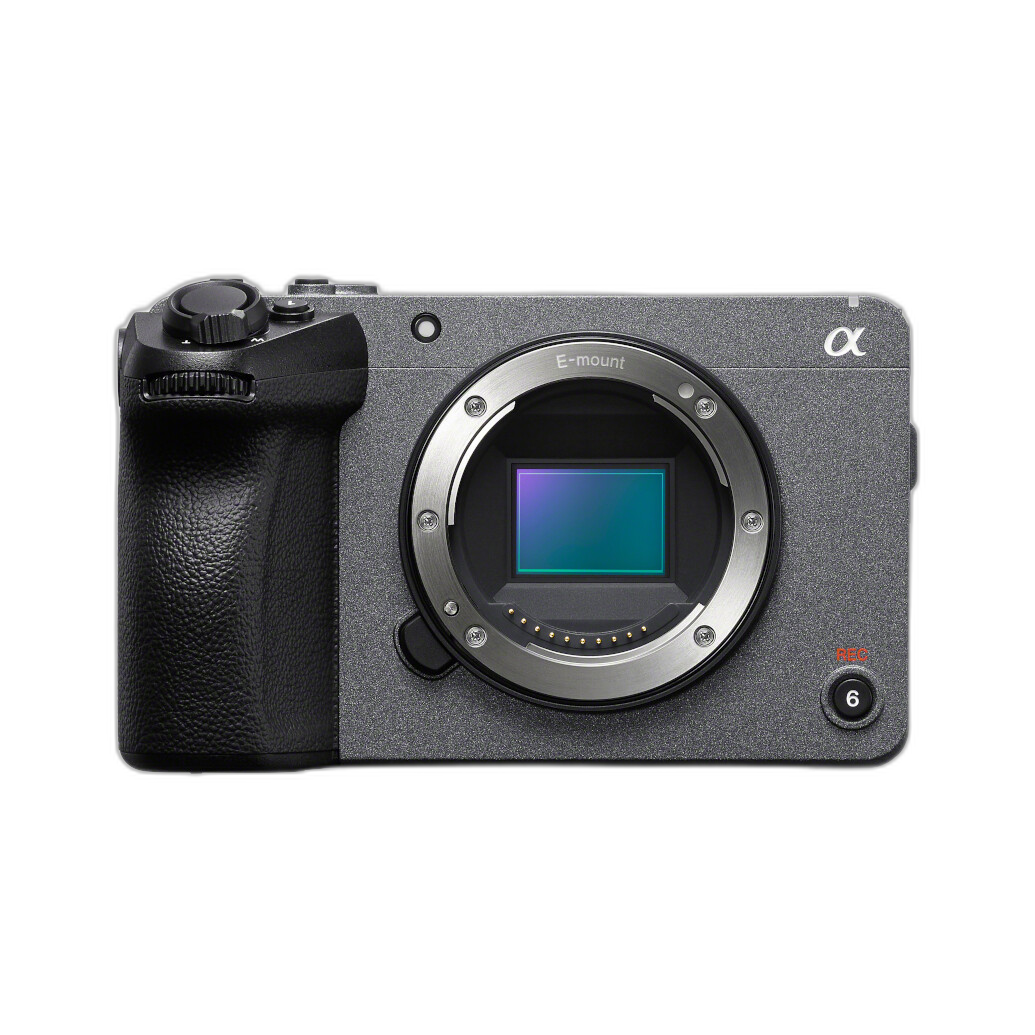
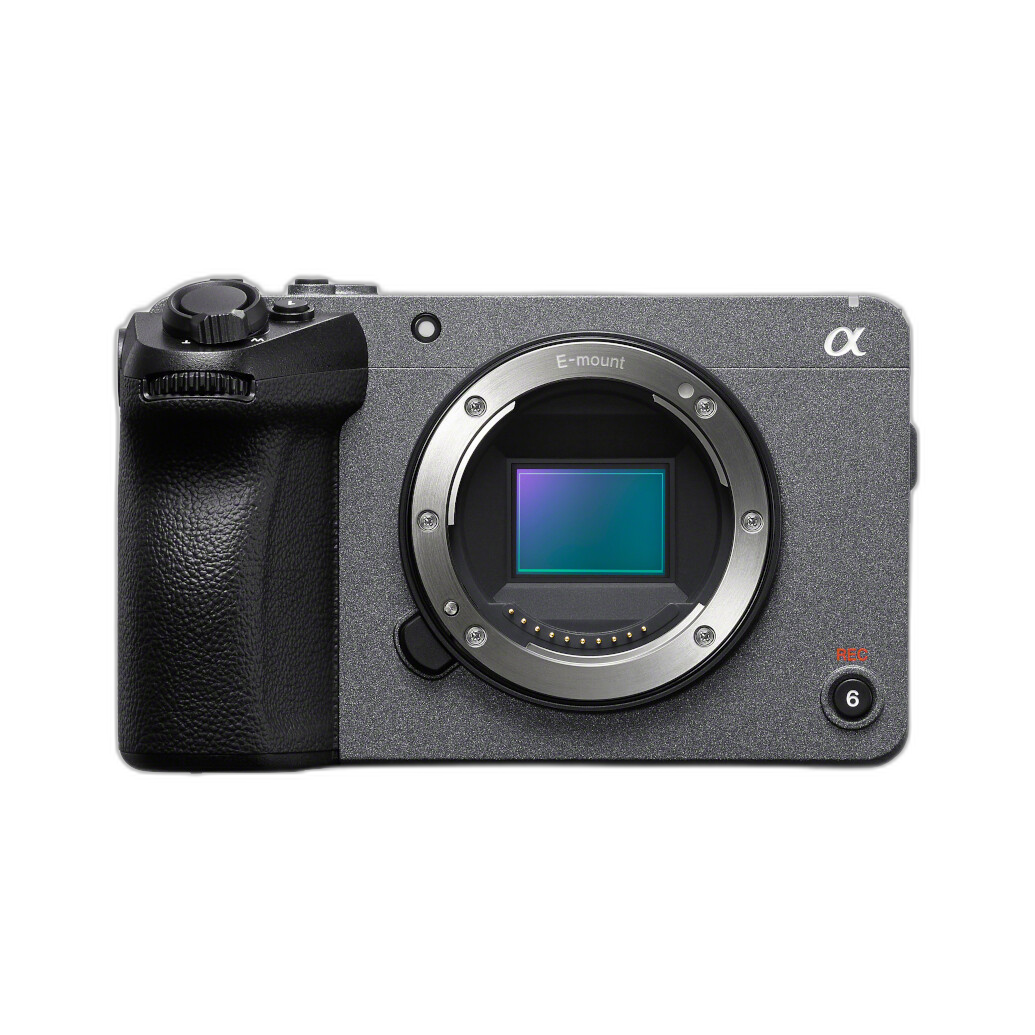
Sony’s Cinema Line grew in a meaningful new direction on September 28, 2022, with the announcement of the Sony FX30. Positioned as a more accessible entry into Sony’s filmmaking-focused family, the FX30 brought the design language and workflow sensibilities of the company’s higher-end cinema models to a camera built around a 26MP APS-C sensor. At a $1,799 launch price, it immediately stood out as one of the most important hybrid-cinema announcements of the year: a compact, E-mount camera aimed squarely at independent filmmakers, content creators, and video-first shooters who wanted Cinema Line handling without the cost of full-frame models.
Seen from the vantage point of its launch period, the FX30 was not just another APS-C camera. It was Sony making a statement that cinema-oriented tools no longer had to begin at full-frame prices. By pairing 4K120 video, a familiar compact body, and direct membership in the company’s Cinema Line, the FX30 arrived as a bridge between enthusiast filmmaking and professional production practice.
A New Entry Point into Sony’s Cinema Line
Before the FX30, Sony’s Cinema Line identity was already well established through cameras that emphasized video ergonomics, color workflow, and production-ready design. What made the FX30 notable at launch was how clearly it inherited that philosophy while targeting a different segment of the market. Rather than presenting APS-C as a compromise, Sony framed it as an opportunity: a more affordable way to gain access to a camera built for serious video work.
The Cinema Line branding mattered here. It signaled that the FX30 was meant to be understood as more than a repackaged stills camera. Even though Sony’s APS-C lineup had already earned strong followings among hybrid shooters, the FX30’s announcement underscored a more filmmaking-specific proposition. The body style, controls, and intent aligned it with dedicated motion production rather than general-purpose photography first.
That distinction helped the FX30 resonate immediately with a wide audience. Small crew productions, documentary creators, students in film programs, online video professionals, and owner-operators all saw in it a camera that promised a serious step up in workflow while keeping cost within reach.
Why the APS-C Sensor Was Central to the Story
The FX30 launched with a 26MP APS-C sensor, and that specification was central to its identity. In 2022, APS-C remained a highly practical format for many filmmakers. It offered a useful balance of image quality, compactness, lens flexibility, and price. Sony’s decision to anchor the FX30 around APS-C meant the company could deliver a lower cost of entry not only in the camera body itself, but often across an entire shooting kit.
For many users, Sony E-mount APS-C systems had long represented one of the most approachable ways into interchangeable-lens video production. The FX30 leveraged that reality. Existing Sony users could look at the announcement and see an easier upgrade path into Cinema Line shooting, especially if they already owned Sony E-mount lenses. New users, meanwhile, could view the camera as a more realistic first step into a serious production ecosystem.
Historically, this was one of the most compelling things about the FX30 announcement. It did not attempt to imitate a full-frame model simply for marketing value. Instead, it embraced APS-C as a format that could serve real production needs while preserving affordability and portability.
4K120 Brings High-End Creative Flexibility
Among the headline specifications at launch, 4K120 video was one of the most eye-catching. In practical terms, this gave filmmakers access to high-resolution slow-motion capture in a compact Cinema Line body at a striking price point. That alone made the FX30 a major announcement for 2022.
Slow motion has long been one of the most expressive tools in modern digital cinematography, used in everything from music videos and commercials to sports coverage, documentaries, and online branded content. By including 4K120, Sony ensured that the FX30 would not be seen merely as an entry-level production camera. It brought a premium creative capability into a much wider market segment.
At the time of release, this specification also reinforced Sony’s broader reputation for pushing advanced video features downward into more accessible models. For filmmakers shopping around the sub-$2,000 range, 4K120 in a camera positioned under the Cinema Line umbrella significantly strengthened the FX30’s appeal.
Design and Workflow: Cinema Thinking in a Compact Body
What gave the FX30 so much archival importance was not just its sensor size or recording capability, but the overall concept behind it. Sony was clearly extending a cinema-first workflow into a compact body category that many creators could realistically carry, rig, and use every day.
That mattered in 2022 because the market had matured. Buyers were no longer asking only for better image quality. They were asking for better tools: cameras that fit gimbals more easily, integrated into small crews, adapted to cage setups, and made sense in fast-moving content pipelines. The FX30’s Cinema Line positioning suggested exactly that kind of thinking. It was not simply about headline specs, but about adopting a more production-oriented identity.
For many prospective buyers at launch, the camera’s appeal likely came from this blend of seriousness and practicality. It looked like a camera that could live on a tripod, a handheld rig, a gimbal, or a compact production build without demanding the budget of a larger cinema package. That versatility helped define the FX30’s place in Sony’s history.
Sony E-Mount and System Strength
The Sony E mount was another key part of the FX30 story. By 2022, E-mount was already one of the most mature and versatile lens ecosystems in the industry, supported by Sony as well as numerous third-party manufacturers. For a cinema-focused APS-C camera, that breadth was especially meaningful.
Lens choice shapes the real-world usefulness of any filmmaking camera, and the FX30 benefited from arriving within a system known for flexibility. Whether users were coming from Sony’s Alpha stills cameras or entering the system fresh, the mount gave the FX30 a strong foundation. This was a practical advantage, not just a spec-sheet one. A more affordable cinema camera only fully succeeds if the surrounding system is equally approachable, and E-mount helped Sony deliver that balance.
Historically, this is one reason the FX30 announcement felt so strategically smart. Sony did not launch it into an uncertain ecosystem. It landed in a mount with depth, familiarity, and room to grow, which gave buyers confidence that the camera could anchor a long-term setup.
A Significant 2022 Announcement
Looking back at the FX30’s release, its importance becomes even clearer. Sony introduced a camera that lowered the cost of entry into its Cinema Line without stripping away the features that gave that line its identity. With a 26MP APS-C sensor, 4K120 recording, Sony E-mount, and a $1,799 launch price, the FX30 was positioned as a serious creative tool rather than a watered-down alternative.
That balance was the announcement’s real achievement. Sony recognized a growing audience of filmmakers who wanted purpose-built video equipment but did not have the budget, need, or lens priorities of full-frame cinema buyers. The FX30 spoke directly to them. It expanded the Cinema Line downward in price while preserving the prestige and ambition of the brand.
Final Thoughts
The Sony FX30 stands as one of the most notable camera announcements of 2022 because it made Cinema Line filmmaking more accessible without losing sight of professional intent. It brought Sony’s cinema-focused design philosophy to an APS-C platform, offered standout 4K120 capability, and hit the market at an attention-grabbing $1,799. For creators seeking a compact but credible production camera, it was easy to see why the FX30 generated such enthusiasm at launch.
For photographers, filmmakers, and content creators interested in the Sony FX30 or the broader Sony ecosystem, Unique Photo is a great place to buy camera gear, compare options, and learn more about the history and evolution of today’s most important imaging tools.