
With the launch of the Sony Alpha A900 on September 9, 2008, Sony made its clearest statement yet that it intended to compete at the highest level of the digital SLR market. Until this moment, full-frame DSLRs were largely the territory of a few entrenched players, and the A900 arrived as an ambitious, attention-grabbing entry: a 24.6-megapixel full-frame CMOS camera with in-body image stabilization, the Sony A mount, and a launch price of $2,999. For photographers following Sony's rise after its takeover of Konica Minolta's camera assets, the A900 represented not just a new camera, but a declaration of long-term intent.
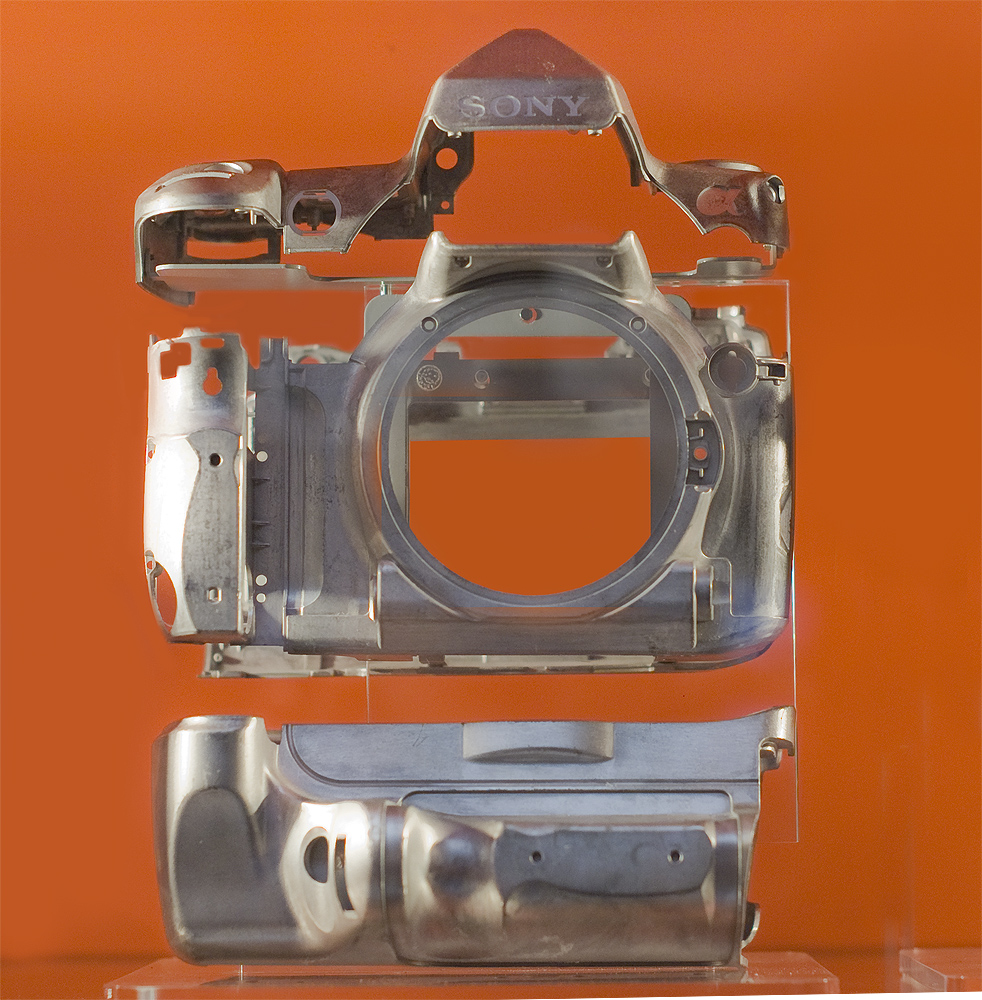
Sony Enters the Full-Frame Arena
By 2008, Sony had already established the Alpha system as a serious DSLR platform, but the release of the A900 pushed the brand into a new category. A full-frame sensor carried symbolic and practical weight. It signaled a camera aimed at advanced enthusiasts and professionals who wanted the field of view, image quality potential, and system prestige associated with the 35mm format.
The A900's arrival was especially significant because Sony was still relatively new to the interchangeable-lens camera business under its own name. The Alpha line had inherited the legacy of Minolta's autofocus SLR system, including the A mount, but the A900 was the sort of product that could shape perceptions of the entire system. It had to reassure existing A-mount users while attracting photographers who might otherwise have looked to more established professional platforms.
A 24.6MP Full-Frame CMOS Sensor Built to Impress
The headline feature of the Sony Alpha A900 was its 24.6MP full-frame CMOS sensor. In 2008, that resolution was a major talking point. It placed the A900 among the highest-resolution DSLRs available at launch and made it immediately appealing to photographers interested in landscape work, studio imaging, architecture, commercial photography, and any application where detail capture mattered.
At a time when megapixel counts still carried strong marketing power, Sony's choice to debut its first full-frame DSLR with such a high-resolution sensor was strategic. The company was not entering the category quietly. It was positioning the A900 as a camera that could stand out on specification alone, while also leveraging Sony's broader reputation in sensor technology.
For photographers in 2008, a 24.6MP full-frame body suggested room for large prints, generous cropping flexibility, and a level of image detail that would have been difficult to ignore in side-by-side comparisons. The A900 therefore arrived not merely as Sony's first full-frame camera, but as one of the era's most attention-worthy DSLR announcements.
In-Body Stabilization on a Full-Frame DSLR
Another defining element of the A900 was its in-body image stabilization. This feature carried special significance because it extended stabilization benefits across compatible lenses without requiring optical stabilization to be built into each lens individually. That approach reflected the Minolta-derived philosophy behind the A-mount system and gave Sony a notable point of differentiation.
In the late 2000s, in-body stabilization on a full-frame DSLR was still a compelling advantage. For photographers with existing A-mount glass, especially those coming from the Minolta ecosystem, the A900 offered the possibility of stabilization with a broad range of lenses. That made the camera especially attractive to system loyalists who wanted to move into full-frame without abandoning their lens investments.
From a historical perspective, the A900 stands out because it brought together two features that were not always found in combination at the time: very high full-frame resolution and body-based stabilization. That pairing helped define the camera's identity and gave Sony a distinct technical and marketing angle.
The Sony A Mount and System Continuity
The Sony A mount was central to the A900's release story. Sony was not launching a camera into an empty ecosystem; it was building on the installed base and heritage of the A-mount system inherited from Minolta. This mattered greatly in 2008, when lens ecosystems often influenced buying decisions just as much as camera bodies.
By introducing a flagship full-frame DSLR in the A mount, Sony reinforced the message that Alpha was a complete system with room to grow. Existing users gained an aspirational body at the top of the lineup, while prospective buyers could look at Sony as a brand serious about long-term support for advanced photography.
The A900 also arrived during a period when the DSLR market was intensely competitive. To be taken seriously, a manufacturer needed not only a capable camera body, but a credible lens roadmap and clear platform identity. The A900's use of the A mount tied Sony's future to a legacy autofocus system that already had loyal users, while also giving the company a foundation from which to build new premium lenses and accessories.
Launch Price and Market Position
At a launch price of $2,999, the Sony Alpha A900 was positioned aggressively for a full-frame DSLR with its resolution and ambitions. The price suggested a camera aimed squarely at advanced users and professionals, but one designed to create pressure in the market rather than simply match rivals feature for feature.
That pricing was part of what made the announcement so notable. Sony was not treating full-frame as a boutique experiment. It was making a serious play for photographers who wanted premium performance and were willing to invest in a flagship body, but who also paid attention to value. In an era when full-frame remained a prestige category, the A900's price helped frame it as an assertive and potentially disruptive release.
Why the A900 Mattered in 2008
Seen from the perspective of its launch period, the Sony Alpha A900 was about more than specifications. It represented a milestone in Sony's transformation from a newcomer in DSLRs into a manufacturer willing to challenge established expectations. The camera's 24.6MP full-frame sensor gave it immediate visibility, its in-body stabilization preserved a key A-mount advantage, and its pricing made it impossible to dismiss.
For photographers and industry watchers in 2008, the A900 raised important questions: Could Sony become a true top-tier system camera maker? Would professionals and advanced enthusiasts embrace the Alpha platform at the high end? Could the A-mount ecosystem grow into a long-term alternative to the leading DSLR systems? The A900 did not answer all of those questions overnight, but it undeniably changed the conversation.
Historically, the model remains significant because first-generation products often reveal a company's priorities. In the A900, Sony showed that it was willing to lead with resolution, invest in full-frame imaging, preserve compatibility through the A mount, and differentiate itself with in-body stabilization. Those choices made the camera one of the most important Alpha releases of its era.
An Archival Look at a Landmark Alpha Release
Today, the Sony Alpha A900 stands as a landmark in Sony camera history: the company's first full-frame DSLR and a bold step in the evolution of the Alpha brand. It was a camera that arrived with confidence, technical ambition, and a clear desire to be part of the professional and enthusiast conversation from day one.
For collectors, longtime Sony users, and anyone interested in the history of digital imaging, the A900 remains a fascinating release to revisit. It captures a moment when full-frame DSLRs were still aspirational, system identity mattered deeply, and Sony was signaling that it had no intention of staying on the sidelines.
If you'd like to explore classic camera milestones, learn more about Sony gear, or shop current photography equipment, Unique Photo is a great place to buy, compare, and dive deeper into the history and future of imaging.