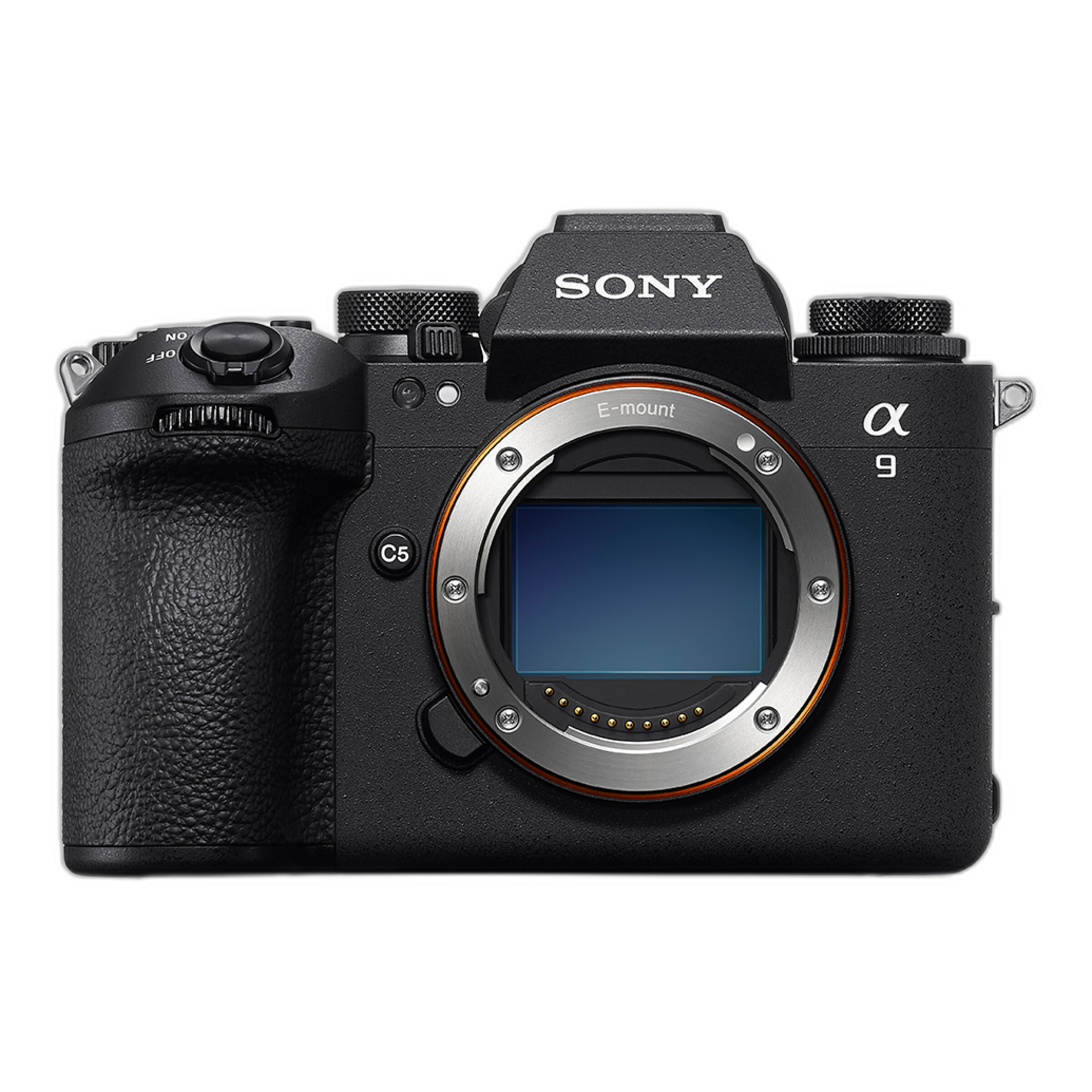
In April 2017, Sony unveiled a camera that clearly aimed beyond the enthusiast mirrorless market and directly at the working professionals who had long depended on flagship DSLRs. The Sony a9 arrived as a bold statement: mirrorless was no longer just about compact size or adapting vintage lenses. It could also be about speed, responsiveness, and reliability at the highest level of sports, news, and event photography. With a newly developed 24.2MP stacked full-frame sensor, blackout-free shooting at up to 20 frames per second, and Sony’s E mount at the center of a growing system, the a9 immediately stood out as one of the most important camera announcements of its era.
At launch, the Sony a9 carried a list price of $4,499 in the United States, placing it squarely in professional territory. That pricing made Sony’s intentions unmistakable: this was not a niche experiment, but a direct challenge to the established hierarchy of pro imaging tools.
A Defining Moment for Professional Mirrorless
By 2017, Sony had already built a strong reputation for innovation in full-frame mirrorless cameras through its Alpha lineup. Earlier models had proven that mirrorless could deliver excellent image quality, advanced electronic viewfinders, and strong video features. But professional sports and press photographers often remained cautious. For them, speed was only part of the equation. The real tests were consistency, viewfinder usability, autofocus confidence, and the ability to follow fast-moving action without interruption.
The a9 was announced as the camera meant to answer those doubts. Rather than simply refining an existing formula, Sony introduced a model built around a different kind of sensor architecture. That decision gave the camera its historical importance. The a9 was not merely another full-frame mirrorless body; it represented a new phase in sensor design and camera performance, one intended to compete with the top end of the interchangeable-lens market.
The 24.2MP Stacked Full-Frame Sensor
The headline innovation of the Sony a9 was its 24.2MP stacked full-frame sensor. In the context of 2017, the phrase “stacked sensor” carried major significance. This design allowed Sony to increase data readout speed dramatically compared with more conventional sensor structures of the time. In practical terms, that readout speed supported the camera’s remarkable continuous shooting capability and helped reduce many of the compromises traditionally associated with electronic shooting.
For photographers following camera technology closely, this was one of the clearest signs that Sony was leveraging its sensor-development strength in a way competitors would have to take seriously. The a9 was not sold purely on megapixels. At 24.2MP, its resolution sat at a practical sweet spot for editorial, sports, event, and general professional use. Instead, the larger story was how that sensor enabled speed.
That balance was important. The a9 did not pursue ultra-high resolution at the expense of responsiveness. It was designed as a working tool for moments that cannot be repeated: the split-second goal, the finish line, the gesture on stage, the decisive frame in a breaking-news sequence.
20 fps Blackout-Free Shooting
If one specification defined the a9 at launch, it was its ability to shoot at up to 20 frames per second with blackout-free viewing. This was the sort of number that instantly grabbed attention in 2017, not only because it was fast, but because of what it implied for real-world shooting. Blackout between frames had long been one of the sticking points for electronic viewfinding in action photography. Sony’s promise of blackout-free continuous shooting suggested a much more fluid shooting experience, allowing photographers to track motion more naturally while continuing to capture at extremely high speed.
For professionals accustomed to the cadence of top DSLRs, this was a serious proposition. A camera that could maintain visual continuity during rapid bursts had the potential to change how mirrorless was perceived in demanding fields like sports and photojournalism. Even photographers who did not need 20 fps for every assignment could immediately see the benefit in peak-action situations.
The a9’s announcement helped shift the conversation. Instead of asking whether mirrorless could eventually become fast enough, the industry began asking how quickly the traditional leaders would respond.
Sony E Mount and System Maturity
Another reason the a9 mattered was that it arrived not as a stand-alone technological showcase, but as part of Sony’s full-frame E-mount system. By 2017, Sony had already spent years developing lenses and expanding the Alpha ecosystem. The a9 therefore landed at a moment when the system had reached a greater level of maturity, making it more plausible for serious users to consider a switch.
The Sony E mount was central to that proposition. A camera body can make headlines, but professionals buy into systems, not just single models. The a9’s significance was tied to the fact that Sony was no longer just offering a clever alternative. It was building a platform intended to serve photographers across genres, with the a9 as the flagship speed machine that demonstrated what mirrorless could do at the highest level.
This mattered especially for agencies, freelancers, and longtime DSLR users evaluating future investments. The a9 suggested that Sony’s ambitions extended well beyond portrait, travel, and hybrid shooting. It was a camera meant to be seen on sidelines, in arenas, and in the hands of photographers who make their living on reliability and reaction time.
Why the Launch Price Mattered
At $4,499 at launch in the U.S., the Sony a9 was priced like a professional instrument. That figure positioned it not as an affordable disruptor, but as a premium body that believed it could earn its place through performance. In historical terms, this is important. Sony did not attempt to undercut the market solely on price. Instead, it framed the a9 as a legitimate peer to top-tier professional cameras.
That strategy reflected confidence in both the camera and the broader Alpha brand. It also signaled that Sony understood the professional customer. Working photographers often evaluate total value differently from hobbyists. If a camera helps secure more keepers, improves workflow in fast-moving conditions, or opens new ways to cover action, then the purchase becomes easier to justify. The a9’s launch positioning acknowledged that reality.
A Camera That Changed the Tone of the Industry
Seen from the release period, the Sony a9 felt like more than just another announcement. It had the tone of a challenge. The established pro camera world had long been built around rugged, high-speed DSLRs with optical viewfinders and deep lens lineups. Sony’s message with the a9 was that mirrorless technology had developed to the point where those assumptions could be tested directly.
The a9 was especially notable because it did not frame mirrorless as a compromise. Earlier generations of mirrorless cameras were often marketed around portability, innovation, or versatility. The a9 instead emphasized attributes traditionally associated with pro sports bodies: speed, uninterrupted viewing, and readiness for action. That was a major psychological shift in camera marketing and in camera history.
Even at the moment of its release, it was clear that the a9 would be discussed for years as a turning-point product. Cameras that alter expectations tend to matter beyond their own sales figures. They force competitors to adapt, accelerate new development, and reconsider what users now expect from a flagship camera.
The Archival Legacy of the Sony a9 Announcement
Looking back historically, the Sony a9 stands as one of the defining professional mirrorless announcements of the late 2010s. Its 24.2MP stacked full-frame sensor was not just a bullet point; it represented a meaningful technological leap. Its 20 fps blackout-free shooting was not just marketing language; it was a direct answer to one of the biggest practical objections action photographers had raised about mirrorless. And its Sony E-mount foundation placed it within a broader system strategy that made the camera relevant beyond its own release cycle.
For photographers reading the news in 2017, the a9 offered a glimpse of a very near future. For historians of camera development today, it marks a moment when mirrorless moved decisively into territory once considered the secure domain of the professional DSLR.
Closing Thoughts
The Sony a9 announcement on April 19, 2017 remains one of the most consequential product debuts in modern camera history. With its 24.2MP stacked full-frame sensor, 20 fps blackout-free shooting, Sony E mount, and $4,499 launch price, it was a camera designed to make the industry pay attention—and it did. For photographers interested in landmark camera releases, system history, and the evolution of professional tools, the a9 deserves its place near the top of the conversation. To learn more about Sony cameras and lenses, or to shop current gear, visit Unique Photo.