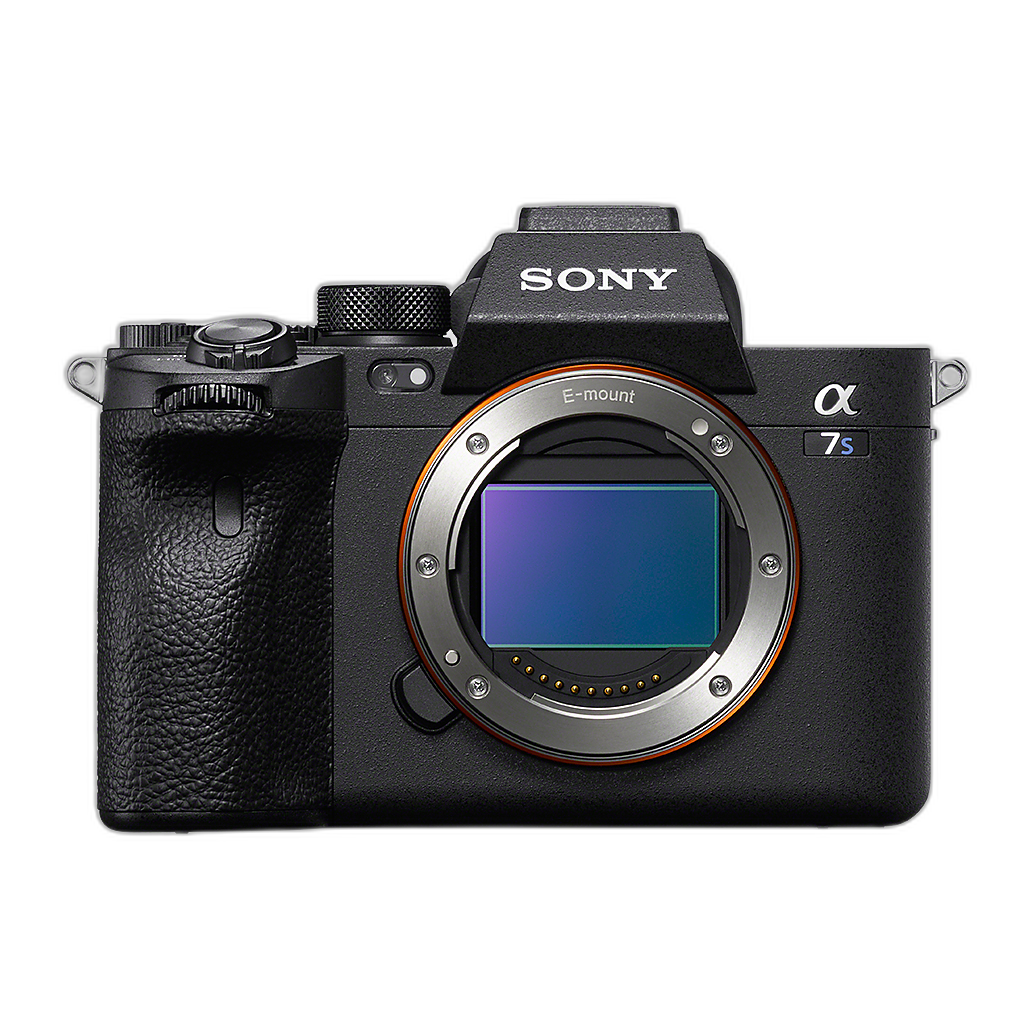
After years of anticipation, Sony officially announced the a7S III on July 28, 2020, bringing the long-running low-light and video-focused branch of the Alpha family into a new era. For filmmakers, hybrid shooters, and anyone who had watched the original a7S and a7S II become staples of compact video production, this was one of the most closely watched camera launches of the year. In classic a7S fashion, Sony did not chase headline megapixel numbers. Instead, it doubled down on what made the line famous: sensitivity, video performance, and practical tools for serious creators.
The result was a camera built around a 12.1MP full-frame back-illuminated sensor, a design clearly aimed at delivering strong low-light performance and fast readout for advanced video features. Most notably, Sony positioned the a7S III as a major video machine with 4K recording up to 120 frames per second in 10-bit, alongside a remarkable sensitivity range extending to ISO 409600. At a launch price of $3,499, the camera entered the market as a premium full-frame tool for users who prioritized image quality in difficult light and robust internal video capabilities over sheer resolution.
A Landmark Return for the a7S Line
By 2020, the a7S name already carried real weight in the video world. The original a7S had earned a reputation for exceptional sensitivity at a time when full-frame mirrorless video was still maturing, and the a7S II expanded on that foundation for run-and-gun filmmakers, documentarians, wedding shooters, and low-light specialists. The wait for a third-generation model was unusually long, which only heightened expectations.
When Sony finally unveiled the a7S III, it was clear the company was not treating it as a routine update. This was a camera designed to answer years of user feedback and to fit the increasingly demanding realities of modern content production. By mid-2020, full-frame mirrorless competition was fierce, and videographers expected more than basic 4K. They wanted internal high-bit-depth recording, high frame rates, dependable handling, and image quality that could withstand serious grading. The a7S III arrived as Sony’s strongest statement yet for that audience.
Why 12.1 Megapixels Made Sense
One of the defining characteristics of the a7S series has always been its relatively modest resolution, and the a7S III stayed true to that formula with a 12.1-megapixel full-frame BSI sensor. In an era when many cameras were competing through ever-higher megapixel counts, Sony’s choice was deliberate and in keeping with the model’s purpose.
For video, especially 4K video, extremely high resolution is not always the priority. What matters more is efficient readout, controlled noise, broad dynamic potential, and the ability to capture clean footage in poor lighting. A lower-resolution full-frame sensor means larger individual photosites than would typically be found on a higher-resolution chip of the same size. That design approach has long appealed to filmmakers who need dependable results at high sensitivity settings, whether they are shooting interiors, concerts, events, documentary footage, or atmospheric narrative work in available light.
The back-illuminated, or BSI, design further underscored Sony’s intent. BSI sensors are well established for improving light gathering efficiency, and in the context of the a7S III, that technology aligned perfectly with the series’ low-light identity.
4K120 10-Bit: A Serious Video Tool
The headline feature at launch was undoubtedly the a7S III’s ability to record 4K at up to 120 fps in 10-bit. In 2020, this was exactly the kind of capability advanced shooters were asking for: high-resolution footage, high frame rate options for smooth slow motion, and color depth suited to modern post-production workflows.
For professionals and enthusiasts alike, 10-bit capture represented an important step up from more limited recording formats. It meant more flexibility for color correction, grading, and finishing, particularly in scenes with subtle tonal transitions such as skies, skin, and low-contrast interiors. Combined with 4K120, the a7S III was positioned not simply as a stills camera with respectable video, but as a genuine filmmaking platform housed in a relatively compact mirrorless body.
This specification also reflected how far expectations had evolved. Earlier generations of hybrid cameras often asked users to accept tradeoffs in frame rate, codec quality, or internal recording. The a7S III was announced into a market where users wanted cinematic image quality without external recorders being mandatory for everyday work. Sony’s messaging around the launch made it clear that this camera was intended to satisfy that demand.
Built for Low Light
No discussion of the a7S III would be complete without mentioning its extraordinary sensitivity range, rated to ISO 409600. Numbers alone do not tell the whole story, but within the a7S tradition, they signaled a camera built to see in conditions that challenge ordinary systems.
That matters not only for shooters working in near darkness, but also for anyone trying to preserve natural ambience. Event videographers often prefer to avoid disrupting a scene with excessive lighting. Documentary filmmakers may not be able to control their environment at all. Wedding filmmakers, stage shooters, and available-light portraitists all benefit when a camera can maintain image quality deeper into the ISO range. Sony clearly understood that the a7S audience was less interested in maximum printable resolution than in confidence after sunset, indoors, or in mixed and imperfect lighting.
Historically, that has been the emotional appeal of the a7S line. These cameras became known not just for technical sensitivity, but for the creative freedom that sensitivity enabled.
Sony E-Mount and System Flexibility
The a7S III launched as part of Sony’s full-frame Alpha E-mount ecosystem, one of the company’s major strengths by 2020. For buyers, that meant access to a mature lens platform ranging from compact primes to professional zooms, as well as broad third-party support. For video users in particular, E-mount had become attractive because it could accommodate native autofocus lenses while also working well with adapted cinema and vintage glass in many production setups.
That system context mattered. A camera body can be impressive on its own, but in practice it succeeds when it fits into a larger kit. The a7S III’s place in the Sony E-mount world made it immediately relevant to existing Alpha users and to filmmakers who had already built rigs, lens collections, and workflows around the mount.
Positioning at Launch
At $3,499 at launch, the a7S III was clearly aimed at serious creators rather than casual upgraders. But within the context of professional video-capable full-frame cameras, Sony’s pricing placed it in the heart of a very active and competitive segment. It was expensive enough to signal premium intent, yet accessible enough to appeal to owner-operators, small production teams, wedding studios, commercial creators, and independent filmmakers who needed a versatile main camera or a highly capable B-camera.
Importantly, the a7S III’s value proposition was not built around doing everything for everyone. Sony presented it as a specialized instrument: a camera for people who understood why 12.1MP was a feature rather than a limitation, and why 4K120 10-bit could matter more than a giant still-photo file. In that sense, it was one of the more focused major camera launches of 2020.
Early Historical Significance
Even at the moment of its announcement, the a7S III felt significant beyond its specifications. It represented the maturation of the mirrorless video market itself. Features that once seemed exotic were becoming expected, and manufacturers had to deliver cameras that balanced image quality, workflow practicality, and reliability for increasingly sophisticated users.
The a7S III also reinforced Sony’s identity as a major force in hybrid and video-first mirrorless design. While other models in the Alpha lineup served broader photographic audiences, the a7S III remained distinctive. It was a camera with a clear mission and a clear user: the creator who values low-light confidence, manageable file sizes, and high-end internal 4K video performance.
Conclusion
The Sony a7S III arrived in 2020 as the long-awaited continuation of one of digital imaging’s most influential low-light video camera lines. With its 12.1MP full-frame BSI sensor, 4K120 10-bit recording, sensitivity to ISO 409600, and position within the Sony E-mount system, it was announced as a camera purpose-built for filmmakers and hybrid shooters who needed speed, flexibility, and confidence in challenging light. At $3,499, it entered the market as a premium but highly targeted tool, and from the start, it was easy to see why the release generated so much excitement.
For photographers and filmmakers interested in Sony history, current gear, or adding an Alpha body to their kit, Unique Photo is a great place to buy, compare, and learn more.