In 2012, Sigma introduced one of the most important reorganizations in modern third-party lens history: Global Vision. Rather than presenting a catalog as a loose collection of individual optics, Sigma redefined its interchangeable-lens lineup around three clearly identified families—Art, Contemporary, and Sports. It was a strategic shift, but also a statement of intent. With Global Vision, Sigma was telling photographers that lens design could be more purposeful, more transparent, and more ambitious.
Seen from the vantage point of its September 2012 debut, the Global Vision launch marked a turning point not only for Sigma, but for the broader lens market. It created a structure that made it easier for photographers to understand where a lens fit, what it was designed to prioritize, and how Sigma intended to compete across enthusiast and professional categories. This archival hub traces that release history, explains the logic behind the three-line system, and places the launch in the longer story of Sigma's rise as a major optical manufacturer.
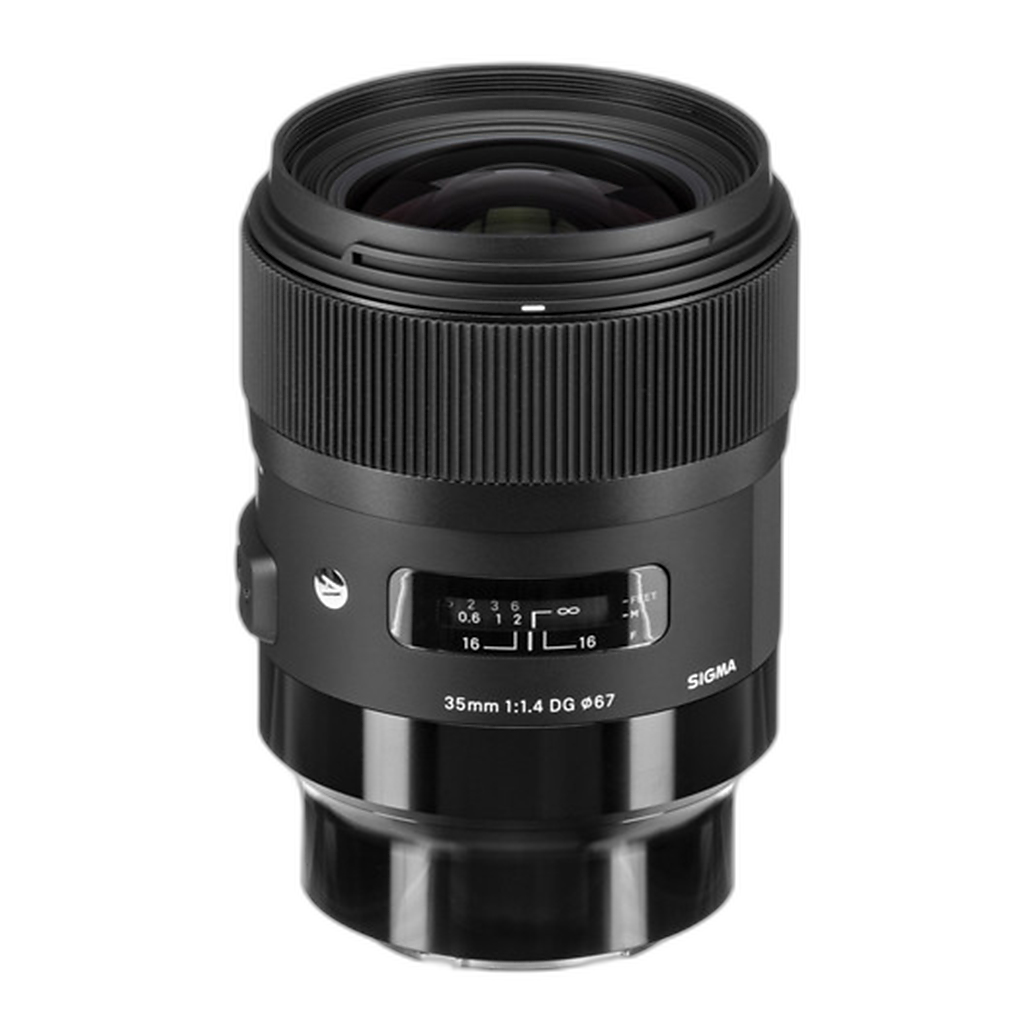
Before Global Vision: Why Sigma Needed a New Lens Identity
By the early 2010s, Sigma had already spent decades building lenses for major SLR mounts and earning a reputation for breadth. Its catalog spanned everything from compact consumer zooms to serious fast primes and specialized telephotos. Yet breadth can be a mixed blessing. As DSLR photography matured, buyers became more demanding about optical performance, consistency, handling, and long-term system planning. A lens was no longer just judged by focal length and maximum aperture. It was judged by its place in a working kit.
At the same time, Sigma had increasingly demonstrated that it was capable of more than just filling gaps left by first-party brands. Its better lenses were becoming recognized not merely as alternatives, but as serious contenders in their own right. The challenge was how to present that capability with clarity. A catalog full of unrelated naming conventions and overlapping intentions could undersell the design philosophy behind the products.
Global Vision answered that problem. Introduced in 2012, the system divided Sigma's interchangeable lenses into three lines:
- Art — built around expressive optical performance, fast apertures, and high image quality for photographers who placed creative rendering first.
- Contemporary — focused on portability, versatility, and balanced performance for everyday photography.
- Sports — developed for action-oriented work, especially long telephoto use, with an emphasis on speed, control, and durability.
The genius of the concept was that it was simple without being simplistic. It did not reduce lenses to price tiers alone. Instead, it framed them by purpose.
The September 17, 2012 Launch: A New Era Begins
The official release point for Sigma Global Vision was September 17, 2012. In historical terms, this was a clean break with the company's earlier product-language strategy. Sigma was not merely launching a handful of new lenses; it was launching a new way to understand its lens development.
That distinction matters. Many lens announcements are incremental: a new focal length here, an update there, perhaps a revised coating or stabilization system. Global Vision was broader. It was a platform launch. Sigma was effectively saying that future lens development would be organized around these identities and that design, manufacturing, and customer communication would all align around them.
For photographers shopping in late 2012, this offered immediate practical value. Instead of decoding where a lens sat in Sigma's hierarchy, buyers could quickly grasp the intended role of a product. A photographer considering a compact walkaround zoom could look to Contemporary. A portrait or studio photographer seeking premium optical expression could look to Art. A wildlife or field sports shooter could look to Sports.
Just as importantly, the launch suggested continuity. Once the three lines were established, future releases could be understood as part of an unfolding family history rather than isolated entries in a catalog.
The Three Lines Explained
Art: Performance as a Creative Priority
The Art line was the most aspirational and, in many ways, the most attention-grabbing branch of Global Vision. Art lenses were conceived for photographers who valued image quality, expressive rendering, and lens character. In practical terms, this often meant fast maximum apertures, careful optical correction, and a willingness to prioritize performance over compactness.
Within the release-period context, the Art designation signaled Sigma's confidence that it could compete at the highest optical levels. This was significant. Third-party lenses had often been judged primarily on value, but the Art line invited a different conversation—one about excellence, ambition, and desirability. The implication was not just that Sigma could make a cheaper alternative, but that it could make a lens photographers would choose on merit.
For many photographers in 2012, that was a refreshing proposition. As digital capture made lens performance more visible than ever—high-resolution sensors revealing strengths and weaknesses with little mercy—there was growing demand for optics that could satisfy exacting users. The Art line met that cultural moment head-on.
Contemporary: Modern Practicality Without Compromise
The Contemporary line occupied a different but equally important place in the system. Not every photographer needs the largest aperture or the heaviest all-metal premium optic. Many need lenses that fit daily life: travel, family, street shooting, general-purpose photography, and lightweight all-around use. Contemporary represented Sigma's effort to address those priorities thoughtfully rather than treating them as secondary.
What defined Contemporary was balance. These lenses were meant to deliver strong modern performance while paying close attention to size, weight, usability, and versatility. In a historical sense, this line acknowledged that portability is not a compromise category in itself. For many photographers, it is the very foundation of a successful system because a lens only works if it is practical enough to be carried and used regularly.
The release of the Contemporary line also reflected changing photographic habits. By 2012, photographers were increasingly diverse in how they worked. Some shot professionally on assignment. Others made serious images while traveling, commuting, or documenting daily life. A line built around smart, current, carryable lenses felt entirely in step with the era.
Sports: Built for Reach, Speed, and Reliability
The Sports line addressed one of the most demanding parts of lens design: long telephoto and action-focused work. Sports, wildlife, motorsports, and field reportage all place unusual stress on equipment. Lenses used in these environments must deliver not just image quality, but also operational confidence. They need to feel like tools made for hard use.
Within the Global Vision framework, Sports lenses were intended for users who needed a combination of telephoto capability, handling, and ruggedness. This categorization clarified Sigma's intentions in a segment where photographers often make buying decisions based on trust as much as specifications. A Sports designation told the buyer that this lens belonged in action-oriented workflows and that its design priorities reflected that reality.
Historically, this was important because it gave Sigma a clearer voice in a field often dominated by first-party professional telephotos. By giving telephoto lenses their own identity rather than treating them as outliers in a broader catalog, Sigma signaled a sustained commitment to photographers working in demanding conditions.
Why the Global Vision Structure Mattered
It is easy to look back and see the three-line system as obvious, but in 2012 it felt unusually coherent. Sigma was not the first manufacturer to segment products by audience, but the Global Vision approach was especially effective because it tied product identity to lens-design philosophy. It made the lineup easier to understand while also making Sigma's ambitions easier to believe.
There were several reasons this mattered:
- It clarified intent. A lens line should tell you why the product exists. Global Vision did exactly that.
- It strengthened trust. Photographers could begin to understand Sigma not as a company with scattered offerings, but as one with a disciplined development plan.
- It improved continuity. As new lenses were released, they could be situated within a familiar framework, helping users build systems more confidently.
- It elevated brand perception. The launch suggested that Sigma saw itself not just as a lens supplier, but as a design-led optical maker with a long view of the market.
In the broader historical context, Global Vision also aligned well with a period in photography when enthusiasts were becoming more technically informed. Online reviews, high-resolution test charts, and image-sharing communities had made optical conversations much more sophisticated. Sigma's answer was not to drown customers in jargon, but to organize the lineup in a way that translated engineering priorities into everyday language.
Chronological Lineage: Reading the Global Vision Era from Its Beginning
2012: The Foundational Reorganization
The first and most essential chapter is 2012 itself. With the September 17 release, Sigma established the long-term architecture of the Global Vision family. This is the defining milestone because it changed the lens catalog from a collection into a system.
Historically, product systems tend to matter more than individual launch announcements because systems shape what comes next. The moment Sigma committed to Art, Contemporary, and Sports, it effectively established a road map for future development. Every lens that followed under the Global Vision umbrella would inherit a clearer place in the lineup and a clearer promise to the user.
That is why 2012 should be understood not merely as a launch date, but as a beginning point in Sigma's modern identity.
The Early Global Vision Period: Defining Each Family in Practice
After the initial introduction, the next phase of the release history was definitional. A concept can be elegant on paper, but it only becomes meaningful once products embody it convincingly. The early Global Vision period was therefore about demonstrating that Art, Contemporary, and Sports were not just labels. They were working design philosophies.
Art would have to prove that Sigma could deliver premium optical results and distinctive creative tools. Contemporary would have to show that practical lenses could still feel modern and deliberate. Sports would have to establish credibility with users who depend on long lenses under pressure.
This is one reason the 2012 launch remains historically significant. It was ambitious in a way that carried real risk. If the lenses did not live up to the line identities, the structure would have felt cosmetic. But by framing the lineup around purpose, Sigma created a standard against which it would be judged—and that accountability itself helped define the era.
A New Standard for Release History
One of the lasting effects of Global Vision is that it changed how Sigma lens releases were discussed. Instead of asking only, “What is the new lens?” reviewers, retailers, and photographers increasingly asked, “Which line does it belong to, and what does that tell us?” That shift may seem subtle, but it had major implications.
It meant that every subsequent release came with context built in. A new Art lens was automatically read as an image-quality-forward product. A new Contemporary lens was understood through the lens of balance and practicality. A new Sports lens was measured against expectations of action use and robustness. In other words, the Global Vision launch gave Sigma's future announcements a vocabulary.
That is a hallmark of a successful product reorganization: it changes not only what is sold, but how people think about what is sold.
How Each Generation Advanced the Sigma Story
Because this is a release-history hub rather than a single-product review, the most useful way to understand advancement is in terms of line evolution rather than isolated specification changes. The major advancement introduced by Global Vision was conceptual clarity. But that conceptual clarity had practical consequences that shaped every generation after the launch.
From General Catalog to Purpose-Driven Families
The first advancement was organizational. Sigma moved from a broad lens catalog toward three recognizable families. This helped photographers compare products more intelligently and encouraged Sigma to design lenses with more sharply defined roles.
From Value Conversation to Merit Conversation
The second advancement was reputational. Especially with Art, Sigma repositioned itself in the premium lens conversation. The language of Global Vision encouraged photographers to evaluate lenses based on performance and use case, not merely on price relative to first-party options.
From One-Off Releases to System Thinking
The third advancement was strategic. Once a lineup is structured coherently, every future release can build on previous expectations. This creates continuity for users and accountability for the manufacturer. Global Vision turned Sigma's lens history into something cumulative.
From Brand Breadth to Brand Identity
Finally, Global Vision advanced Sigma's identity as a manufacturer. The company was no longer simply known for making many kinds of lenses. It became known for organizing lens design around recognizable philosophies. That shift gave the brand a stronger historical signature.
Global Vision in the Context of the 2012 Camera Market
To appreciate the timing of the launch, it helps to remember what the camera world looked like in 2012. DSLRs remained central to the enthusiast and professional market, and lens choice was increasingly seen as the heart of a system investment. Camera bodies changed quickly, but lenses were expected to stay useful for years. Buyers were therefore more deliberate and more demanding.
That market favored manufacturers who could communicate long-term intent. Sigma's Global Vision strategy met that need unusually well. It implied continuity, planning, and seriousness. For photographers considering whether to invest in a Sigma lens instead of a first-party option, this mattered. They were not just buying a focal length; they were buying into a design philosophy that appeared stable and forward-looking.
Retailers and educators also benefited. A clearly organized lineup is easier to explain, compare, and recommend. A customer could be asked what kind of work they did—creative portraiture, general travel, or field sports—and the conversation could begin from there. That made Global Vision as useful on the sales floor as it was in the lab.
Why This Release History Still Matters
More than a decade later, the 2012 debut of Sigma Global Vision still deserves attention because it represents a genuine hinge point in lens history. The launch demonstrated that product naming, when done thoughtfully, can be much more than branding. It can help define engineering priorities, purchasing confidence, and long-term market position.
For collectors, historians, and working photographers looking back, Global Vision marks the start of Sigma's modern era. It is the point at which the company presented a lens ecosystem with unmistakable internal logic. Even if individual photographers gravitate more toward one line than another, the strength of the whole concept lies in how completely the three branches complement each other. Art addresses aspiration, Contemporary addresses everyday use, and Sports addresses demanding action work. Together they form a map of photographic intent.
That is why this launch belongs in any serious discussion of 21st-century lens development. Sigma did not just refresh a product range in 2012. It reframed how a third-party lens maker could define itself in relation to users, competitors, and the future.
Closing Thoughts
The release of Sigma Global Vision on September 17, 2012 stands as a foundational moment in modern lens history. By organizing its lineup into Art, Contemporary, and Sports, Sigma created a clearer, more purposeful, and more historically durable way of presenting photographic tools. For photographers at the time, it made the catalog easier to navigate. For the industry, it raised the bar for how lens lines could be defined and understood.
As an archival release-history hub, the key takeaway is simple: Global Vision was not just a launch. It was the beginning of a lineage. The lines introduced in 2012 gave Sigma a framework that oriented future releases, clarified design intent, and helped establish the company as one of the most closely watched lens makers of its era.
If you are looking to explore Sigma lenses, compare generations, or learn more about the history behind the gear, Unique Photo is an excellent place to buy, research, and keep up with the story of modern photography equipment.