The Sigma 85mm F1.2 DG Art Lens and 20-60mm F2.8-4 DG Contemporary Lens are available to preorder in Sony E and L-Mount versions.
Two new Sigma lenses with different jobs
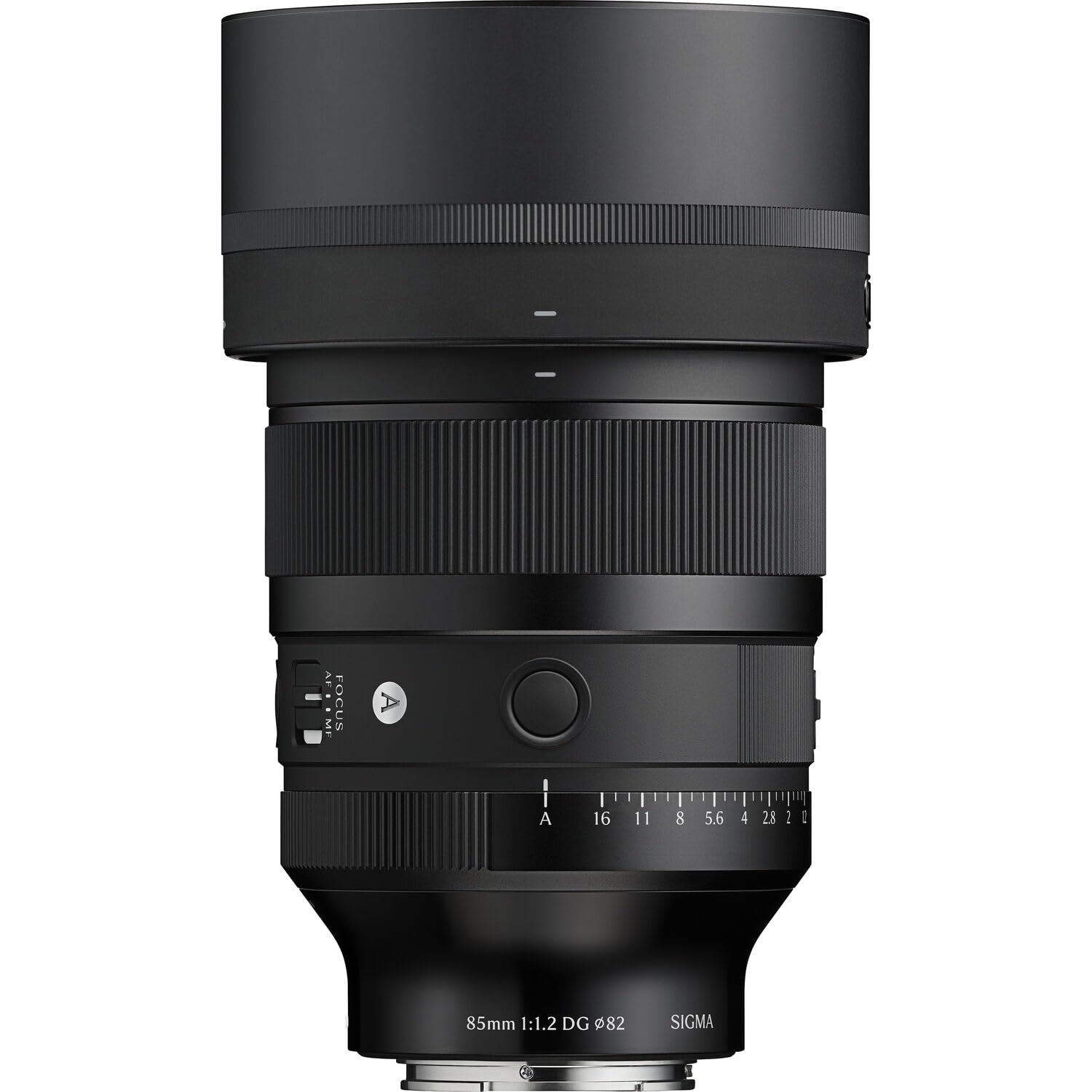
The Sigma 85mm F1.2 DG Art Lens for Sony E is a fixed-focal-length autofocus lens built around an f/1.2 maximum aperture. Its 85mm medium-telephoto view makes it a choice for portraits and other work where separating a subject from its surroundings matters more than changing framing with a zoom ring.
Alongside it, the Sigma 20-60mm F2.8-4 DG Contemporary Lens for Sony E covers an ultra-wide 20mm view through 60mm. That range suits interiors and travel photography, with room for environmental portraits. Both lenses also come in L-Mount versions. The distinction is straightforward: the Art lens concentrates on a single focal length and a larger aperture; the Contemporary lens changes its angle of view without a lens change.
What f/1.2 means for portraits and available light
At f/1.2, the 85mm can admit more light than it does at a smaller aperture. In the same light, that gives room to use a faster shutter speed or a lower ISO. For portraits of people who are moving, the shutter-speed option can be more useful than simply making the background softer.
The other effect is shallow depth of field. At close portrait distances, opening the lens fully can leave only a narrow part of the subject in focus. Autofocus is included, but selecting the intended focus point still matters. Stopping down is the practical answer when more of a face needs to be sharp, or when several people are at different distances from the camera.
85mm optical design and close-focus limits
Sigma lists 17 elements in 12 groups for the 85mm, including two SLD glass elements. It also describes high-anomalous-dispersion glass intended to suppress axial chromatic aberration, the colour fringing that can appear in front of and behind the focus plane. Aspherical elements are used to correct spherical aberration and sagittal coma flare. Sigma describes the design as intended to retain high resolving power at the maximum aperture, rather than relying on stopping down.
The 13-blade diaphragm controls the aperture opening, whose shape can be visible in out-of-focus highlights. The lens stops down to f/16 when more depth of field is needed. Its closest focusing distance is 84cm (33.1 inches), with maximum magnification of 1:8.9. Those limits matter for tight detail work: an 85mm focal length does not automatically make this a close-up lens for small objects.
905g in either mount, with 82mm filters
Both 85mm mount versions weigh 905g (31.9 ounces). The Sony E version measures 87.2mm by 121.7mm; the L-Mount version is 87.2mm by 119.7mm. The small length difference does not come with a weight difference.
Both take 82mm filters. That is a useful number to check before ordering a filter or deciding which existing filters can move over. The aperture may be the headline, but 905g is still part of the camera-and-lens load carried through a portrait session. Compare the dimensions with the space in a bag rather than assuming a fixed-focal-length lens will occupy little room.
Where the 20-60mm Contemporary fits
The 20-60mm starts substantially wider than the 85mm and never reaches its focal length. At 20mm, it can include more of a room or landscape; toward 60mm, it offers tighter framing without moving to a separate lens. For a photographer changing subjects and locations throughout the day, that framing range is the main reason to choose it.
Sigma specifies f/2.8 at 20mm, useful when light is limited indoors. The zoom uses 15 elements in 13 groups and a nine-blade diaphragm. It has autofocus and takes 67mm filters, rather than the 85mm's 82mm size.
Sigma lists a minimum focus distance of 37.9cm (14.9 inches) at 28mm. That focal-length qualification matters: it describes the close-focus limit at 28mm, not a single distance to apply across the entire zoom range. For tabletop details, check framing at the focal length being used rather than judging close-up ability from the 20-60mm range alone.
Sony E and L-Mount prices and preorder availability
As of October 14, 2026, both lenses are available to preorder in Sony E and L-Mount. The price is the same across the two mounts for each lens.
| Lens and mount | Price | Availability |
|---|---|---|
| Sigma 85mm F1.2 DG Art Lens for Sony E | $1,599 | Available to preorder |
| Sigma 85mm F1.2 DG Art Lens for L Mount | $1,599 | Available to preorder |
| Sigma 20-60mm F2.8-4 DG Contemporary Lens for Sony E | $849 | Available to preorder |
| Sigma 20-60mm F2.8-4 DG Contemporary Lens for L Mount | $849 | Available to preorder |
All four versions are available to preorder from Unique Photo.
Prices at Unique Photo
- Sigma 85mm F1.2 DG Art Lens for Sony E: $1,599.00 (preorder)
- Sigma 85mm F1.2 DG Art Lens for L Mount: $1,599.00 (preorder)
- Sigma 20-60mm F2.8-4 DG Contemporary Lens for Sony E: $849.00 (preorder)
- Sigma 20-60mm F2.8-4 DG Contemporary Lens for L Mount: $849.00 (preorder)
Prices as of October 14, 2026. Browse more: Sigma Mirrorless Lenses, Sigma at Unique Photo.
Frequently asked questions
How much is the Sigma 85mm F1.2 DG Art Lens?
The Sony E and L-Mount versions each cost $1,599. Both are available to preorder.
Does the Sigma 85mm F1.2 DG Art Lens have autofocus?
Yes. Sigma lists autofocus for both the Sony E and L-Mount versions.
What is the minimum focus distance of the Sigma 85mm F1.2 DG Art?
The minimum focus distance is 84cm (33.1 inches). Maximum magnification is 1:8.9.
How much is the Sigma 20-60mm F2.8-4 DG Contemporary Lens?
It costs $849 in either Sony E or L-Mount. Both versions are available to preorder.