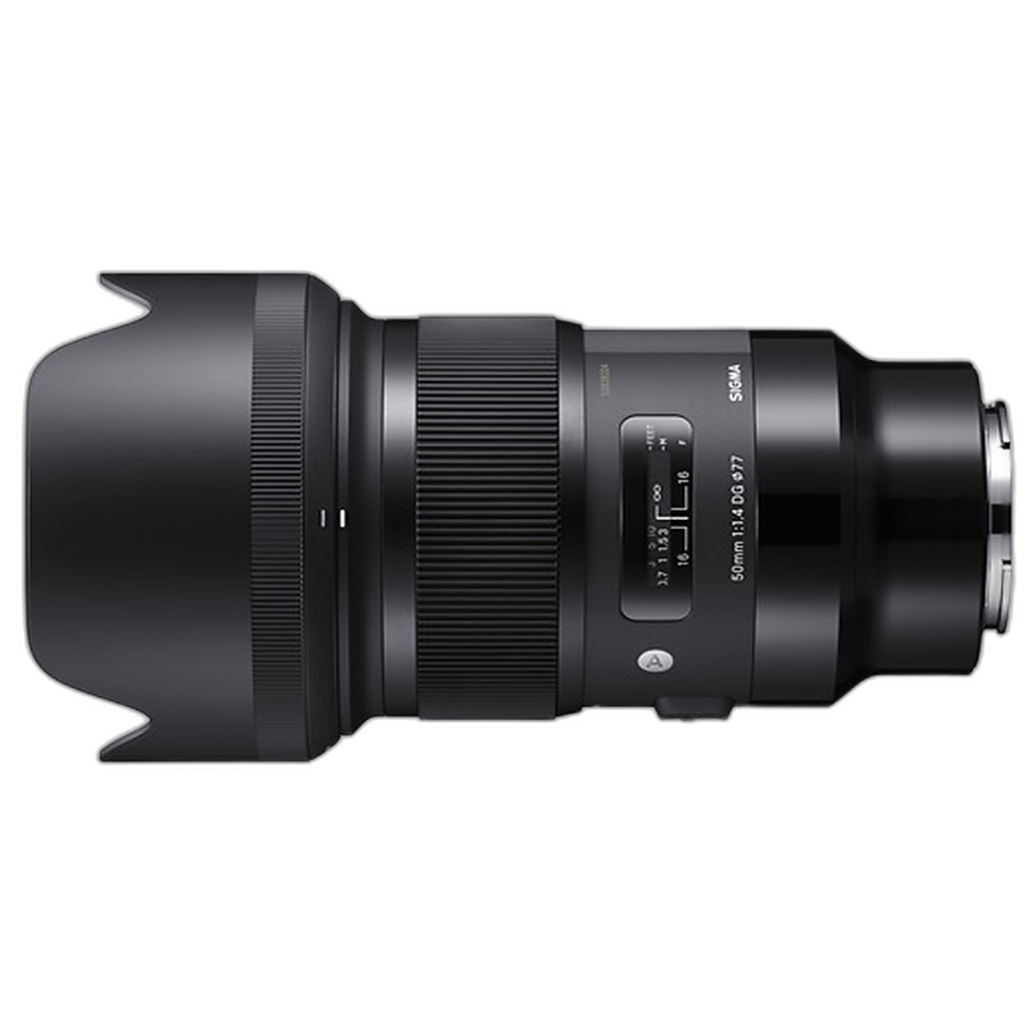
In the long history of the standard lens, few focal lengths carry as much weight as 50mm. It is the benchmark by which generations of photographers have judged rendering, speed, value, and optical ambition. By the time Sigma introduced the 50mm f/1.4 DG HSM Art on April 11, 2014, the market was already crowded with fast fifties from the biggest names in photography. Yet this release immediately felt different. It was not positioned merely as another affordable alternative. Instead, Sigma presented a lens that aimed directly at the top of the category, asking a bold question: what if a third-party 50mm could challenge, and in some cases surpass, the established leaders?
Seen from the vantage point of its release period, that question was not rhetorical. The Sigma 50mm f/1.4 Art quickly became one of the defining lenses of the company’s modern era, helping cement the Global Vision reboot and the identity of the Art line as a serious destination for photographers who cared about image quality first.
A Standard Lens in a New Sigma Era
The Sigma 50mm f/1.4 DG HSM Art arrived during a pivotal period for the company. Sigma’s Global Vision strategy had reorganized its lens lineup into three families: Art, Contemporary, and Sports. This was more than branding. It was a public statement that Sigma intended to define products by purpose and performance, not simply by filling mount catalogs.
Within that framework, the Art series quickly became the most closely watched. These lenses were aimed at photographers who wanted expressive rendering, wide-aperture capability, and uncompromising optical performance. The 50mm f/1.4 was especially important because the standard prime is such a visible proving ground. If Sigma could deliver here, it could alter perceptions across the entire market.
And that is exactly what happened. With a launch price of $949, the Sigma 50mm f/1.4 Art was not cheap enough to be dismissed as a budget play, but it was still priced aggressively for what it promised. The lens entered the conversation not as a bargain-bin substitute, but as a premium tool built to compete on merit.
Why the 50mm Matters So Much
The 50mm lens occupies a special place in photographic history. It has long been associated with normal perspective, compact design, and a practical balance between speed and portability. For film SLR users, a 50mm was often the first prime they owned. For portrait, documentary, wedding, street, and editorial photographers, it remains one of the most versatile focal lengths ever made.
That prestige also means expectations are unusually high. A fast 50mm must be sharp, but it also has to render subjects attractively at wide apertures, focus reliably, and justify its role as an everyday lens. Many classic 50mm designs made compromises in exchange for size or price. The Sigma Art approach was different. Rather than prioritize compactness, Sigma appeared willing to build a larger, more ambitious lens if that is what it took to maximize performance.
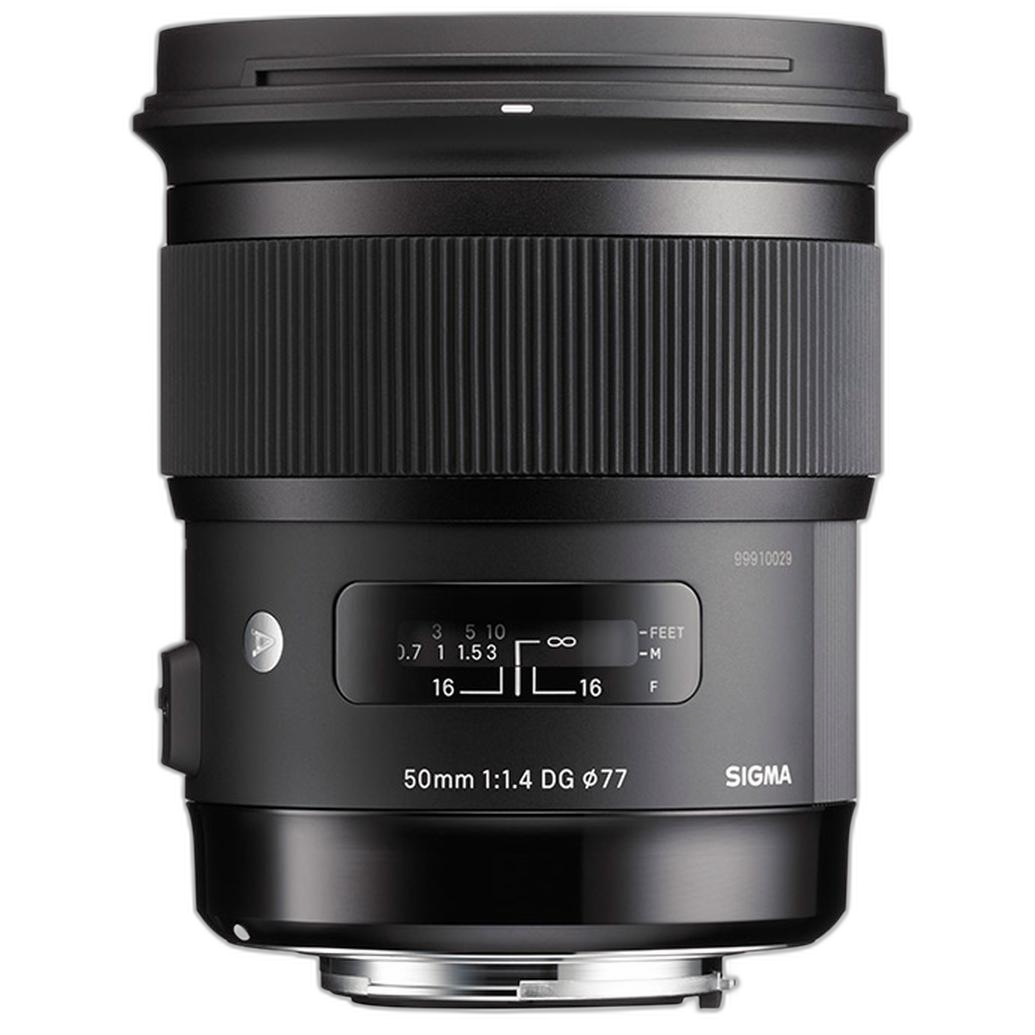
That decision was immediately visible in the final product. The 50mm f/1.4 Art did not resemble the small, modest standard lenses photographers had known for decades. It looked and felt substantial, more like a statement piece than a casual kit addition. In 2014, that alone told photographers something significant: Sigma was taking the fifty seriously enough to redesign expectations around it.
The Promise of the Art Line
By name alone, the Art series set a high bar. A lens wearing that badge needed to offer more than acceptable test-chart numbers. It had to appeal to photographers who valued both technical fidelity and visual character. The Sigma 50mm f/1.4 Art fit neatly into that philosophy. Its appeal rested on the idea that a fast standard prime should be useful wide open, not merely tolerable until stopped down.
This point mattered because many photographers had grown accustomed to treating f/1.4 as an emergency aperture or a stylistic effect rather than a truly dependable working setting. The early reaction to the Sigma suggested something more ambitious: here was a lens intended to produce high-grade results at 50mm and f/1.4 without apology.
That combination made the lens instantly attractive to portrait shooters, wedding professionals, and available-light photographers. It also appealed to enthusiasts who wanted one premium normal prime that could handle everything from environmental portraits to travel details and low-light interiors.
“Out-Resolved the Big Brands”
The phrase in this article’s title reflects how the lens was discussed around its launch. Reviews and early user impressions repeatedly centered on one point: the Sigma 50mm f/1.4 Art delivered exceptional resolving power. In an era when full-frame digital cameras continued to climb in resolution and photographers were scrutinizing files at 100 percent, that mattered enormously.
To say a lens “out-resolved the big brands” is, of course, shorthand rather than a universal law. Performance depends on camera body, shooting distance, technique, focus accuracy, and many other variables. But historically, the significance of the Sigma lies in how often it was mentioned alongside, and frequently above, first-party competitors in discussions of sharpness and overall optical confidence. That was a major shift in market perception.
For years, many buyers had treated third-party lenses as compromises: good value, perhaps, but rarely the unquestioned best in class. The 50mm f/1.4 Art helped dismantle that assumption. It made photographers reconsider what a Sigma prime could be, and it encouraged a much more open comparison between first-party and independent manufacturers.
A Different Kind of Fifty
Size, Presence, and Serious Intent
The Sigma 50mm f/1.4 Art stood apart physically as much as optically. It was larger than many legacy 50mm designs, and that carried practical implications. Photographers who favored tiny walk-around primes sometimes found the scale surprising. But in return, the lens projected confidence. Its build, styling, and handling were very much in line with Sigma’s new premium identity.
That larger form also symbolized a broader trend in digital-era lens design. As sensors became more demanding, manufacturers increasingly accepted that top optical performance might require larger, heavier constructions. The Sigma embraced that reality instead of pretending it could be avoided.
Autofocus and Real-World Use
As a DG HSM lens, the 50mm f/1.4 Art was designed for full-frame cameras and used Sigma’s Hyper Sonic Motor focusing system. In the context of 2014, autofocus consistency on fast primes was an especially important topic. Photographers wanted a lens that could be trusted for paid work, not one that dazzled in lab tests but frustrated in actual assignments. Part of the Art series appeal was that Sigma was clearly trying to address the complete ownership experience, not only optical bragging rights.
That broader experience was also reflected in Sigma’s push toward a more modern ecosystem around its lenses. During this period, the company’s Global Vision products helped reinforce the impression that Sigma was thinking systematically about calibration, compatibility, and long-term product identity.
Why This Lens Mattered Historically
The Sigma 50mm f/1.4 Art was more than a successful product. It was a reputational milestone. It arrived at a time when Sigma was proving that independent lens makers could lead the conversation, not simply respond to it. In that sense, this lens belongs to a larger chapter in camera history: the period when third-party manufacturers began to claim genuine prestige in premium optics.
It also helped redefine what photographers expected from a standard prime under $1,000. At $949, it occupied a compelling position in the market. Buyers were no longer choosing only between low-cost compromise and expensive brand loyalty. Sigma introduced a third option: a lens with flagship aspirations sold at a price that, while serious, remained within reach of many working photographers and committed enthusiasts.
For some users, the Sigma 50mm f/1.4 Art became the lens that validated the entire Art concept. If one standard prime could perform at this level, then the rest of the line deserved close attention too. That ripple effect was crucial. The lens did not just succeed on its own; it elevated the status of Sigma’s broader lineup.
An Archival View of a Modern Classic
From a historical perspective, the Sigma 50mm f/1.4 DG HSM Art stands as one of the key lenses of the 2010s. It captured a moment when optical design, digital demands, and shifting brand loyalties all intersected. It proved that the standard lens could still be newsworthy. More importantly, it showed that excellence in the 50mm category was not reserved for the oldest and most established camera brands.
That is why this lens continues to matter in archival discussions today. Its importance is not just that it was sharp, fast, or attractively priced. Its real legacy is that it changed expectations. It demonstrated that Sigma’s Art line was not a side story in photographic history, but one of the main stories.
If you want to explore landmark lenses like the Sigma 50mm f/1.4 Art, compare modern classics, or shop current photographic gear, Unique Photo is an excellent place to buy, research, and learn more.