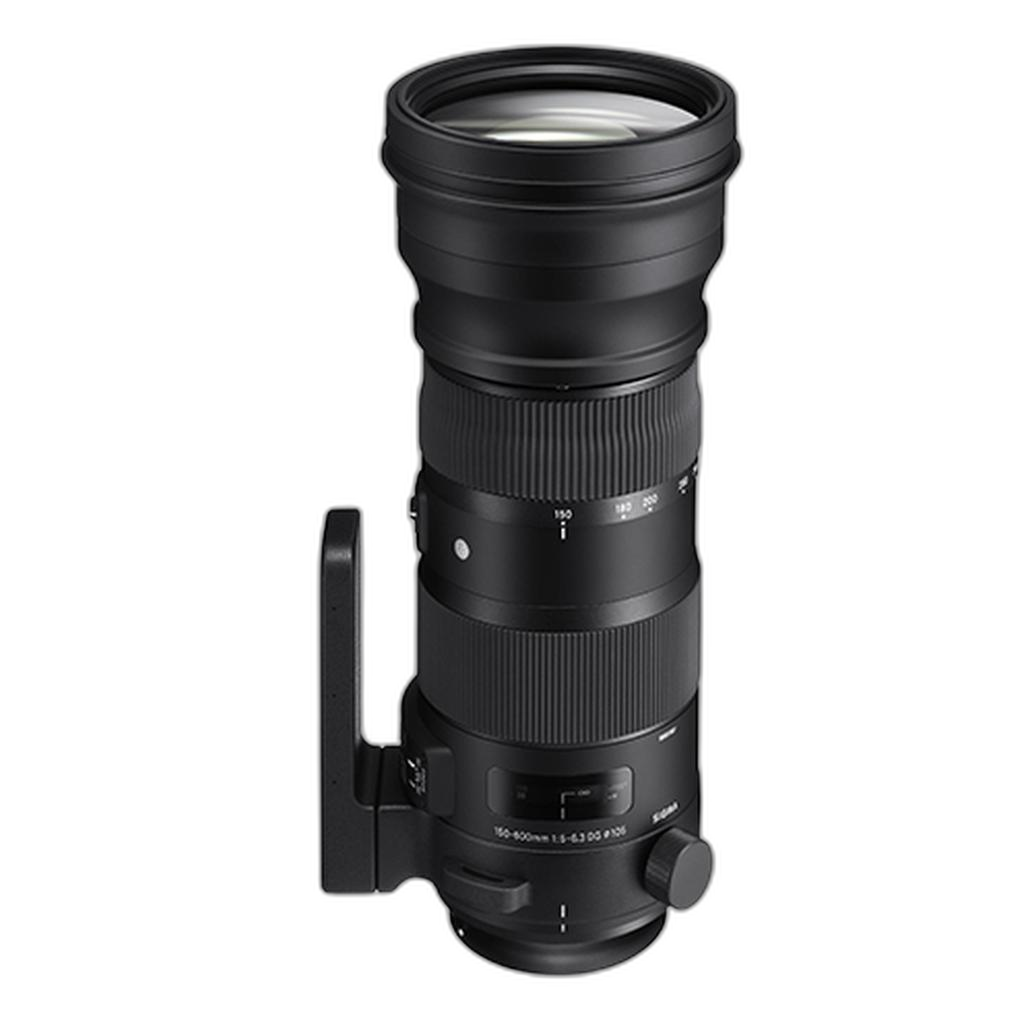
When Sigma introduced its Global Vision lens families, it gave photographers a clearer sense of purpose across the lineup: Art for outright optical ambition, Contemporary for compact versatility, and Sports for speed, durability, and long-lens performance under pressure. The Sigma 150-600mm f/5-6.3 DG OS HSM Sports, announced in 2014, arrived as one of the most attention-grabbing examples of that strategy. For wildlife specialists, aviation fans, field sports shooters, and anyone who had long wanted serious super-telephoto reach without stepping into the stratospheric pricing of flagship exotic primes, this lens immediately stood out.
At a launch price of $1,999, the 150-600mm Sports entered the market with a compelling promise: genuine long-range flexibility, a rugged professional-minded build, and a place in Sigma’s premium Sports family at a price many enthusiasts and working photographers could realistically consider. Seen from the perspective of its release period, it was one of the clearest signs that the super-telephoto zoom category was becoming far more accessible.
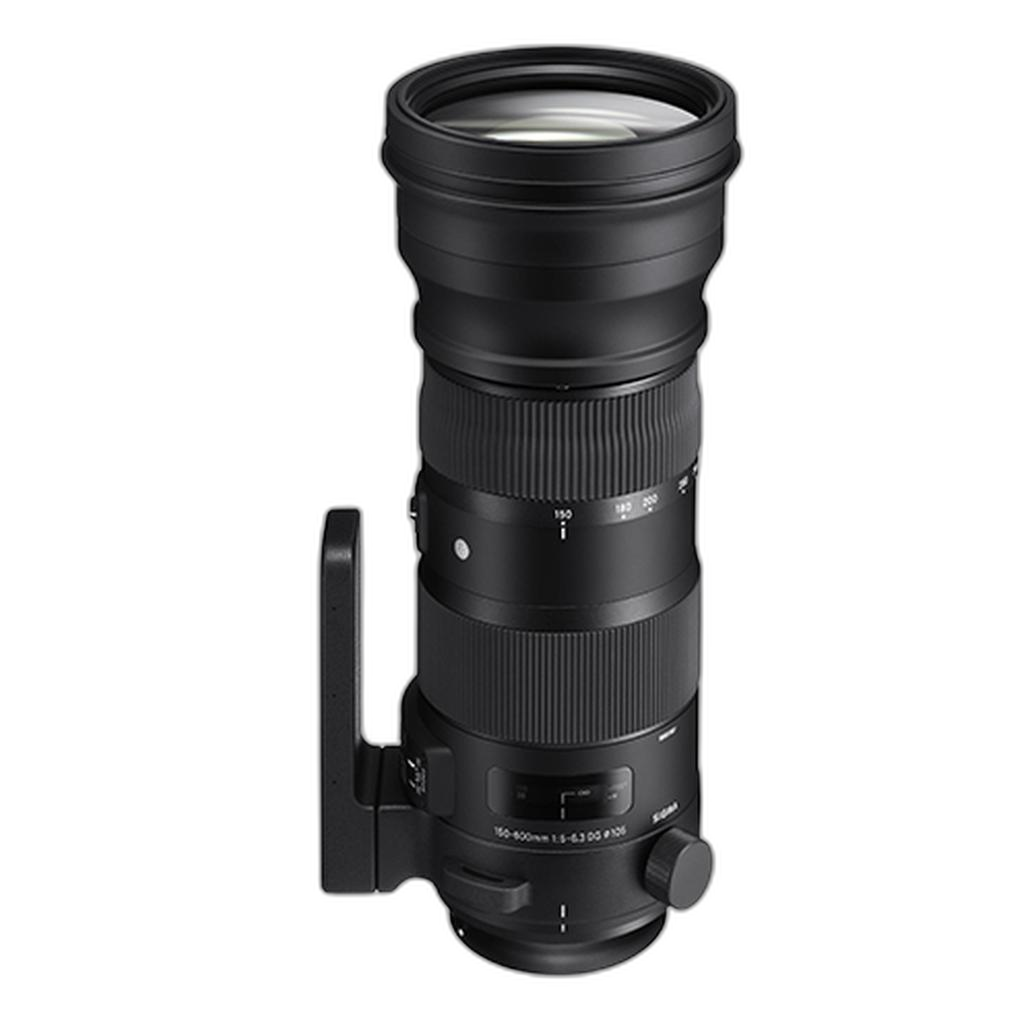
A Major Super-Telephoto Zoom for the Global Vision Era
The Sigma 150-600mm f/5-6.3 DG OS HSM Sports belongs to a notable moment in lens history. By the mid-2010s, camera makers and third-party manufacturers alike were responding to strong demand for longer zooms that could serve both advanced enthusiasts and professionals. Wildlife and outdoor sports photography had always been gear-intensive disciplines, often dominated by large, expensive prime lenses. Zooms existed, of course, but a lens stretching from 150mm to 600mm in a serious, pro-oriented package still felt ambitious.
Sigma’s Sports designation mattered here. This was not simply a consumer super-zoom with a long barrel and a bold spec sheet. It was positioned as a durable, action-oriented optic intended for photographers working in changing weather, on sidelines, from hides, or across rough terrain. The combination of 150-600mm coverage and a variable f/5-6.3 maximum aperture reflected practical design tradeoffs: enough light-gathering ability for real-world telephoto work, but in a form and price bracket far more attainable than a 500mm or 600mm fast prime.
Why 150-600mm Was Such an Appealing Range
One of the key reasons this lens drew so much attention at launch was the usefulness of its focal range. Starting at 150mm gave photographers a little more room than a fixed super-telephoto perspective, which is especially helpful when subjects move unpredictably or approach closer than expected. At the other end, 600mm opened the door to frame-filling images of distant birds, wildlife, motorsports, sailing, surfing, and field sports from positions where access is limited.
That range made the lens versatile in ways that many long primes simply could not match. A photographer covering an outdoor event could track action at intermediate distances and still push to 600mm when the subject moved farther away. Wildlife shooters could adapt quickly without changing lenses in dusty or wet conditions. For many photographers around the release period, this flexibility was not merely convenient; it was transformative.
The Meaning of “Affordable Reach” in 2014
The phrase “affordable reach” should always be used carefully, because a $1,999 lens is still a serious investment. But historically, in the context of super-telephoto photography, Sigma’s launch price positioned the 150-600mm Sports as unusually attainable. Long-lens photography had often required compromises: lower-cost consumer zooms with limited durability, older used primes with less flexibility, or simply doing without the focal length needed for small or distant subjects.
With this lens, Sigma offered a different proposition. It did not pretend to replace every premium telephoto prime, nor did it need to. Instead, it gave photographers access to a broad and highly practical focal range within a professional-looking, professional-feeling product line. For many users, that was enough to reconsider what was possible in wildlife and sports work.
Sports-Series Positioning and Practical Appeal
Built for Demanding Use
The Sports label signaled that Sigma intended this lens for photographers who expected more than basic optical reach. In Sigma’s Global Vision structure, Sports lenses emphasized performance in fast-moving, challenging shooting environments. That identity gave the 150-600mm Sports an immediate appeal for outdoor specialists who needed confidence in the field as much as they needed magnification.
Even at a glance, the lens looked and felt like a serious tool. Super-telephoto zooms are never discreet, and this one embraced that reality. It was designed for users who understood the tradeoffs of long-lens photography and were willing to carry a substantial optic in exchange for coverage, control, and durability.
Optical Stabilization and HSM in Context
The full product name also tells an important story about the era: DG OS HSM. Sigma’s DG designation identified compatibility with full-frame digital SLRs, though many such lenses also found strong audiences among APS-C users seeking even tighter effective framing. OS, or Optical Stabilizer, was especially important in a lens of this class, where camera shake becomes more pronounced as focal length increases. HSM, Sigma’s Hyper Sonic Motor, underscored the expectation of responsive autofocus performance for action subjects.
Those features were not marketing decorations. By 2014, wildlife and sports shooters increasingly expected stabilization and capable autofocus behavior in long zooms, and Sigma understood that this lens needed to compete not merely on paper but in the field.
A Lens That Spoke to Multiple Audiences
Part of the historical importance of the Sigma 150-600mm Sports is how effectively it crossed category lines. It was obviously attractive to bird and wildlife photographers, but it also made sense for high school and college sports, motorsports, airshows, equestrian work, outdoor portrait compression, and even landscape details captured from great distances. On APS-C bodies, it could become even more appealing to photographers chasing extra apparent reach.
That broad usefulness helped the lens become more than a niche product. It was a statement that Sigma was not merely filling gaps in the market, but actively shaping it. The company had already built momentum through the Global Vision families, and the 150-600mm Sports reinforced the idea that third-party lenses could be ambitious, distinctive, and highly relevant to serious photographers.
The Historical Place of the Sigma 150-600mm Sports
Looking back, the 150-600mm Sports represents an important phase in the evolution of long-lens photography. It arrived during a period when photographers were demanding more capability without always being able, or willing, to invest in elite prime-lens systems. Sigma answered with a product that balanced aspiration and practicality remarkably well.
It is also part of a broader shift in how super-telephoto zooms were perceived. Once viewed mainly as compromise tools, lenses in this class increasingly became first-choice solutions for many shooters. The Sigma 150-600mm Sports helped drive that change by offering long reach, action-oriented features, and premium-series identity in a package that felt within reach of a much larger audience.
For photographers shopping in 2014, the lens had obvious appeal. For historians of camera gear, it marks a moment when long-range photography became more democratized without losing its performance ambitions.
Final Thoughts
The Sigma 150-600mm f/5-6.3 DG OS HSM Sports remains a memorable release from Sigma’s Global Vision era: a super-telephoto zoom with serious intent, broad real-world usefulness, and a launch price that made many photographers take a second look at what was possible. Its combination of 150-600mm reach, f/5-6.3 aperture, Sports-series positioning, and $1,999 introductory price made it one of the most compelling long-lens stories of its time.
To explore historic and current Sigma lenses, or to learn more about the gear that has shaped modern photography, visit Unique Photo—a trusted place to buy camera equipment and dive deeper into photographic history.