Editing and Enhancing Landscape and Nature Photography with Photoshop: A Contest‑Focused Review
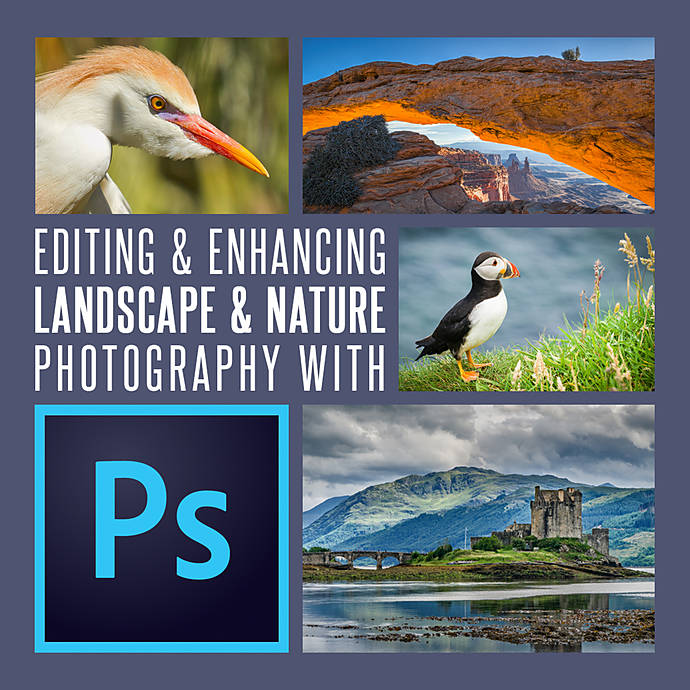
If you’re prepping your best landscapes for a juried competition, the difference between “shortlisted” and “also‑ran” often comes down to disciplined, tasteful post‑processing. Unique Photo’s “Editing and Enhancing Landscape and Nature Photography with Photoshop” (SKU: UUU237) positions itself as a practical, ethics‑minded roadmap for turning strong captures into contest‑ready entries. Aimed at photographers who already have the basics down and want a coherent workflow for print and digital submissions, this class emphasizes color accuracy, non‑destructive edits, and output choices that hold up under a judge’s loupe.
Key Features That Matter to Contest Entrants
Contest‑Critical Workflow: RAW to Ready
The course builds a step‑by‑step pipeline from raw conversion through final output. You’ll learn how to normalize exposure and color in Adobe Camera Raw (or Lightroom) before handing off to Photoshop, keeping edits non‑destructive with smart objects and adjustment layers. The structure is geared toward repeatability—ideal when you’re preparing multiple entries against a deadline.
Color Management and Print Consistency
Judges (and lab techs) are color‑critical. The class covers monitor calibration basics, working spaces (Adobe RGB vs. sRGB), and soft‑proofing to anticipate paper and ink behavior. You’ll practice converting with intent (relative vs. perceptual) and dialing in black point compensation so shadow detail survives the trip to print without crushing or color shifts.
Tasteful Dynamic Range Control
Expect guidance on exposure blending and HDR restraint—enough to keep clouds dimensional and foregrounds clean without halos or telltale seams. Luminosity masking, gradient masks, and targeted curve layers are used to sculpt contrast while preserving a natural look that aligns with most contest rules and judge preferences.
Local Adjustments Without the “Overdone” Look
The curriculum favors subtlety: dodging and burning on 50% gray layers, luminosity‑guided color grading, and selective clarity for microcontrast. You’ll see how to remove dust and minor distractions while steering clear of disqualifying manipulations common in nature competitions.
Noise, Detail, and Sharpening Stages
Learn a clean division of labor—capture sharpening to restore lens/AA softness, creative sharpening to spotlight the subject, and output sharpening for web or print. Chroma noise is reduced without smearing texture, and you’ll mitigate banding and halo artifacts that can tank an otherwise excellent submission.
Output for Web, Lab, and Gallery
From pixel dimensions and PPI for lab prints to sRGB exports sized for online portals, the course covers practical targets and file settings. You’ll also review JPEG vs. TIFF tradeoffs, embedding profiles for accurate judging, and safe compression levels that avoid stair‑stepping or color posterization.
Ethics and Rules Compliance
Many competitions set boundaries on compositing, sky swaps, and object removal. This class addresses rule‑compliant editing: when basic cleanup is fine, when cloning crosses the line, and how to disclose focus stacks or exposure blends if required. It’s a smart inclusion that protects your entry from technical disqualification.
File Hygiene and Metadata
Contest coordinators appreciate clean submissions. You’ll adopt sane file naming, layered master files, and embedded IPTC metadata (title, caption, keywords, copyright) so your entries are discoverable and properly credited throughout the judging pipeline.
Technical Tips for Contest‑Ready Photos (Actionable Takeaways)
- Shoot RAW and expose to the right carefully to preserve highlight detail you can’t recover later; pull back highlights in ACR before Photoshop.
- Calibrate your display and soft‑proof with the lab or paper profile; if no profile is provided, soft‑proof to sRGB for online contests.
- Keep edits non‑destructive: smart objects, adjustment layers, and masks; never bake in changes until final export.
- Use luminosity masks for contrast and color refinement; avoid global saturation spikes that overshoot skin tones, foliage, or sky blues.
- Stage sharpening: light capture sharpening early, creative sharpening on the subject only, and output sharpening as the last step at final size.
- Target print sizes at 240–360 PPI; for web portals, stick to sRGB, moderate compression (10–12 in Photoshop), and avoid over‑compression banding.
- Remove sensor dust and transient distractions, but avoid adding, moving, or deleting significant scene elements if rules disallow it.
- Embed metadata with your name and copyright; follow the contest’s file‑naming convention exactly to prevent administrative disqualifications.
- Before submitting, zoom to 100% to check for halos on edges, noise in smooth gradients, and color shifts in neutrals.
Pros and Cons
- Pros
- Contest‑oriented workflow bridges raw processing, Photoshop refinement, and compliant output.
- Excellent emphasis on color management and soft‑proofing for reliable print results.
- Balanced approach to dynamic range—natural, judge‑friendly results without HDR excess.
- Clear ethics guidance aligned with common nature competition rules.
- Actionable, repeatable steps suitable for multi‑image submission prep.
- Cons
- Photoshop‑centric; photographers looking for a Lightroom‑only path may want supplemental training.
- Paced for motivated beginners through intermediates—absolute newcomers might need a fundamentals primer first.
- Landscape focus means portrait or studio contest entrants will need to adapt certain techniques.
Verdict
Unique Photo’s “Editing and Enhancing Landscape and Nature Photography with Photoshop” delivers a practical, judge‑savvy blueprint for getting your landscapes competition‑ready. The attention to color, print predictability, and ethical boundaries is precisely what separates strong entries from winners, and the disciplined workflow makes batch prepping for deadlines far less stressful. If you’re ready to elevate your post‑processing with the right balance of polish and restraint, this class is a smart investment.
Recommendation and Where to Buy
Recommended for enthusiastic beginners through intermediate photographers preparing images for contests, exhibitions, or portfolio reviews—especially those submitting prints. Enroll through Unique Photo to take advantage of their Unique University ecosystem and knowledgeable staff. You can purchase and attend “Editing and Enhancing Landscape and Nature Photography with Photoshop” directly from Unique Photo.