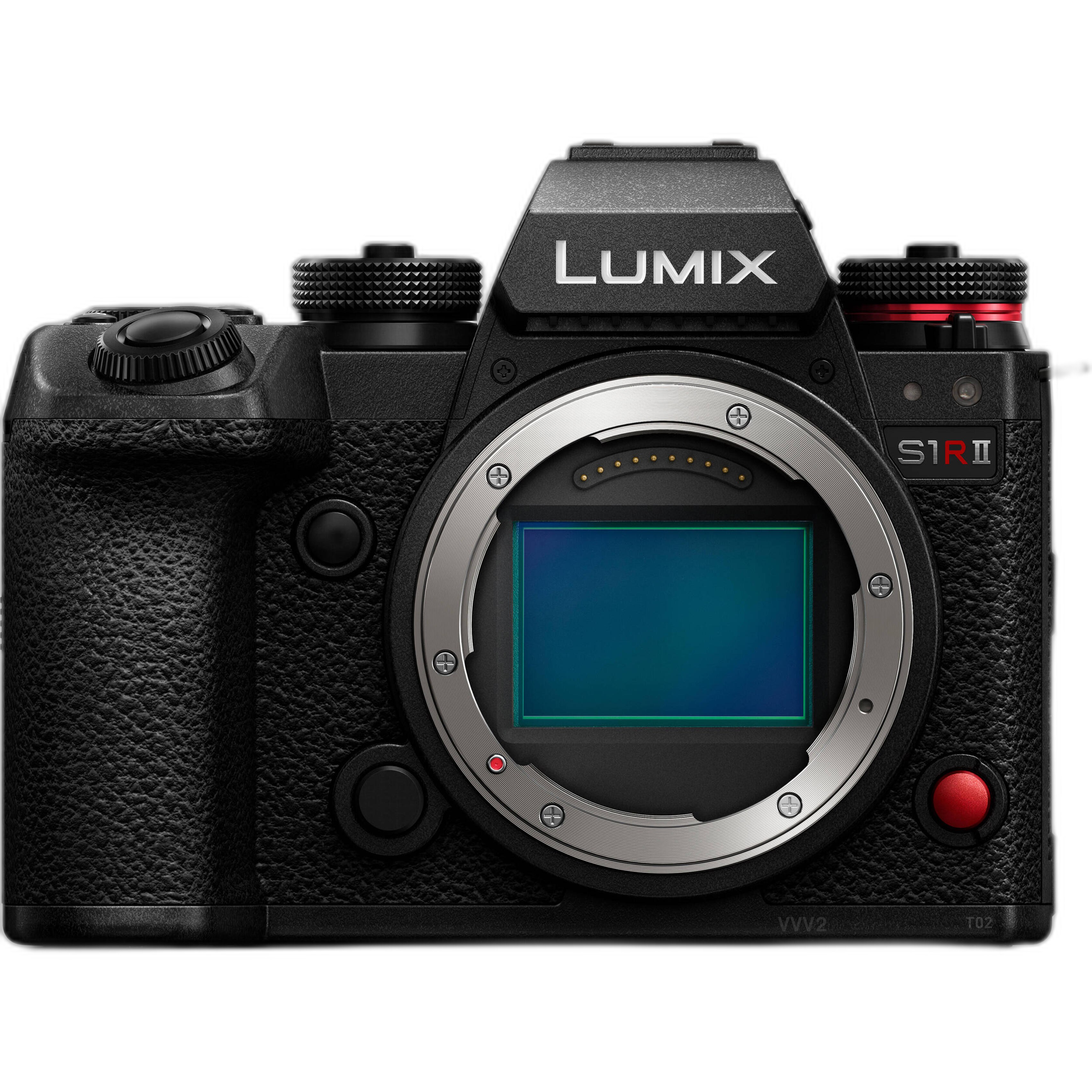
Panasonic’s announcement of the Lumix S1 marks a major turning point for the company. Long associated with Micro Four Thirds through the hugely influential Lumix G series, Panasonic is now stepping decisively into the full-frame mirrorless market with a new flagship system built around the L-mount. Introduced as part of the new Lumix S family, the S1 arrives as a camera aimed squarely at serious hybrid creators—photographers and filmmakers alike—who want full-frame image quality, advanced stabilization, and high-end video performance in a professional body.
At launch, the Panasonic Lumix S1 enters the market with a 24.2-megapixel full-frame sensor, 4K60 video, in-body image stabilization, and a launch price of $2,499. More than just another new camera body, the S1 represents Panasonic’s full commitment to a broader professional ecosystem, and it does so with unusually ambitious intent for a first-generation system camera.
Panasonic Enters the Full-Frame Mirrorless Race
By early 2019, the full-frame mirrorless category had become one of the most closely watched segments in photography. Sony had already established itself as a major player, while Canon and Nikon had recently launched their own new full-frame mirrorless systems. Panasonic’s response was not to adapt an existing mount upward, but to build a new platform around the L-mount, developed in cooperation with Leica and Sigma through what became known as the L-Mount Alliance.
That alliance gave Panasonic an unusual advantage at launch. Rather than asking buyers to commit to a brand-new system with a thin roadmap, the company could present the S1 as part of a mount standard with immediate strategic depth. For working photographers, that matters. A camera body can be compelling, but lenses and long-term system support are what determine whether a platform feels viable. Panasonic clearly understood that, and the S1’s debut was as much about system confidence as it was about the camera itself.
A 24.2MP Full-Frame Sensor for Versatility
At the heart of the Lumix S1 is a 24.2MP full-frame sensor, a resolution choice that reflects Panasonic’s intention to balance still-image performance with serious video capability. In 2019, 24 megapixels remained a highly practical sweet spot for a broad range of users: enough resolution for commercial work, portraiture, event coverage, travel, and general professional use, without pushing file sizes or low-light performance in a direction that would compromise speed or flexibility.
For photographers stepping up from smaller formats, the move to full frame promises familiar benefits: broader dynamic potential, shallower depth of field with comparable lenses, and strong overall image quality. Panasonic’s decision to launch the S1 with this sensor class also suggests a camera designed to be dependable across many kinds of assignments rather than narrowly specialized for one.
4K60 Signals Panasonic’s Hybrid Ambition
If Panasonic built its reputation in mirrorless on anything beyond compact design, it was video. The Lumix GH line had already become deeply respected among independent filmmakers, documentarians, and multimedia creators. So it is no surprise that the Lumix S1 arrives with 4K60, immediately signaling that this is not a stills-first full-frame camera with video added as an afterthought.
That specification alone made the S1 stand out at release. In the context of 2019, 4K at 60 frames per second was still a headline feature, especially in a full-frame mirrorless body at this price point. It reinforced Panasonic’s long-standing identity as a maker of hybrid tools and suggested that the company intended the S1 to appeal not just to traditional photographers, but also to production-minded shooters who needed robust motion capabilities in a portable package.
For creators already familiar with Panasonic’s video heritage, the S1 looked like a logical next step: a camera that could bring the company’s serious video DNA into a larger-sensor format without abandoning the needs of still photographers.
In-Body Image Stabilization Adds Everyday Practicality
Another key part of the Lumix S1’s appeal is its inclusion of in-body image stabilization. By 2019, IBIS had become one of the most desirable features in high-end mirrorless cameras, and Panasonic wisely made it central to the S1 proposition. For handheld photography, stabilization expands usable shutter speeds and makes available-light work more forgiving. For video shooters, it can help smooth motion and reduce reliance on support gear in fast-moving environments.
Panasonic had already earned trust for stabilization technology in its earlier cameras, so its presence in the S1 carried real weight. In a full-frame launch body, IBIS was more than a convenience feature—it was part of the message that the Lumix S system was arriving fully competitive and professionally serious from day one.
The L-Mount as a System Statement
The L-mount is one of the most historically significant parts of the S1 story. Panasonic did not simply release a new camera; it introduced a new direction for the company’s professional ambitions. The L-mount tied the S1 to a broader cross-brand lens ecosystem, one with both premium heritage and future growth potential.
For buyers considering a new full-frame platform in 2019, mount choice was not a small matter. A new body could be exciting, but the real question was whether the system would mature quickly enough to support working needs. Panasonic’s alignment with Leica and Sigma made the S1 announcement far more consequential than a single-body launch. It positioned Lumix as part of a larger conversation about open system development in the mirrorless era.
This also gave the S1 a distinctly different identity from many rival launches. Rather than building entirely behind proprietary walls, Panasonic entered full frame with a collaborative framework already in place. Historically, that makes the S1 not just an important Panasonic camera, but an important early chapter in the L-mount story itself.
Launch Price and Market Position
With a launch price of $2,499, the Lumix S1 entered the market at a level consistent with enthusiast-professional full-frame mirrorless competition. That pricing signaled confidence. Panasonic was not trying to undercut the market with a stripped-down entry body; it was presenting the S1 as a serious tool meant to be compared on capability, build, and long-term system value.
Given the combination of a 24.2MP full-frame sensor, 4K60 video, IBIS, and a new pro-oriented mount ecosystem, the S1’s pricing placed it in a very deliberate position: attainable for committed enthusiasts, but clearly designed with advanced users and working creators in mind.
Why the S1 Mattered in 2019
Looking at the S1 from the release period, what stands out is not just the specification list, but the confidence of the launch. Panasonic did not test the waters with a cautious full-frame experiment. Instead, it entered the segment with a camera that reflected many of the values that had already made Lumix respected: strong video credentials, practical stabilization, robust system thinking, and a willingness to compete seriously in enthusiast and professional spaces.
The S1 also represented a broader shift in Panasonic’s identity. For years, the company had been a major innovator in mirrorless design, but the move to full frame suggested a desire to extend that influence into new creative territory. The result was a camera that felt significant from the moment it was announced—both as a product and as a strategic statement.
Final Thoughts
The Panasonic Lumix S1 is one of the most important Panasonic camera announcements of 2019. With its 24.2MP full-frame sensor, 4K60 video, in-body image stabilization, and adoption of the L-mount, it introduced Panasonic as a full-frame mirrorless contender with genuine ambition. For photographers and filmmakers watching the market at the time, the S1 was a clear sign that Panasonic intended to be taken seriously at the highest levels of mirrorless system development.
For those interested in Panasonic history, full-frame mirrorless evolution, or the continuing growth of the Lumix S system, the S1 remains a landmark release. To buy Panasonic gear or learn more about historic and current camera systems, visit Unique Photo.