Compare the Panasonic Lumix S 20mm f/2.5 Lens with the Lumix G 20mm f/1.7 II and Sony E 20mm f/2.8 by mount, view, size and price.
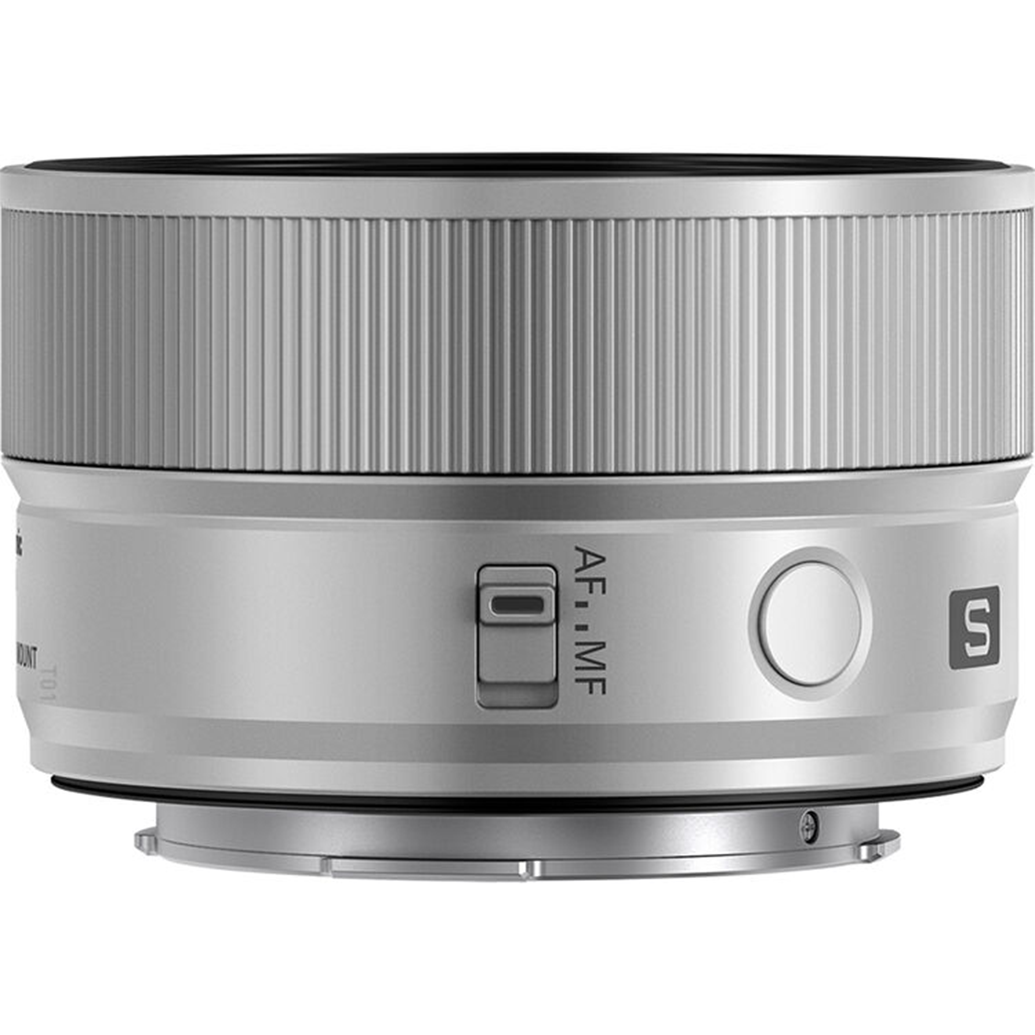
Three 20mm lenses, three different mounts
These are three 20mm primes, but they are not interchangeable purchases for the same camera. The Panasonic Lumix S 20mm f/2.5 Lens - Black is a full-frame L-Mount lens. The Panasonic Lumix G 20mm f/1.7 II ASPH. Standard Lens - Silver uses the Panasonic Lumix G mount. The Sony E 20mm f/2.8 E-mount Prime Lens uses Sony E Mount for NEX cameras. Check the camera mount before comparing aperture or price.
A shared focal length does not guarantee shared framing across camera systems. Panasonic lists a 94° diagonal angle of view for the S and 57° for the G. Sony describes its lens as providing a 30mm-equivalent view in 35mm terms. For someone choosing a camera system, those differences matter as much as the dimensions. For someone who already owns a camera, compatibility narrows the decision first.
Shared specifications side by side
The magnification row below uses reproduction ratios, not 35mm-equivalent magnification. The aperture figures describe each lens's available opening range.
| Specification | Lumix S 20mm f/2.5 | Lumix G 20mm f/1.7 II | Sony E 20mm f/2.8 |
|---|---|---|---|
| Mount | L-Mount | Panasonic Lumix G | Sony E Mount for NEX |
| Focal length | 20mm | 20mm | 20mm |
| Maximum aperture | f/2.5 | f/1.7 | f/2.8 |
| Minimum aperture | f/22 | f/16 | f/22 |
| Minimum focus distance | 0.18m | 0.2m | 0.2m |
| Maximum magnification | 0.15x | Approx. 0.13x | 0.12x |
| Filter size | 62mm | 46mm | 49mm |
| Length | 40.9mm | Approx. 25.5mm | Approx. 20.4mm |
| Weight | Approx. 142g, excluding front and rear caps | Approx. 87g, excluding front and rear caps | 69g |
| Aspherical elements | 3 | 2 | 3 |
The Sony is the lightest and shortest of these three lenses. The S requires the largest filter diameter. That matters if filters are already part of the kit: a 46mm filter for the G is not a direct fit on either of the other lenses. Element counts describe construction, not a ranking of image quality.
Framing: 94° is not the same job as 57°
The S lens's 94° diagonal view is useful when the frame needs to include more of a room or a broad foreground. Its full-frame 20mm coverage makes it a wide-angle choice, rather than simply a small general-purpose prime. In a confined interior, that broad view can matter more than gaining a wider maximum aperture.
The G lens's 57° diagonal view is narrower. From a fixed camera position, it includes less of the surroundings, which can help when the aim is a more selective composition. Buying it because the barrel says 20mm would miss this important distinction.
Sony's 30mm-equivalent specification provides another framing reference. Judge it by that equivalent view rather than expecting the coverage of a full-frame 20mm lens. Panasonic also lists crop zoom support for the S. Cropping narrows the view; it does not change the lens's optical focal length.
Aperture, close focus and stabilization
The G has the widest maximum aperture here at f/1.7. A wider opening gives more room to use a faster shutter speed or lower ISO for a given exposure. The S opens to f/2.5, while the Sony opens to f/2.8. The aperture difference between those two is smaller than the gap between either one and the G.
That does not make aperture alone a reliable ranking of background blur across these systems. Framing and subject distance also matter. The S uses seven diaphragm blades with a circular aperture diaphragm; Panasonic also lists a circular diaphragm for the G.
The S focuses closest at 0.18m and reaches 0.15x maximum magnification. The G and Sony both focus to 0.2m, with approximately 0.13x and 0.12x magnification respectively. The S therefore has the highest listed reproduction ratio, useful when small details are part of a wider composition.
Neither the S nor the Sony has lens-based image stabilization. A wider aperture can help keep shutter speeds up, but it does not steady the camera during a handheld exposure or video take.
Carry size, outdoor protection and focus controls
The S measures 40.9mm and weighs approximately 142g without its caps. It is compact, but the G is shorter at approximately 25.5mm and lighter at approximately 87g without caps. Sony lists a 20.4mm length and 69g weight. If keeping the lens from projecting far beyond the camera is the main concern, those dimensions deserve attention.
Panasonic lists dust-, splash- and freeze-resistant construction for the S, along with a fluorine-coated front element. Those features are relevant to outdoor work, though splash resistance is not a substitute for keeping equipment out of water. The S also supports customizable control functions.
The Sony lists autofocus with an internal stepping motor and Direct Manual Focus. The G supports contrast AF and has a metal mount. Panasonic also specifies multi-coated elements on the G to reduce ghosting and flare. These are specific construction and control features, not grounds for assuming which lens will focus faster or produce sharper files.
Who should choose each lens
Lumix S: a broad view for an L-Mount kit
Choose the S for an L-Mount camera when full-frame 20mm coverage is the requirement. Its 94° view and resistant construction are more persuasive reasons than its focal-length label alone. The black version is available to order for $497.99. The Panasonic Lumix S 20mm f/2.5 Lens - Silver is available to preorder for $497.99.
Lumix G: a wider aperture for a compatible G camera
Choose the G when the camera uses the Panasonic Lumix G mount and the priorities are an f/1.7 opening and a short lens. Its 57° diagonal view suits a more selective frame than the S provides. The silver version is available to order for $297.99.
Sony E: the smallest option for a compatible NEX kit
Choose the Sony for a compatible E-mount NEX camera when minimum lens size matters more than a wider maximum aperture. Its 69g weight and 20.4mm length are the main physical advantages in this comparison. It provides a 30mm-equivalent view, includes Direct Manual Focus and is in stock for $378.
Prices at Unique Photo
- Panasonic Lumix S 20mm f/2.5 Lens - Silver: $497.99 (preorder)
- Panasonic Lumix S 20mm f/2.5 Lens - Black: $497.99
- Panasonic Lumix G 20mm f/1.7 II ASPH. Standard Lens - Silver: $297.99
- Sony E 20mm f/2.8 E-mount Prime Lens: $378.00
Prices as of November 7, 2026. Browse more: Mirrorless Lenses, Panasonic at Unique Photo.
Related reading: Panasonic Lumix S 20mm f/2.5 Lens: Specs, Price and What's New.
Frequently asked questions
Do the Panasonic Lumix S and Lumix G 20mm lenses use the same mount?
No. The Lumix S 20mm f/2.5 uses L-Mount, while the Lumix G 20mm f/1.7 II uses the Panasonic Lumix G mount.
Which of these 20mm lenses is the lightest?
The Sony E 20mm f/2.8 weighs 69g. Panasonic lists approximately 87g for the Lumix G and 142g for the Lumix S, both excluding front and rear caps.
Does the Panasonic Lumix S 20mm f/2.5 have image stabilization?
No. The Lumix S 20mm f/2.5 does not have lens-based image stabilization.
What is the Sony E 20mm f/2.8 equivalent focal length?
Sony lists a 30mm-equivalent focal length in 35mm format terms. Its actual focal length is 20mm.