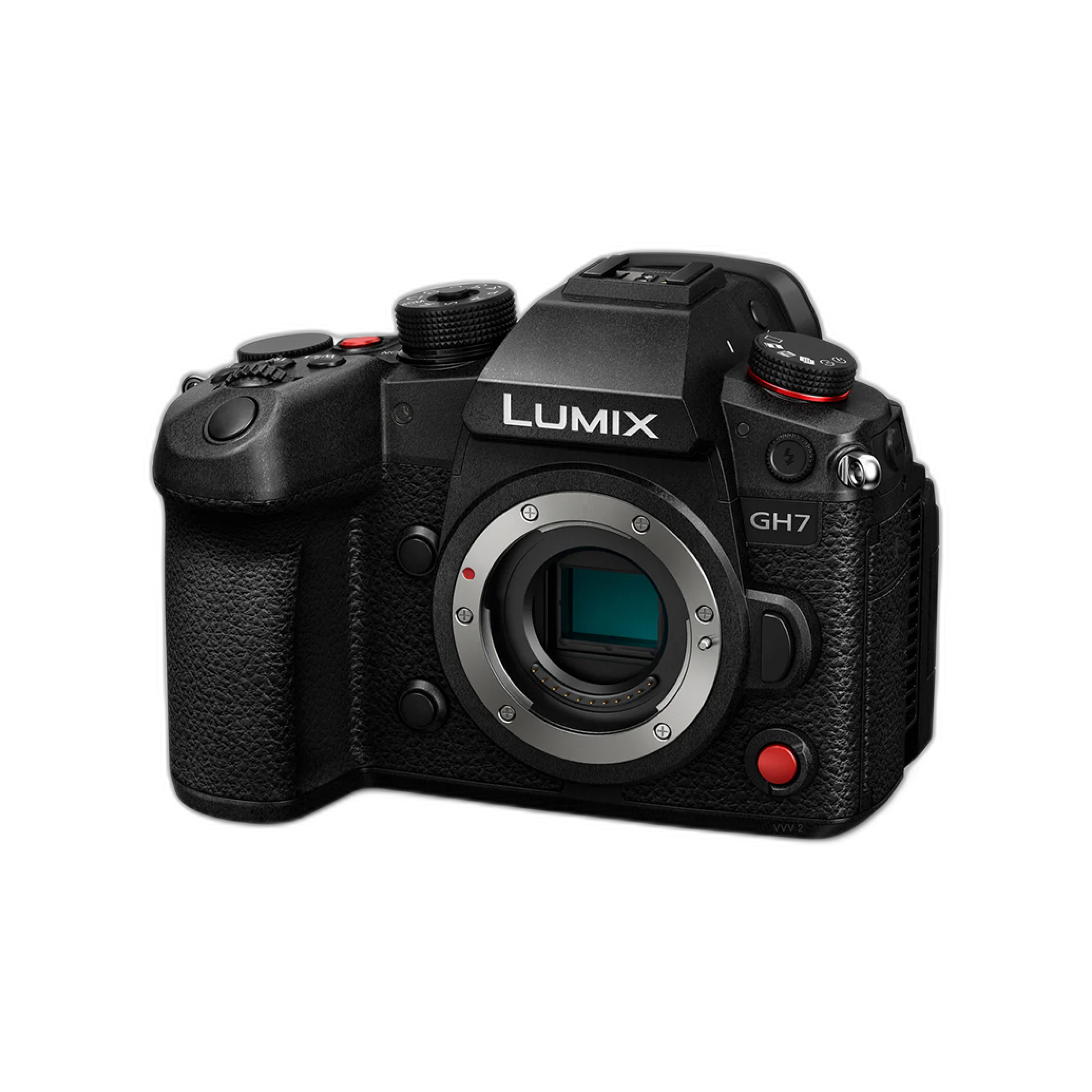
Panasonic Pushes the GH Series Forward with the Lumix GH7
With the announcement of the Panasonic Lumix GH7 on May 22, 2024, Panasonic refreshed one of the most influential names in hybrid imaging. For years, the GH line has held a special place among filmmakers, content creators, documentarians, and hybrid shooters who wanted serious video features in a compact, affordable body. The GH7 arrives as a particularly notable milestone because it combines the established strengths of the series with one of the most requested upgrades in recent Lumix history: phase-detect autofocus.
At launch, the Lumix GH7 entered the market at $2,199 USD, positioning it as a premium Micro Four Thirds body aimed squarely at demanding creators. It keeps the Micro Four Thirds mount that helped define the system’s compact versatility, while introducing a 25.2-megapixel Micro Four Thirds PDAF sensor and headline-grabbing 5.7K ProRes RAW internal recording. In other words, Panasonic did not treat the GH7 as a modest refresh; it announced a camera designed to reinforce the GH family’s reputation as a video powerhouse.
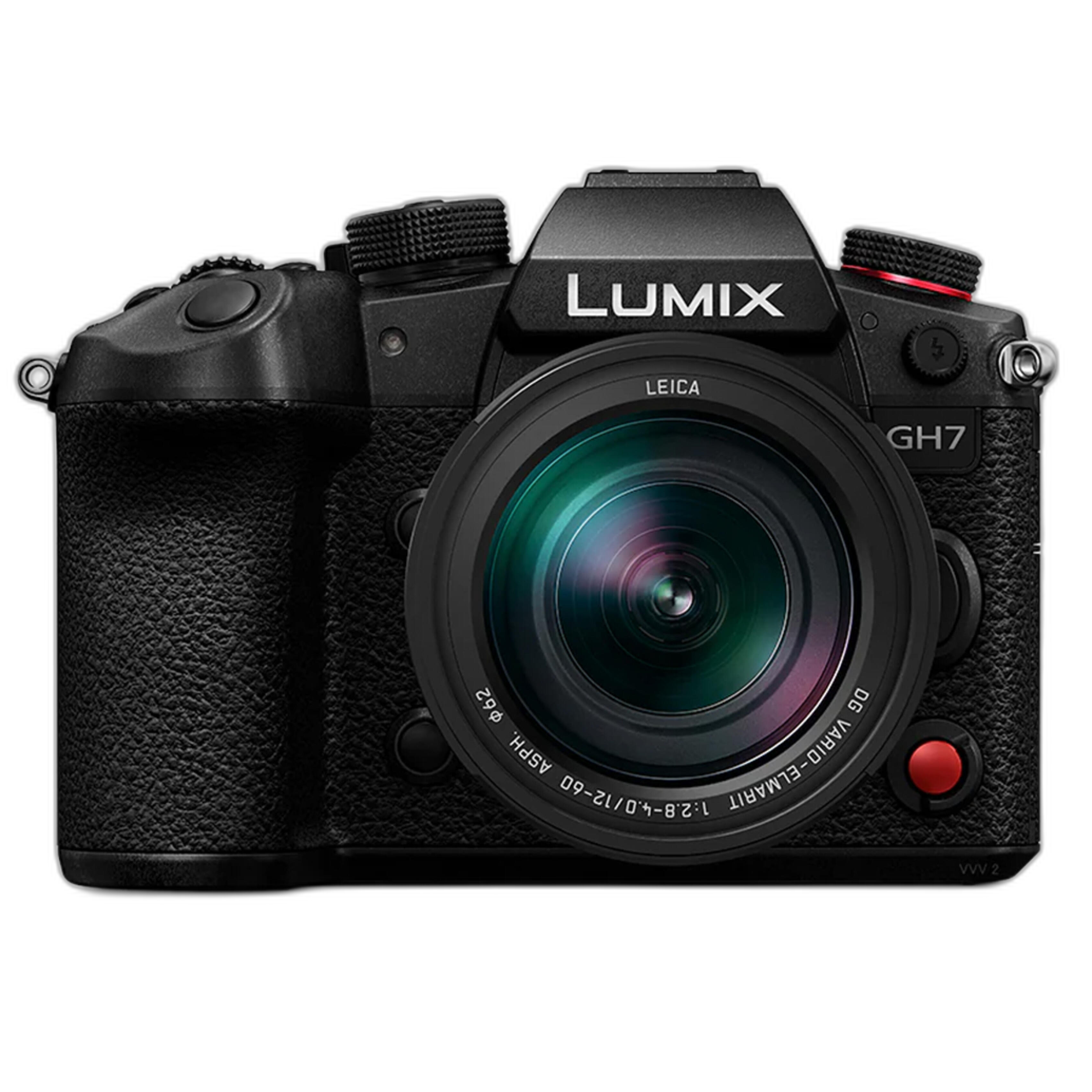
A Historically Important GH Update
To understand why the GH7 announcement mattered, it helps to remember what the GH series has represented. Earlier GH models earned strong followings by offering video-centric features well before many competitors took hybrid video seriously. The line became associated with high-end recording options, deep codec support, robust controls, and flexible performance for independent production. From small crews to solo operators, GH cameras often punched above their size and price.
By 2024, however, autofocus had become one of the central battlegrounds in hybrid mirrorless design. Panasonic users had long appreciated the company’s color science, stabilization, and video toolset, but many also hoped for a more decisive autofocus solution for moving subjects, gimbal use, event work, and fast-paced run-and-gun production. The GH7 announcement answered that demand directly with a phase-detect autofocus system built into its new 25.2MP sensor.
That single change gave the GH7 significance beyond a normal spec-sheet update. It suggested Panasonic was not merely maintaining the GH formula, but adapting it to creator expectations in 2024.
Key Specifications at Launch
25.2MP Micro Four Thirds PDAF Sensor
At the center of the camera is a 25.2MP Micro Four Thirds sensor with phase-detect autofocus. For the GH line, this was one of the defining talking points of the release. The resolution gave photographers and hybrid creators a modern pixel count for stills and oversampled video workflows, while the PDAF implementation signaled a major practical improvement for subject acquisition and tracking.
5.7K ProRes RAW Internal Recording
Another standout specification at launch was 5.7K ProRes RAW internal recording. This is exactly the kind of feature that reinforces the GH series identity. Panasonic has long understood that serious video users care not only about resolution, but also about codec flexibility, post-production latitude, and efficient professional workflows. Internal ProRes RAW recording in a relatively compact Micro Four Thirds camera was a powerful statement about the intended audience for the GH7.
Micro Four Thirds Mount
The camera continues to use the Micro Four Thirds mount, preserving compatibility with one of the most mature mirrorless lens ecosystems in the industry. For existing Lumix G users, this meant continuity and investment protection. For newcomers, it meant access to a wide range of compact lenses suited to travel, documentary, wildlife, street shooting, and video rigging.
Launch Price
Panasonic announced the GH7 at a launch price of $2,199 USD. In context, that price placed it in a serious enthusiast and professional hybrid category, but still within reach for many working creators and owner-operators who needed advanced recording features without stepping into far more expensive cinema systems.
Why Phase-Detect AF Was Such a Big Deal
If there was one feature likely to dominate first reactions to the GH7, it was phase-detect autofocus. Panasonic’s video cameras had earned admiration for many reasons, but autofocus conversations often overshadowed launches in the hybrid market. By bringing PDAF to the GH7, Panasonic addressed a long-running concern at the heart of real-world usability.
For filmmakers and content creators, autofocus is not just about convenience. It affects confidence on paid shoots, efficiency on solo productions, and consistency when working in dynamic environments. Weddings, events, interviews with movement, sports-adjacent coverage, documentary walk-and-talks, and creator-driven direct-to-camera work all benefit when autofocus is more predictable and sticky. The GH7’s announcement made it clear that Panasonic intended to pair its traditional video strengths with autofocus performance more aligned with market expectations.
Just as importantly, this improvement arrived in a body that remained rooted in the GH tradition rather than abandoning it. The message was not that Panasonic had moved away from videographers; it was that Panasonic was giving videographers an overdue autofocus upgrade.
The Continuing Appeal of Micro Four Thirds
In 2024, Micro Four Thirds remained a format with clear advantages, especially for video-minded users. The GH7’s announcement reaffirmed Panasonic’s commitment to the system at a time when some shoppers reflexively looked only at larger sensors. But format choice has always been about more than sensor size alone.
Micro Four Thirds offers practical benefits that matter in the field: smaller lenses, lighter kits, easier balancing on gimbals, and long-established lens variety. For travel creators, documentary shooters, and anyone building a portable production package, these factors can be more important than spec-sheet prestige. The GH series historically thrived because Panasonic built cameras that emphasized what creators could actually do, not just what looked best in marketing shorthand.
The GH7 continued that tradition. Its combination of a 25.2MP sensor, professional internal recording capability, and the mature Micro Four Thirds ecosystem made it attractive to users who prioritize a compact but highly capable production tool.
A Camera Aimed at Serious Hybrid Creators
The GH7 was not announced as an entry-level mirrorless model. Its feature set and pricing clearly targeted advanced users who needed robust imaging tools in a manageable body. That includes independent filmmakers, YouTubers, educators, live-event shooters, commercial content teams, and experienced enthusiasts who had outgrown simpler cameras.
The phrase “video king” has followed the GH line for years, and Panasonic’s 2024 announcement showed why that reputation persisted. Features like 5.7K ProRes RAW internal recording are not casual additions. They reflect a camera designed for users who care deeply about recording quality, editing flexibility, and future-proof capture. At the same time, the inclusion of PDAF broadened the camera’s appeal to hybrid users who wanted stronger stills-and-video crossover usability.
That balancing act is one reason the GH7 was such an interesting release. It did not attempt to become a generic mirrorless camera for everyone. Instead, it sharpened the GH identity while removing a major historical objection from some buyers.
How the GH7 Fits into Panasonic History
Seen from a historical perspective, the Lumix GH7 stands as a meaningful chapter in Panasonic’s mirrorless development. Panasonic had already established itself as a major force in video-oriented camera design, and the GH family played a foundational role in that reputation. The GH7 built on that legacy by preserving the things longtime users valued most—strong video specifications, a compact interchangeable-lens body, and workflow-friendly features—while evolving in a way that clearly reflected market demand.
That makes the GH7 more than a yearly update. It is an archival marker for the point at which Panasonic’s video-first Micro Four Thirds flagship embraced phase-detect autofocus while continuing to deliver high-end internal recording options. For many observers around launch, that combination made the camera feel like one of the most consequential GH announcements in years.
Final Thoughts
The Panasonic Lumix GH7, announced on May 22, 2024, arrived as a major release for hybrid shooters who wanted Panasonic’s established video strengths with a more modern autofocus approach. With its 25.2MP Micro Four Thirds PDAF sensor, 5.7K ProRes RAW internal recording, Micro Four Thirds mount, and $2,199 launch price, the GH7 immediately stood out as one of the most important camera announcements of its class in 2024.
For longtime GH users, it represented continuity and progress at the same time. For newcomers, it offered a compelling entry into a celebrated video-centric system. If you want to explore the Panasonic Lumix GH7, compare Lumix G lenses, or learn more about the history and evolution of creator-focused cameras, Unique Photo is a great place to shop and stay informed.