Panasonic has officially announced the Lumix GH6, a long-awaited new flagship in the company’s video-centric Lumix G lineup. Revealed on February 22, 2022, the GH6 arrives as a major statement camera for hybrid creators, filmmakers, and photographers who have followed the Micro Four Thirds system for years. With a new 25.2MP Micro Four Thirds sensor, internal ProRes recording, and 5.7K60 video, Panasonic is clearly positioning the GH6 as one of the most ambitious cameras ever built around the Micro Four Thirds mount.
At launch, the Panasonic Lumix GH6 entered the market at $2,199 in the U.S., placing it squarely in enthusiast and professional territory. Yet the headline of the announcement is not merely price or resolution. It is Panasonic’s continued commitment to giving video shooters serious production tools in a compact interchangeable-lens body.
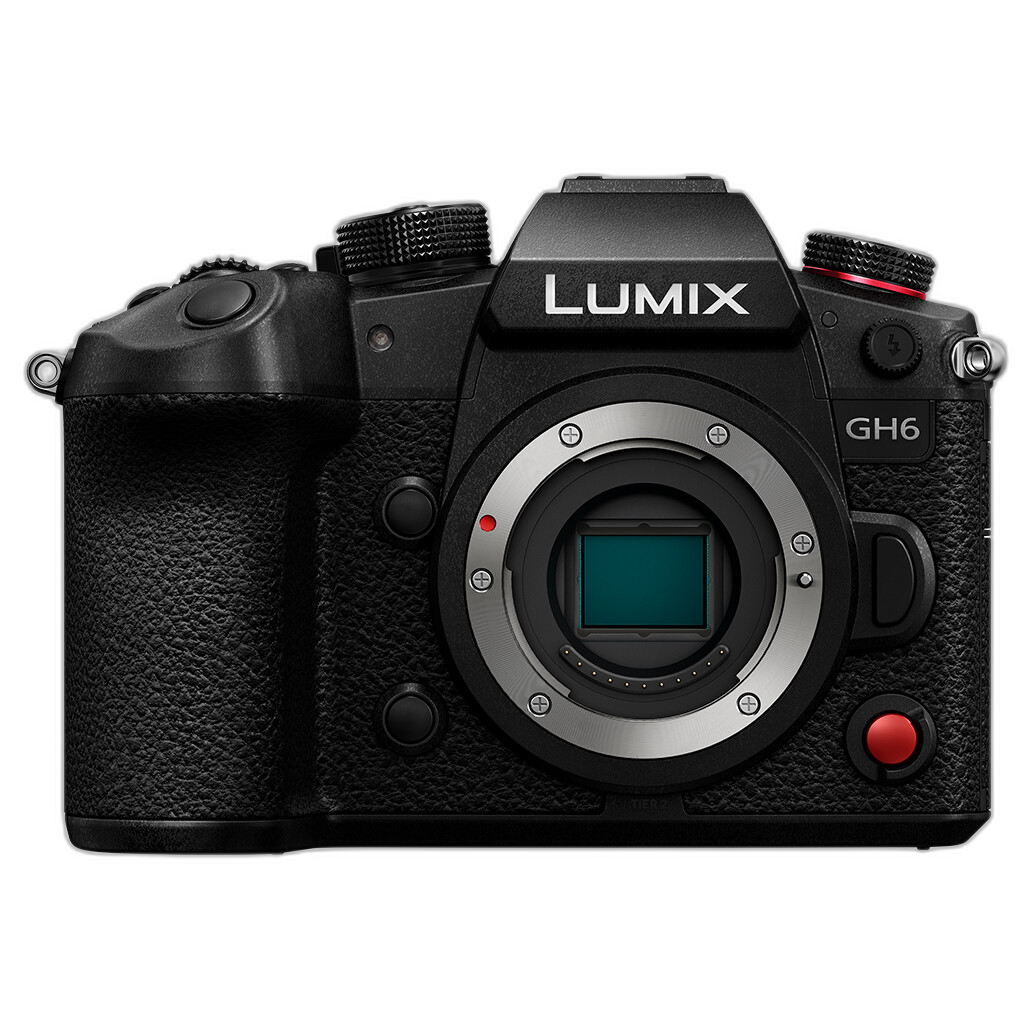
A New Flagship for the GH Line
The GH series has long held a special place in digital camera history. Earlier models helped redefine what mirrorless cameras could do for video creators, and they became especially influential during the rise of affordable independent filmmaking, YouTube production, and small-crew commercial work. With the GH6, Panasonic is not abandoning that legacy. Instead, it is expanding it with a camera that leans even further into high-end internal recording and creator-focused workflow features.
From the outset, the GH6 announcement made clear that this was not a modest iterative refresh. The inclusion of a 25.2-megapixel sensor marks a notable change for the line, giving users a new imaging platform while preserving the compactness and lens flexibility that have made Micro Four Thirds so appealing. Panasonic’s decision to pair that sensor with robust internal codecs reinforces the GH6’s identity as a serious production tool rather than simply a stills camera with strong video features.
25.2MP Micro Four Thirds Sensor
At the center of the Lumix GH6 is its 25.2MP Micro Four Thirds sensor. For GH-series users, this was one of the most important details in the announcement. Sensor updates matter not only for headline resolution, but also for the broader imaging pipeline: detail rendering, oversampling possibilities, cropping flexibility, and how a camera supports both still and moving image work.
Micro Four Thirds remains a distinctive format in the modern camera world. While larger sensors often dominate marketing conversations, the format continues to offer practical advantages that many working shooters value highly. These include smaller lenses, lighter overall kits, and excellent adaptability for handheld video, travel work, documentary shooting, and gimbal use. The GH6 announcement reaffirmed Panasonic’s confidence that there is still strong demand for a high-performance camera built around these strengths.
For photographers, 25.2 megapixels also represents a healthy amount of resolution for everyday professional use, editorial work, web delivery, and many print applications. For hybrid users, it means the GH6 is not limited to being a niche cine body; it remains part of the broader mirrorless tradition of serving multiple creative roles.
5.7K60 Video as a Headline Feature
If there is a single specification that captured the attention of video shooters at launch, it is 5.7K60. Panasonic has built much of the GH reputation on advanced internal recording options, and the GH6 pushes that lineage further. Recording at 5.7K and up to 60 frames per second gives filmmakers and content creators a level of flexibility that was once reserved for far more specialized cinema systems.
Higher-resolution capture offers several practical advantages. It can provide additional room for reframing in post, facilitate oversampled delivery for lower-resolution final outputs, and help future-proof footage in a fast-changing production environment. The 60 fps capability also signals that Panasonic designed the GH6 not merely for static, locked-off work, but for dynamic production scenarios where slow motion or fluid motion rendering may be essential.
In the context of early 2022, this specification helped the GH6 stand out in an increasingly competitive mirrorless market. Panasonic’s message was clear: the GH6 was intended to remain a benchmark camera for creators who demand advanced video tools without stepping into the size, cost, and rigging requirements of larger cinema bodies.
Internal ProRes Recording Comes to the GH Series
Perhaps the most historically significant part of the GH6 announcement was the inclusion of internal ProRes recording. For many filmmakers and editors, ProRes has long been associated with high-quality, edit-friendly workflows. Bringing ProRes recording inside a compact mirrorless camera body was a meaningful development and one of the strongest signals yet that Panasonic understood the practical needs of serious working videographers.
Internal ProRes can streamline production by reducing the need for external recording hardware in some setups. That can mean a leaner rig, faster turnaround, and less complexity on set. For solo operators, event shooters, documentary creators, and small crews, those workflow benefits can be just as important as image quality itself.
The GH line had already earned a reputation for giving users advanced codecs and professional-level recording options at relatively accessible prices. With the GH6, Panasonic deepened that identity. Rather than treating professional workflows as an optional extra, the camera’s announcement positioned them near the center of the product’s value proposition.
The Continued Importance of the Micro Four Thirds Mount
The Micro Four Thirds mount remains one of the key reasons the GH6 matters. By 2022, the camera industry had seen intense competition from APS-C and full-frame mirrorless systems, yet Micro Four Thirds continued to offer a mature and diverse lens ecosystem. For many users, that lens catalog is a major part of the format’s enduring appeal.
Panasonic’s mount choice for the GH6 meant continuity for existing Lumix G users and for anyone invested in the broader Micro Four Thirds system. It also ensured access to a wide range of compact primes, zooms, and specialist optics. For run-and-gun filmmakers, wildlife shooters, and travel creators, that portability remains an advantage that should not be underestimated.
Historically, the GH series has often served as proof that camera usefulness cannot be measured by sensor size alone. The GH6 announcement continued that argument. Panasonic was effectively saying that a thoughtfully designed Micro Four Thirds flagship could still deliver cutting-edge results for modern hybrid production.
Launch Price and Market Position
With a launch price of $2,199, the GH6 entered the market as a premium enthusiast and professional tool. That pricing reflects the camera’s role as a flagship model rather than an entry-level body. It also underscores how Panasonic saw the GH6: as a serious investment for creators who wanted advanced recording capability, a new sensor, and the proven flexibility of the Lumix G system.
Compared with the wider market at the time, the GH6’s value proposition centered on features and workflow rather than purely on sensor format. Buyers considering the camera in 2022 were likely doing so because they needed Panasonic’s particular mix of compactness, video-forward design, and internal recording strength. In that sense, the GH6 followed the best traditions of the GH family: it was built for users with clear priorities and demanding workflows.
Why the GH6 Announcement Matters
The Panasonic Lumix GH6 announcement stands as an important moment in mirrorless camera history. It showed that Panasonic was still fully committed to the GH concept and still willing to push technical boundaries within the Micro Four Thirds format. A 25.2MP sensor, 5.7K60 recording, and internal ProRes made the camera immediately notable, but the deeper significance lies in how those features were packaged together for real-world creators.
For longtime GH users, the camera represented continuity and evolution at the same time. For new buyers, it offered a reminder that the best camera system is not always the one with the largest sensor, but the one whose design best supports the work you actually do.
Final Thoughts
Seen from its 2022 release moment, the Panasonic Lumix GH6 looked like a bold reaffirmation of Panasonic’s place in the hybrid and filmmaking world. It built on the GH line’s hard-earned reputation while adding a new 25.2MP Micro Four Thirds sensor, 5.7K60 video, and internal ProRes recording in a camera priced at $2,199. For creators invested in the Micro Four Thirds mount, it was one of the year’s most important announcements.
If you want to explore the GH6, compare Lumix cameras, or learn more about the history of Panasonic’s video-focused mirrorless systems, Unique Photo is a great place to buy camera gear or get expert guidance.