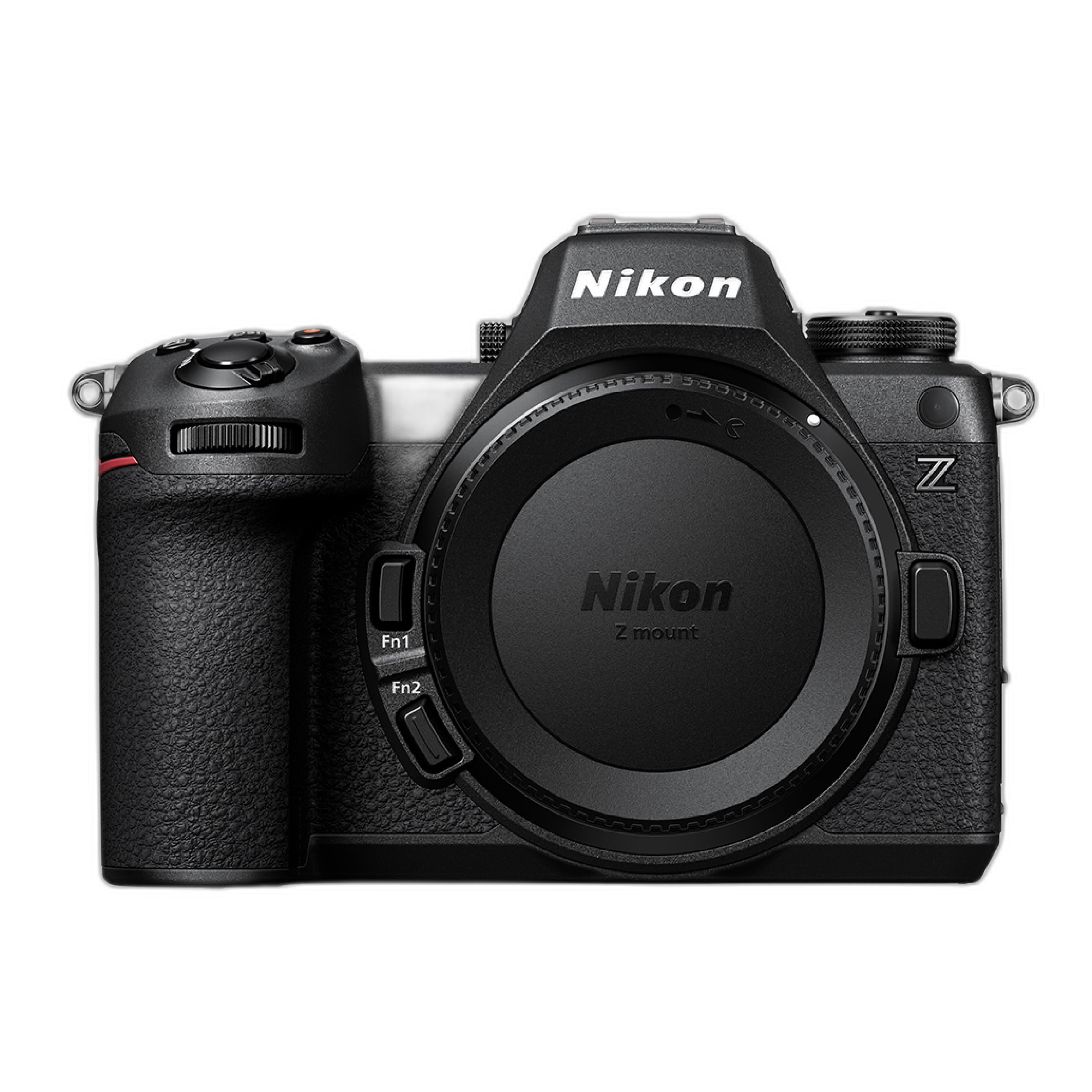
With the announcement of the Nikon Z6 on August 23, 2018, Nikon made clear that its long-awaited full-frame mirrorless system was not built around a single flagship statement alone. Alongside the higher-resolution Z7, the Z6 arrived as the more broadly approachable model in the new Z mount lineup: a 24.5MP full-frame BSI camera aimed at photographers and hybrid shooters who wanted speed, versatility, and modern video capability in a compact body. At a launch price of $1,999, the Z6 immediately positioned itself as the all-rounder of Nikon's mirrorless debut.
For Nikon users, this announcement marked more than the release of a new camera. It represented the beginning of a new chapter for the company, one centered on the Nikon Z mount and a fresh full-frame mirrorless platform designed for the future. The Z6 was especially important in that story because it was the model most likely to appeal to the widest group of enthusiasts and working photographers.
A New Full-Frame Mirrorless Direction for Nikon
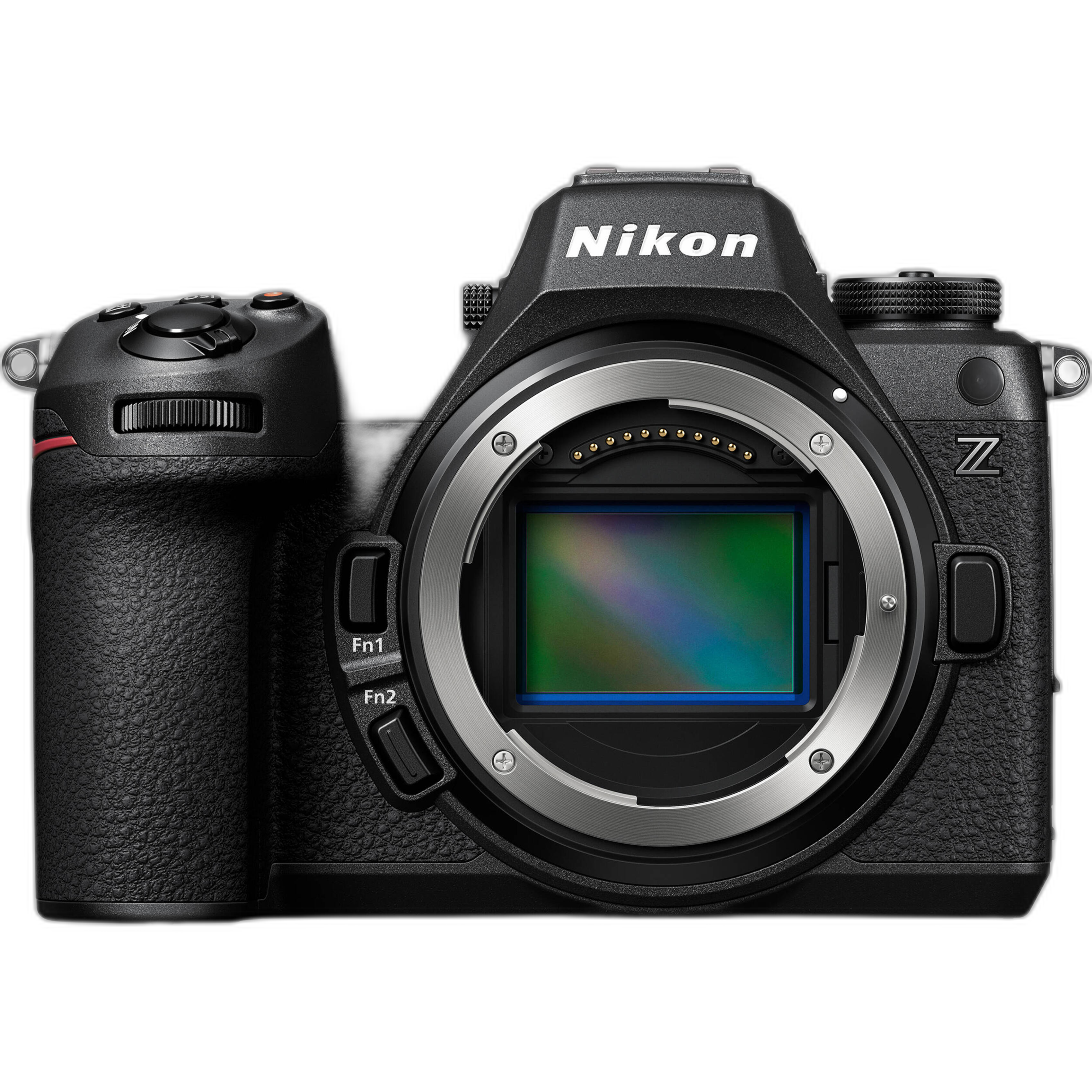
By 2018, the camera industry had already seen mirrorless develop from niche alternative into a serious professional and enthusiast format. Nikon's response was not to simply adapt an existing DSLR concept into a smaller package, but to launch an entirely new mount system: Nikon Z. The arrival of the Z6 therefore carried significance well beyond its own feature set. It served as one of the first proof points for how Nikon intended to compete in the mirrorless era.
The Z6 introduced photographers to the new Z mount at a more accessible price than its higher-resolution sibling, while still delivering a full-frame sensor, advanced video capability, and the kind of handling Nikon users expected. Historically, that made it the practical heart of the launch. If the Z7 was the headline-grabbing high-resolution body, the Z6 was the camera many users could imagine actually carrying every day.
The Nikon Z6's Position in the Launch Lineup
Nikon announced the Z6 as a 24.5MP full-frame BSI mirrorless camera built around flexibility rather than specialization. In Nikon's own emerging mirrorless hierarchy, that sensor resolution placed it in a sweet spot. It was high enough for serious still photography while remaining naturally suited to event work, general-purpose shooting, and lower-light use where balanced resolution can be an advantage.
The use of a back-side illuminated, or BSI, full-frame sensor was also notable. In 2018, sensor design was a major talking point across the industry, and the Z6's 24.5MP full-frame BSI configuration signaled that Nikon was aiming for strong all-around image quality rather than chasing pixel count alone. That decision helped define the camera's identity from the start: not merely a less expensive Z7, but a thoughtfully distinct model.
Why the Z6 Mattered at Launch
Historically, many photographers evaluating Nikon's mirrorless debut would have viewed the Z6 as the more practical entry point into the new system. Its price, sensor resolution, and broad feature balance made it especially appealing to users coming from enthusiast and professional Nikon DSLRs who were curious about mirrorless but not necessarily looking for the highest-resolution body available.
That broader appeal is part of why the Z6 announcement remains important in Nikon history. It was the camera that suggested the Z system was not just for one niche user. It was for wedding shooters, travel photographers, multimedia creators, and long-time Nikon owners looking ahead.
24.5MP Full-Frame BSI Sensor: Balanced by Design
At the center of the Nikon Z6 is its 24.5MP full-frame BSI sensor. Even at announcement, this specification immediately communicated balance. A resolution of 24.5 megapixels was well established as a strong fit for photographers who needed detailed files without stepping into the larger storage demands and workflow implications of ultra-high-resolution capture.
For many working photographers in 2018, this made the Z6 especially compelling. Full-frame image quality remained a major draw, and the BSI sensor architecture reinforced the impression that Nikon was building a camera for real-world versatility. Rather than marketing the Z6 solely as a stepping stone into the Z system, Nikon presented it as a serious camera in its own right.
In historical hindsight, that positioning was smart. The Z6 became associated with the kind of broad capability that often gives a camera a long life in photographers' memories: a machine built not for one narrow use case, but for nearly everything.
Nikon Z Mount and the Importance of a New System
The Nikon Z6 was also inseparable from the debut of the Nikon Z mount itself. A new mount announcement is always a major moment in camera history, particularly for a brand with as much legacy as Nikon. For decades, Nikon had been strongly identified with its DSLR and SLR heritage. The launch of the Z mount therefore carried both excitement and scrutiny.
As one of the first cameras to carry that mount, the Z6 functioned as an ambassador for the entire platform. Buyers were not just considering a camera body; they were considering a new lens ecosystem and a new long-term direction from Nikon. That gave the Z6 an outsized role in shaping first impressions of the system.
From an archival perspective, this is part of what makes the camera so significant. The Z6 was one of the bodies that turned the abstract idea of "Nikon mirrorless" into a tangible product line. It helped establish the Z mount not as an experiment, but as a serious foundation.
4K30 Video Signals Hybrid Intent
Another key part of the Nikon Z6 announcement was its support for 4K30 video. In 2018, serious video capability was increasingly expected in high-end stills cameras, and hybrid shooters were paying close attention to whether established photo brands could deliver. By equipping the Z6 with 4K30, Nikon underscored that the new camera was intended for more than still photography alone.
This was an important point in the context of the mirrorless market at the time. Mirrorless cameras had become especially attractive to creators who wanted one device for both photography and video. The Z6's 4K30 specification positioned it as a strong contender in that conversation and helped distinguish it as the more video-friendly and broadly flexible option in the initial Z lineup.
For users considering a move into the Z system at launch, that made the Z6 particularly interesting. It was not only a modern Nikon full-frame body; it was a camera aligned with the growing expectation that stills and video live side by side.
Launch Price and Market Position
At $1,999 at launch, the Nikon Z6 entered the market at a key price point. It sat meaningfully below the higher-resolution Z7 while still offering full-frame performance and entry into Nikon's new mirrorless ecosystem. Price often says as much about a product's intended audience as any feature list, and the Z6's launch pricing clearly suggested a camera aimed at a wide swath of advanced users.
That pricing strategy also mattered symbolically. Nikon's first full-frame mirrorless system needed a model that felt attainable enough to build momentum. The Z6 filled that role. It was premium, certainly, but not out of reach for the enthusiast or professional user already invested in Nikon's world and considering the jump.
An Early Verdict from 2018
Seen from the vantage point of its announcement, the Nikon Z6 looked like the most rounded expression of Nikon's mirrorless ambitions. It combined a 24.5MP full-frame BSI sensor, the all-new Nikon Z mount, 4K30 video, and a launch price of $1,999 into a package that made a persuasive case for Nikon's future beyond the DSLR.
What made the Z6 especially compelling was not any single headline specification, but the way its features came together. It felt calibrated for the photographer who wanted one camera to do many things well. In the context of Nikon's 2018 launch, that made it arguably the most consequential camera in the pair: the one likely to welcome the broadest audience into the Z system.
Closing Thoughts
The Nikon Z6 stands as one of the pivotal announcements of Nikon's transition into full-frame mirrorless. As an archival piece from its release period, it is easy to see why the camera drew so much attention: it represented Nikon's new beginning in a practical, flexible, and accessible form. For photographers interested in the history of Nikon mirrorless, the Z6 remains one of the defining cameras of 2018.
To explore Nikon cameras, lenses, and the continuing story of the Z system, visit Unique Photo to buy gear, compare options, or learn more from a retailer with deep roots in photographic equipment and history.