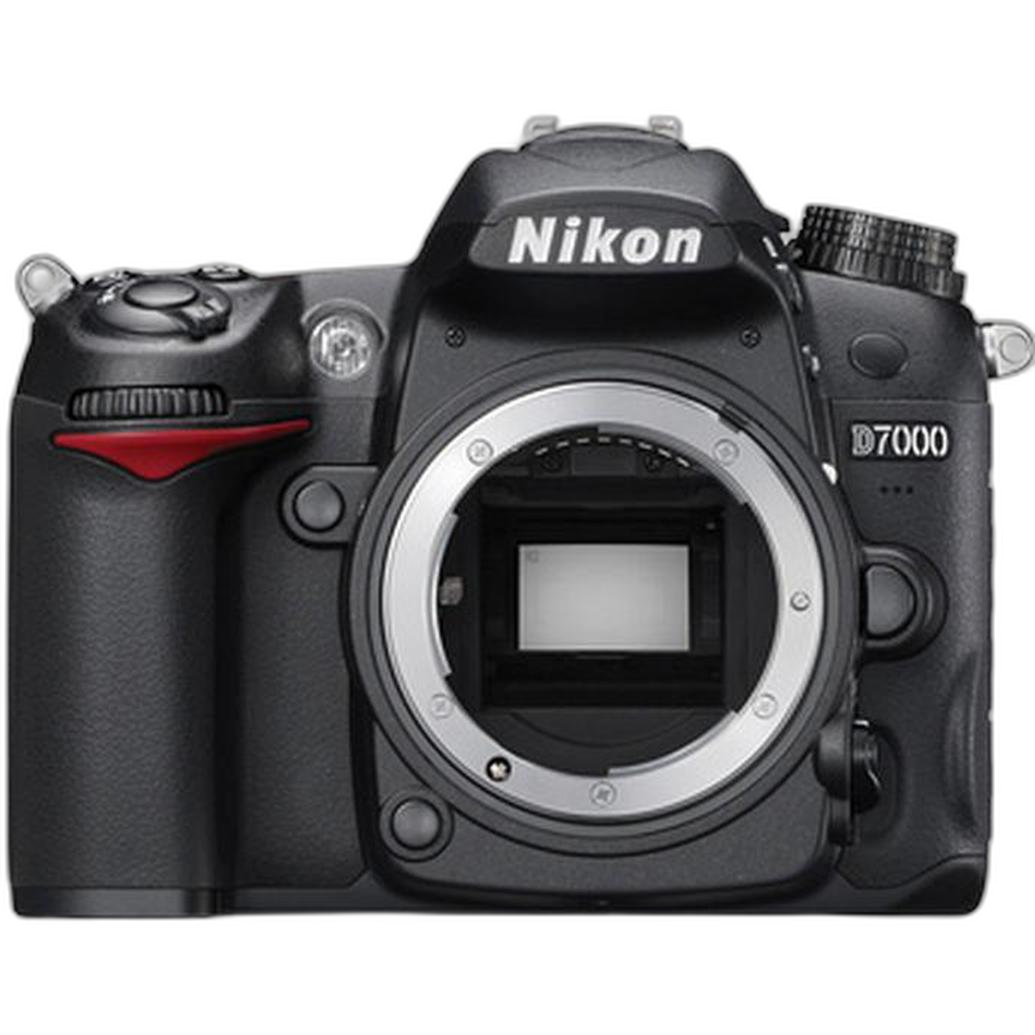
In Nikon’s DSLR lineup, the space between entry-level convenience and serious enthusiast control has often been where some of the company’s most beloved cameras emerge. With the September 2010 arrival of the Nikon D7000, Nikon made a strong statement about what an upper-midrange DX-format body could be. Positioned as a feature-rich camera for committed enthusiasts and ambitious photographers stepping up from beginner models, the D7000 brought together a 16.2MP APS-C sensor, Full HD 1080p video, and the flexibility of the Nikon F mount in a body that looked and felt purpose-built for real photographic work.
At a launch price of $1,199, the D7000 arrived at a moment when the DSLR market was evolving quickly. Resolution was important, video had become a major part of the buying conversation, and photographers increasingly expected advanced controls without necessarily moving all the way to a fully professional body. Nikon’s answer was a camera that delivered a remarkably broad skill set, one that appealed to travel shooters, portrait photographers, enthusiasts building lens collections, and multimedia-minded users who wanted one camera to cover almost everything.
A Key Camera in Nikon’s DX Evolution
By 2010, Nikon’s DX-format system had already proven itself as more than an entry point into interchangeable-lens photography. The format offered a practical balance of image quality, body size, lens variety, and affordability, and Nikon had been steadily refining how much performance could be packed into its enthusiast cameras. The D7000 represented a major step in that progression.
Rather than feeling like a modest update, the D7000 stood out as a camera designed to satisfy photographers who cared deeply about direct controls, handling, and room to grow. It fit naturally into the long-running Nikon tradition of enthusiast bodies that borrowed ideas from higher-tier models while maintaining a price point that kept them realistically within reach. For many photographers at the time, it looked like the sweet spot in the lineup: advanced enough to be taken seriously, approachable enough to become a daily workhorse.
16.2MP DX Sensor: A Strong Foundation
At the heart of the Nikon D7000 is a 16.2MP APS-C, or DX-format, sensor. In the context of 2010, that resolution placed it in a very appealing position. It offered enough detail for large prints, cropping flexibility, and all-around versatility without chasing numbers for their own sake. For enthusiast photographers, this was exactly the kind of specification that mattered in practical use: high enough to feel modern and capable, yet balanced for everyday photography across a range of subjects.
The DX sensor format also reinforced the D7000’s identity as a camera for photographers who wanted reach, flexibility, and access to Nikon’s extensive F-mount ecosystem. Wildlife, travel, street, portrait, and general-purpose shooters all stood to benefit. In an era when many buyers were trying to choose between affordability and ambition, the D7000 made the case that a crop-sensor DSLR could still be a highly serious photographic tool.
Full HD 1080p Video Comes to the Enthusiast Class
One of the defining pressures on DSLR makers around 2010 was the rapid growth of hybrid shooting. Video was no longer a novelty feature to be tucked into a spec list; it had become an important part of how cameras were evaluated. The D7000 answered that shift with 1080p video, giving enthusiasts and emerging multimedia creators a meaningful step forward.
That mattered because it broadened the D7000’s usefulness dramatically. A photographer covering family events, travel experiences, behind-the-scenes content, or creative projects could now think of the camera as more than a still-image device. Nikon was clearly recognizing that many buyers wanted one body capable of handling both high-quality photographs and respectable video capture. For the intended audience, this was not just convenient; it helped future-proof the purchase at a time when video capability was becoming central to camera buying decisions.
Nikon F Mount and System Depth
The Nikon F mount remained one of the D7000’s greatest strengths. By 2010, Nikon users already had access to a deep catalog of lenses spanning decades of photographic history, from practical zooms to fast primes and specialized optics. For an enthusiast body, that system depth was a major advantage.
The D7000’s place in the F-mount family meant buyers were not simply purchasing a camera body; they were buying into a mature photographic system. That mattered enormously for photographers growing beyond the kit-lens stage. A D7000 owner could begin with a general-purpose zoom, then expand into portrait lenses, telephoto options, macro work, or wide-angle shooting as interests developed. The camera’s appeal was therefore not just about what it could do on day one, but how well it could support a longer journey in photography.
An Enthusiast Camera in the Best Sense
The phrase “enthusiast camera” can sometimes sound like a compromise, but the D7000 made that category feel aspirational. Nikon presented a DSLR that spoke directly to users who wanted serious features and a more involving shooting experience without necessarily stepping into flagship territory. That positioning was part of its strength.
Its significance was that it did so without feeling narrow or specialized. Some cameras excel in one role and ask the photographer to accept tradeoffs elsewhere. The D7000’s historical reputation, by contrast, is tied to its breadth. It was the sort of camera that could plausibly be recommended to many different types of photographers because it covered so much ground: image quality, interchangeable-lens flexibility, modern video capability, and a price that was ambitious but not unattainable.
At $1,199 at launch, Nikon was targeting a customer who cared about photography enough to invest seriously, but who still expected value and versatility. In practical terms, that made the D7000 a highly compelling step-up camera. It gave users a reason to remain in DX, and for many it reduced the urgency to move to a more expensive format. It delivered a feeling of completeness that was especially important in a crowded DSLR market.
Why the D7000 Mattered in 2010
Looking at the D7000 in its release-period context, its importance becomes clear. This was a time when enthusiast photographers were demanding more from crop-sensor cameras. They wanted better image quality, stronger video, greater control, and a body that felt like a real photographic instrument. Nikon’s D7000 arrived as a confident answer to those demands.
It also reflected a broader moment in camera history when manufacturers were refining the DSLR formula rather than merely expanding it. Cameras like the D7000 were shaped by years of user feedback and rising expectations. Buyers were more informed, more demanding, and more likely to compare features closely. To stand out, a model had to feel thoughtfully balanced. The D7000 did.
That balanced approach is a major reason the camera continues to be remembered fondly. Historically, it represents a mature phase of the DSLR era, one in which enthusiast bodies became powerful enough to satisfy users for years. It was not defined by a single gimmick or headline feature alone. Instead, it built its reputation on competence across the board, which is often the deeper reason certain cameras endure in memory.
A Lasting Place in Nikon DSLR History
The Nikon D7000 remains an important model in Nikon’s digital history because it captured what many photographers wanted most in 2010: a well-rounded, capable, system-friendly DSLR that could handle stills and video with equal seriousness. Its 16.2MP DX sensor, 1080p video, Nikon F mount compatibility, and $1,199 launch price all helped define it as one of the standout enthusiast DSLRs of its time.
More than a specification sheet, the D7000 represented confidence in the DX format and in the idea that an enthusiast camera could genuinely do it all. For many users, that was exactly the point. It was the camera you could grow into, rely on, and bring almost anywhere.
For photographers and collectors interested in Nikon history, the D7000 remains a memorable chapter in the DSLR era. To explore Nikon cameras, lenses, and more archival gear insights, visit Unique Photo, where you can buy current equipment and learn more about the tools that shaped modern photography.