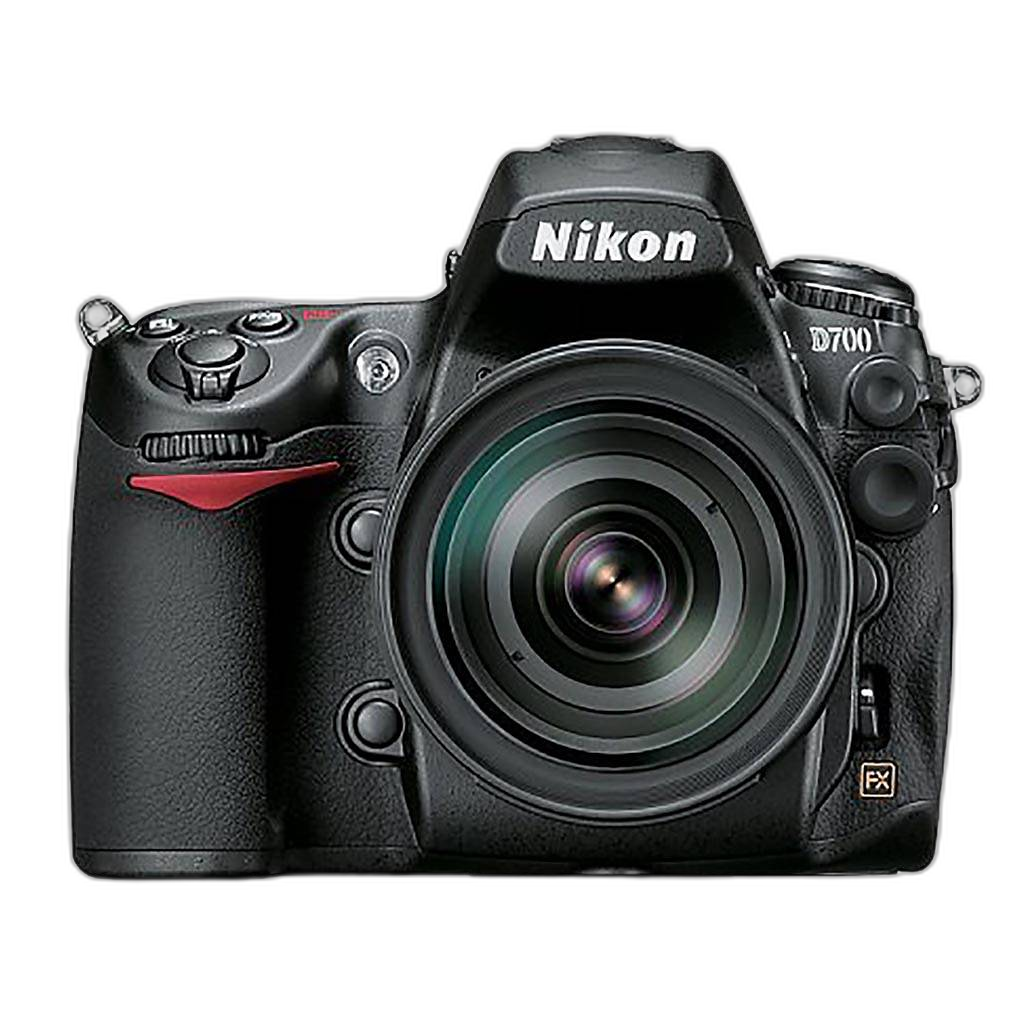
In the summer of 2008, Nikon introduced a camera that immediately drew the attention of working photographers, serious enthusiasts, and anyone who had been waiting for full-frame performance in a more compact package. The Nikon D700 arrived as a 12.1-megapixel FX-format digital SLR that brought much of Nikon’s top-tier professional imaging pedigree into a body that was smaller, lighter, and more accessible than the flagship tier. At a launch price of $2,999, the D700 stood out not simply as another DSLR announcement, but as a significant moment in Nikon’s digital lineup.
For photographers already invested in the Nikon F mount system, the D700 represented something especially compelling: a full-frame body designed to work within a mature ecosystem of lenses and accessories, while promising the kind of image quality and responsiveness demanded in professional environments. In period, it felt like Nikon was answering a very real market desire for a camera that could bridge high-end capability and practical everyday handling.
A Full-Frame Nikon for a Broader Professional Audience
The Nikon D700 launched with a 12.1MP full-frame, or FX-format, sensor. In 2008, that specification was about much more than simple pixel count. Full-frame capture was still closely associated with premium, professional digital cameras, and Nikon’s use of the FX format carried strong appeal for photographers who wanted the field of view characteristics of classic 35mm photography paired with modern digital workflow.
The 12.1-megapixel resolution positioned the D700 as a camera focused on balanced performance rather than headline chasing. For many photographers of the era, that was an advantage. A sensor at this resolution suggested practical file sizes, strong workflow efficiency, and a design emphasis on image quality, responsiveness, and versatility. Wedding photographers, photojournalists, event shooters, portrait specialists, and commercial users could all see the logic in a camera that prioritized real-world usability over excess.
Just as importantly, the D700 brought that FX sensor into a body that was notably more compact than Nikon’s largest pro bodies. That mattered in the field. A smaller professional DSLR could be easier to carry for long assignments, less intimidating in candid environments, and more adaptable for photographers moving quickly between locations. The D700’s arrival signaled that full-frame no longer had to mean committing to the biggest camera in the bag.
Compact Pro Body, Serious Intent
The phrase “compact pro body” captures much of what made the D700 so exciting at launch. Nikon was not positioning this model as an entry point into interchangeable-lens photography; rather, it was delivering a serious tool in a more manageable form factor. That distinction is crucial in understanding the camera’s historical place.
For photographers familiar with Nikon’s digital SLR development in the 2000s, the D700 felt like a meaningful convergence of portability and authority. It had the presence and purpose of a professional camera, but with dimensions and handling that made it a realistic all-day companion. In practical terms, that meant the D700 could appeal both as a primary camera for many professionals and as a second body for those already working with higher-tier Nikon systems.
The Nikon F mount further strengthened that appeal. By 2008, the F mount was one of the most established lens platforms in photography, and its long history gave the D700 immediate relevance across a broad range of applications. Photographers with existing Nikon lenses could look at the D700 and see continuity, compatibility, and a straightforward upgrade path into FX capture.
5 fps Performance for Working Photographers
Speed has always mattered in professional photography, and the Nikon D700’s 5 fps burst rate placed it squarely in the realm of responsive, assignment-ready cameras. While not marketed purely as a sports specialist, the D700’s continuous shooting performance reinforced the idea that this was a camera built for dynamic use.
In 2008, a 5 fps burst in a full-frame DSLR at this price point helped make the D700 especially attractive to photographers covering weddings, news, events, documentary work, and portraits where expression and timing were critical. It was fast enough to capture fleeting gestures, changes in posture, and key moments in unfolding scenes. For many users, this level of speed contributed to the D700’s identity as an all-rounder with genuine professional credibility.
The importance of that should not be understated. Cameras often become memorable not because they dominate any single specification chart, but because they offer a particularly effective combination of image quality, handling, and timing. The D700’s 12.1MP FX sensor and 5 fps burst together suggested a machine tuned for photographers who needed dependable performance in varied and sometimes unpredictable conditions.
Pricing and Market Position in 2008
With a launch price of $2,999, the Nikon D700 entered the market as a premium product, but one that was strategically positioned below the most expensive flagship bodies. That price made it aspirational for enthusiasts and very serious amateurs, while remaining plausible as a business investment for working professionals.
Seen from the perspective of its release period, the D700 occupied an especially interesting space. It was costly enough to signal that it belonged in the professional class, yet accessible enough to broaden the reach of Nikon’s FX format. This was part of the camera’s historical significance. It helped redefine expectations around who could realistically own and use a full-frame Nikon DSLR.
For many photographers in 2008, the D700 likely represented a careful but exciting purchase decision: a camera that delivered major capability without requiring the largest possible outlay in Nikon’s professional range. That balance helped fuel its strong reputation then and its enduring legacy now.
The Nikon F Mount Advantage
No discussion of the D700 is complete without noting the importance of the Nikon F mount. By introducing the D700 within this long-established mount system, Nikon ensured that the camera fit naturally into a broad photographic tradition and a practical modern toolkit at once.
For Nikon users, this meant immediate access to an extensive lens catalog. Wide-angle, standard, portrait, macro, and telephoto options were all part of the equation, and that flexibility made the D700 adaptable to nearly any genre. The camera’s FX format, in particular, would have resonated with photographers who wanted to use lenses at their familiar full-frame angle of view, especially those with experience in 35mm film systems.
This continuity between past and present has always been one of the strengths of Nikon’s system approach. The D700 did not ask photographers to abandon the broader Nikon ecosystem. Instead, it invited them deeper into it.
Why the D700 Mattered
Historically, the Nikon D700 is remembered as one of those cameras that landed at exactly the right time. It offered a specification set that made sense, a body style that answered real user demand, and a price that, while still premium, opened the door to a wider group of dedicated photographers.
Its significance lies not merely in being a 12.1MP full-frame DSLR, but in how it packaged that capability. The D700 helped normalize the idea that a compact professional body could still deliver full-frame authority. It spoke to photographers who wanted serious image-making tools without stepping all the way into the largest, most specialized camera class.
That balance is a major reason the model remains so well regarded in retrospective conversations about landmark digital Nikons. The D700 was practical, ambitious, and well judged. In an era when digital SLRs were evolving rapidly, it stood out by feeling purposeful rather than excessive.
An Archival Look Back
Looking back from a historical perspective, the Nikon D700 can be seen as a defining camera of its moment. Announced in 2008, it captured the industry’s growing confidence in full-frame digital photography while showing that high-end capability could be delivered in a body built for broader real-world use. Its 12.1MP FX sensor, 5 fps burst shooting, Nikon F mount, and $2,999 launch price together tell the story of a camera that was carefully positioned and immediately relevant.
For photographers who remember its release, the D700 represented excitement and possibility. For newer readers exploring the history of digital Nikon cameras, it remains an important milestone in the evolution of the enthusiast-professional DSLR. To learn more about landmark cameras like the Nikon D700, or to shop Nikon gear and other photographic equipment, visit Unique Photo.