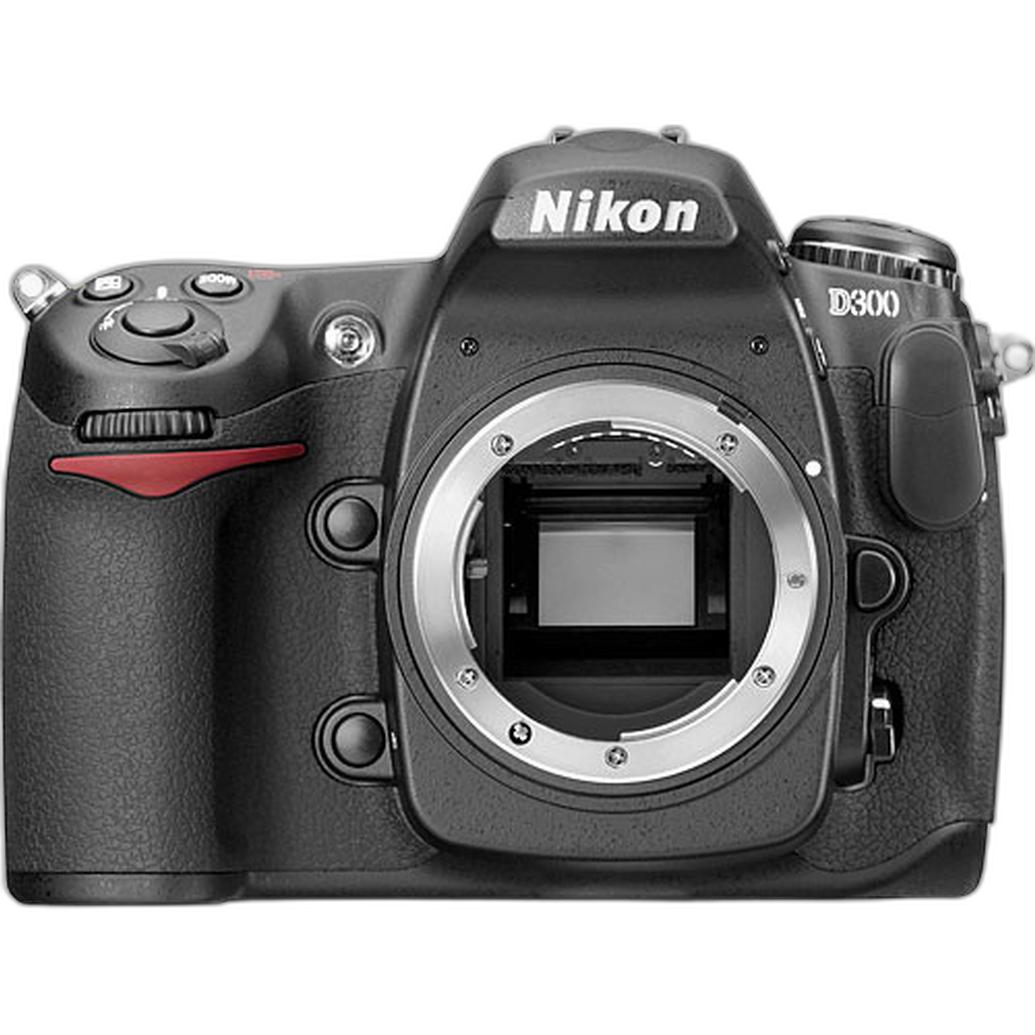
When Nikon introduced the D300 in August 2007, it immediately signaled something important to working photographers and serious enthusiasts alike: the company was bringing flagship thinking to the DX format. At a launch price of $1,799, the D300 arrived as a high-performance Nikon F-mount DSLR built around a 12.3MP APS-C sensor, a 6 fps continuous shooting rate, and a 51-point autofocus system that placed speed and control at the center of the experience. In the context of its release, this was not merely another update. It was a camera positioned to redefine what many photographers expected from a crop-sensor body.
A New Standard for Nikon DX
By the late 2000s, Nikon's DSLR lineup had become increasingly clear in its segmentation, but there was still strong demand for a camera that offered robust, near-professional handling in a smaller and more accessible format than a full-frame flagship. The D300 answered that need with confidence. It was a DX-format camera, but one that clearly borrowed its ambition from higher-tier bodies. Nikon presented it as a serious photographic tool rather than a compromise option, and that distinction mattered.
The 12.3MP APS-C sensor gave photographers a resolution level that was highly competitive for the period, balancing detail with practical file sizes and responsive operation. For users invested in Nikon's DX ecosystem, or those who appreciated the effective field-of-view benefit of the format for sports and wildlife work, the D300 looked especially appealing. It suggested that APS-C no longer had to mean "midrange" in feel or capability.
Performance Where It Counted
One of the D300's defining headline features was its 6 fps burst shooting. In 2007, continuous shooting performance remained a major dividing line between enthusiast cameras and more advanced models. A 6 fps rate made the D300 immediately credible for action-oriented photography, from field sports to events to fast-moving editorial assignments. It was fast enough to matter in real-world use, and more importantly, it reinforced the idea that Nikon intended the D300 to be used in demanding conditions rather than admired only on a spec sheet.
Autofocus was another central part of that message. The inclusion of a 51-point AF system stood out sharply at launch and became one of the camera's most discussed strengths. For photographers tracking motion, working under pressure, or simply wanting more compositional flexibility when placing focus, this was a substantial feature. Nikon's autofocus systems had already built a strong reputation, and bringing a 51-point arrangement to the D300 gave the camera a level of seriousness that elevated it above many peers in its class.
In practical terms, the combination of a 12.3MP sensor, 6 fps shooting, and 51-point AF made the D300 feel like a camera built for photographers who needed responsiveness first. Resolution mattered, of course, but what helped define the model historically was how complete the performance package felt at the time of release.
The Importance of the Nikon F Mount
The D300's Nikon F mount was more than a simple compatibility note. In 2007, the strength of a DSLR system was inseparable from lens access, and Nikon users had every reason to view the D300 as a long-term investment because it sat inside one of photography's most established ecosystems. The F mount connected the camera to a broad and mature lens lineup, making the D300 attractive not only to first-time advanced DSLR buyers but also to existing Nikon photographers looking for a body that could take advantage of glass they already owned.
That system continuity mattered greatly in the D300's reception. A camera body could deliver speed and autofocus sophistication, but the practical value became much higher when paired with a lens catalog designed to support everything from portraiture to sports to landscape work. The D300 fit naturally into that world. It was a camera that looked forward while remaining grounded in Nikon's deep lens heritage.
A Release That Spoke to Serious Enthusiasts and Working Pros
At $1,799 at launch, the D300 occupied a compelling place in Nikon's lineup. It was not an entry-level body, and Nikon never positioned it as one. Instead, it targeted experienced enthusiasts and professionals who wanted advanced performance in a DX format camera. For some, it was a main body. For others, it was an ideal second body alongside a larger or more expensive Nikon setup. Either way, the D300's pricing placed it in a category where expectations were high, and Nikon clearly intended to meet them.
Seen from the perspective of its release period, the D300 was especially important because it helped validate the idea of a "DX flagship." That phrase carried weight. It meant photographers did not have to choose the APS-C format only as a stepping stone toward something more serious. With the D300, Nikon made the case that DX could itself be the platform for a top-tier shooting experience.
Why the D300 Mattered Historically
Looking back, the D300's historical importance lies not just in its individual specifications but in the way they were assembled into a coherent camera identity. Plenty of cameras have one standout feature. The D300 stood out because it presented a well-rounded package that made strategic sense for Nikon and practical sense for photographers. It offered meaningful speed, ambitious autofocus, and the flexibility of the Nikon F mount in a body that elevated APS-C expectations.
It also arrived at a moment when DSLR buyers were becoming more discerning about handling, reliability, and the relationship between camera format and intended use. The D300 helped demonstrate that a crop-sensor DSLR could be a destination camera, not merely a budget alternative. That helped shape how Nikon users thought about the DX format in the years that followed.
For sports, wildlife, news, and event photographers in particular, the D300's format and performance combination made obvious sense. The APS-C sensor could be advantageous when extra apparent reach was welcome, while the 6 fps burst and 51-point AF system aligned with the needs of fast-paced assignments. Even outside those genres, the camera's positioning communicated confidence and versatility.
An Archival View of a Modern Classic
From an archival perspective, the Nikon D300 remains one of the clearest examples of a manufacturer recognizing that serious photographers wanted professional intent in multiple formats. Introduced on 2007-08-23, it captured a key moment in DSLR history, when APS-C cameras were proving they could deliver not only image quality but also operational authority. Nikon's decision to give the D300 a 12.3MP DX sensor, 6 fps continuous shooting, and a 51-point autofocus system was more than a competitive move. It was a statement about how capable a DX flagship could be.
Today, the D300 is remembered not simply as a successful Nikon DSLR, but as a benchmark camera that helped define expectations for advanced APS-C bodies. Its influence is easier to appreciate in hindsight, but even at launch, the message was clear: this was a camera built to be taken seriously.
Learn More
The Nikon D300 stands as an important chapter in Nikon DSLR history and in the broader story of high-performance APS-C cameras. If you want to explore landmark Nikon bodies, shop Nikon gear, or learn more about classic and current camera systems, Unique Photo is an excellent place to buy, compare, and deepen your knowledge.