With the announcement of the Nikon D3 on August 23, 2007, Nikon entered a new chapter in its digital SLR history. For years, professionals had relied on the company’s rugged DX-format bodies for speed, durability, and dependable image quality. But the D3 signaled something bigger: Nikon’s first full-frame FX-format DSLR, built not as a niche experiment, but as a flagship tool for working photographers who needed performance without compromise.
At launch, the Nikon D3 arrived with a 12.1-megapixel full-frame sensor, a blistering 9 frames-per-second continuous shooting rate, the long-established Nikon F mount, and a $4,999 list price in the U.S. On paper, those numbers were impressive. In practice, they suggested a camera aimed squarely at news, sports, wildlife, and event professionals who needed speed, responsiveness, and especially strong low-light performance.
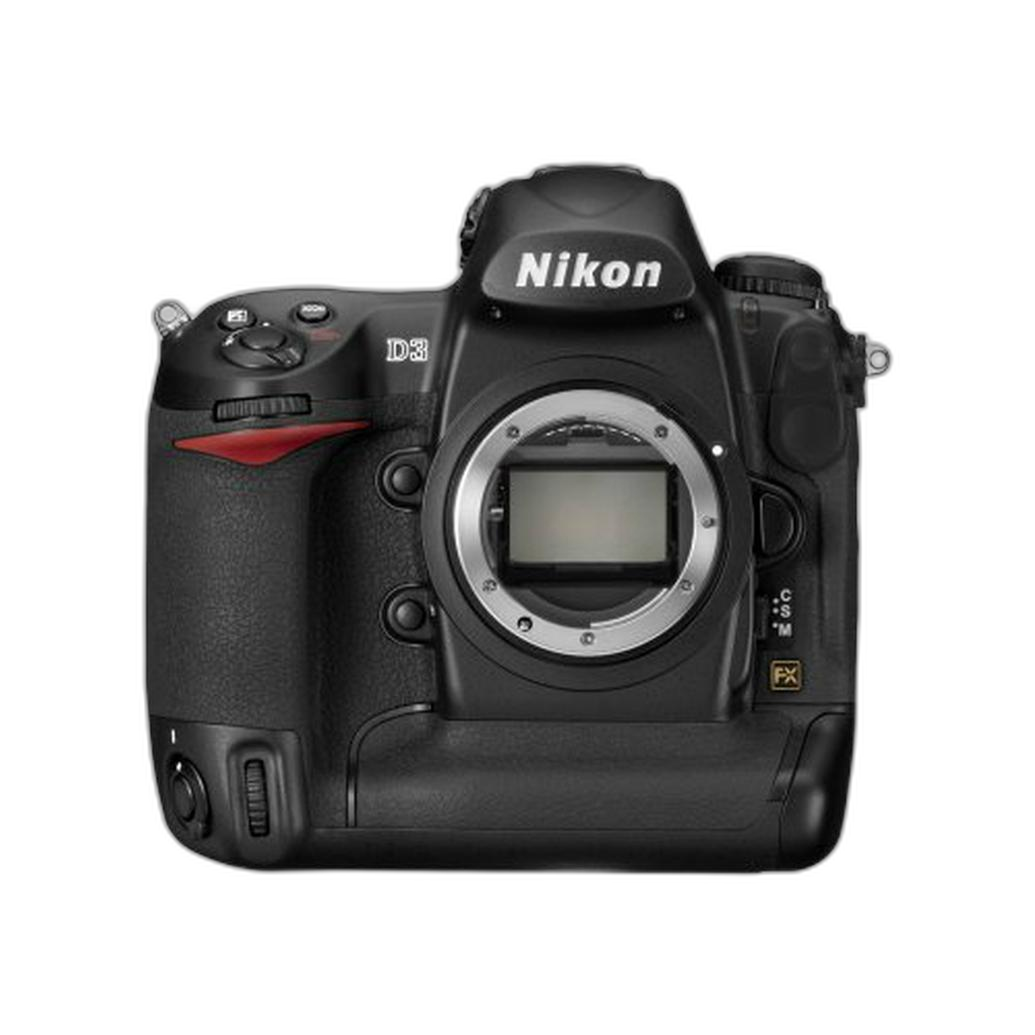
Nikon Steps Into the FX Era
The Nikon D3 was significant for one very clear reason: it was Nikon’s first FX-format digital SLR. In Nikon terminology, FX referred to a full-frame sensor roughly equivalent in size to a frame of 35mm film. That distinction mattered deeply in 2007. Many professionals had built their systems around Nikon F-mount lenses over decades, and the move to FX represented a return to the familiar field of view those lenses were originally designed to deliver.
For photographers using wide-angle glass, this was especially meaningful. Lenses regained their expected character without the crop factor associated with smaller sensors. For photojournalists, editorial shooters, wedding photographers, and commercial users, the D3 promised a digital workflow that felt more closely aligned with Nikon’s 35mm film heritage.
Just as importantly, Nikon did not introduce FX as a slow, studio-only format. The D3 was presented as a professional workhorse. This was a camera intended to survive hard assignments and demanding schedules, not simply to demonstrate that Nikon could build a full-frame DSLR.
A Flagship Built for Speed
Speed was central to the D3’s identity. Its 9 fps burst rate placed it firmly in elite territory for the time, giving professionals the ability to capture fast action with confidence. Whether covering sports, breaking news, or wildlife, photographers often live between moments measured in fractions of a second. A camera that can sustain rapid continuous shooting is not just a convenience; it can be the difference between getting the frame and missing it.
The D3’s integrated pro-style body also communicated its purpose immediately. This was not a compact enthusiast model dressed up with premium features. It was a serious Nikon professional body in the long tradition of cameras designed for all-day handling, vertical shooting comfort, and dependable operation in tough field conditions. Nikon’s top-tier digital cameras had already earned a reputation for ruggedness, and the D3 extended that approach into the FX category.
Why 12.1 Megapixels Mattered
Viewed from today’s perspective, 12.1 megapixels may sound modest. In 2007, however, the number reflected a very deliberate balance. Nikon was not chasing headline resolution alone. Instead, the D3’s specification suggested a camera optimized for real-world professional use: strong image quality, manageable file sizes, fast operation, and better performance in available light.
For newspaper work, magazine reproduction, agency distribution, and a wide range of commercial applications, 12.1 megapixels was more than practical. It allowed room for cropping while keeping workflow efficient for photographers transmitting files on deadline. At a time when image desks and working pros still valued speed from capture to delivery, this balance made sense.
In that context, the D3’s sensor was not simply about size; it was about what that size enabled. The larger FX format gave Nikon room to pursue cleaner results at higher sensitivities, and that was where much of the excitement around the D3 quickly centered.
The Low-Light Conversation Changed
If one theme came to define early reaction to the Nikon D3, it was low-light performance. Even at announcement, it was clear that Nikon intended this camera to challenge assumptions about what could be photographed under dim conditions without sacrificing shutter speed. For event photographers, concert shooters, indoor sports specialists, and photojournalists working in unpredictable light, that promise was enormous.
Low-light capability is not a glamorous spec in the abstract, but in practice it shapes what kind of assignments a camera can handle. It affects how long a photographer can keep shooting after sunset, how confidently an indoor scene can be captured without excessive flash, and whether difficult lighting becomes a technical obstacle or simply part of the story. The D3 arrived with the sense that Nikon had made available-light shooting a core selling point rather than an afterthought.
That positioning helped the camera stand apart. Full-frame alone was a milestone, but full-frame paired with speed and a reputation for excellent high-ISO results made the D3 feel like a practical breakthrough rather than a symbolic one.
Nikon F Mount Continuity
Another major strength of the D3 was its use of the Nikon F mount. By 2007, that mount represented one of the deepest and most important ecosystems in photography. Professionals considering the D3 were not buying into a new, uncertain platform. They were stepping into a flagship body that connected to a long-established lens heritage.
That continuity had both economic and creative value. Existing Nikon shooters could integrate the D3 into working systems built over years, sometimes decades. Familiar fast primes, telephotos, and wide-angle lenses could all take on renewed significance on an FX body. For many users, the D3 was not just a new camera; it was the first digital Nikon that could fully realize the classic behavior of their F-mount glass in a modern pro DSLR.
A Professional Price for a Professional Audience
At a launch price of $4,999, the Nikon D3 was clearly positioned as a flagship professional investment. That price placed it within reach of working photographers, agencies, and serious institutions rather than the broader consumer market. Yet the value proposition was strong when viewed through the lens of daily use. A camera that can produce dependable results in poor light, maintain high shooting speed, and fit seamlessly into an established lens system can pay for itself quickly in professional hands.
For Nikon, the D3 was not about appealing to everyone. It was about sending a message to professionals that the company was fully committed to the high end of digital imaging and prepared to compete at the top level with a body that did not ask users to choose between full-frame image quality and flagship action performance.
Historical Importance of the Nikon D3
Looking back, the Nikon D3 stands as one of the most important digital cameras in Nikon’s modern history. It marked the company’s full-frame arrival in the DSLR era, but more than that, it helped redefine expectations for what a professional Nikon digital body could be. Its combination of a 12.1MP FX sensor, 9 fps shooting, F-mount compatibility, and emphasis on low-light image quality gave it a distinctive place in the market from day one.
For many photographers, the D3 represented a turning point. It was the camera that made full-frame feel fast, durable, and assignment-ready in a way that aligned perfectly with Nikon’s professional identity. It connected the company’s film-era legacy with the demands of modern digital work, and it did so with unusual confidence.
Conclusion
The Nikon D3 was more than a new flagship in 2007; it was a declaration. Nikon’s first FX-format DSLR arrived with the speed, build, and practical low-light strengths needed to matter immediately to working photographers. It respected the Nikon F-mount tradition while opening the door to a new full-frame future for the brand.
As a historical milestone, the D3 remains a landmark in the evolution of professional digital SLRs. To explore classic Nikon gear, learn more about the history of cameras like the D3, or shop current Nikon equipment, Unique Photo remains a trusted place to buy and discover more.