With the arrival of the Nikkor Z 85mm f/1.2 S in late 2022, Nikon made a clear statement about the maturity of its Z-mount system. An 85mm lens has long occupied a special place in portrait photography, prized for its flattering perspective, comfortable working distance, and ability to isolate a subject with grace. By pairing that classic focal length with an f/1.2 maximum aperture and placing it in the premium S-Line, Nikon positioned this lens as a flagship portrait optic for photographers who wanted the most ambitious rendering the Z system could offer.
Historically, the 85mm portrait lens has been one of the most emotionally resonant tools in a photographer's bag. It sits at the crossroads of technical excellence and aesthetic intent: close enough to feel intimate, far enough to avoid distortion, and fast enough to turn busy backgrounds into soft color and shape. The Nikkor Z 85mm f/1.2 S arrived in that tradition, but it also reflected the broader design philosophy of Nikon's mirrorless era, where the larger Z mount opened new possibilities for high-speed optical designs.
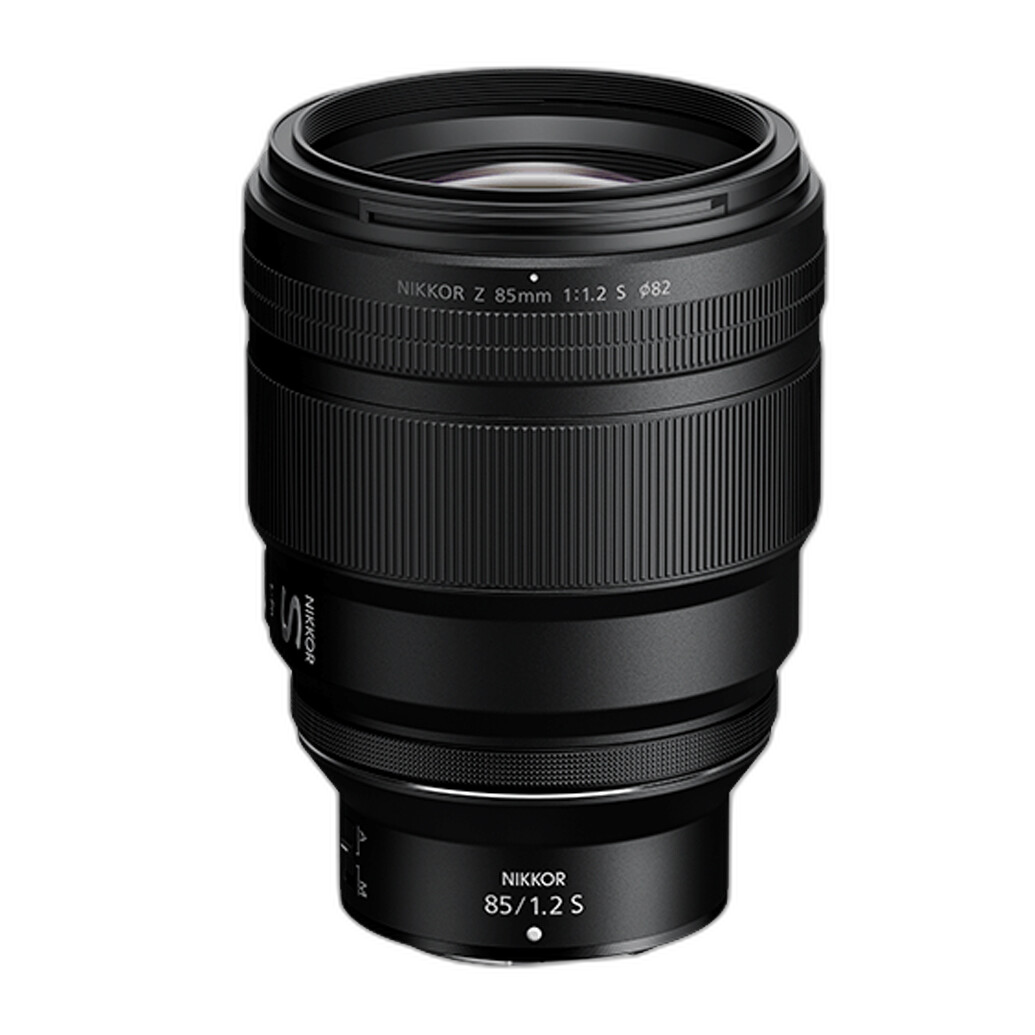
A Classic Portrait Focal Length, Reimagined for Z Mount
The appeal of an 85mm lens is easy to understand. It provides a field of view that works beautifully for headshots, half-length portraits, wedding candids, fashion, and detail work where subject separation matters. Nikon's long history with 85mm lenses gives this release added weight: every new premium 85mm enters into a lineage that photographers know well.
What made the Nikkor Z 85mm f/1.2 S especially notable at launch was not simply its specification sheet, but what those specifications suggested about Nikon's confidence in the Z system. At 85mm with a bright f/1.2 aperture, built for the Nikon Z mount, this lens was created for photographers who prioritize image character as much as sharpness. Its $2,799 launch price in the U.S. placed it firmly in the professional category, signaling that this was not an everyday walkaround lens, but a specialized creative instrument.
Why f/1.2 Matters
In practical terms, an f/1.2 aperture does two things that portrait photographers care deeply about. First, it gathers a great deal of light, making it possible to work in dim interiors, at receptions, or in natural light after sunset while preserving lower ISO settings or faster shutter speeds. Second, and perhaps more importantly for this class of lens, it creates an exceptionally shallow depth of field. That can turn an ordinary background into a wash of tone and texture, drawing a viewer's attention straight to the eyes and expression of the subject.
But the significance of f/1.2 goes beyond brightness. A lens at this level is often judged by the quality of its transitions: how crisply it resolves the in-focus plane, how gracefully it drops off into blur, and how convincingly it renders dimensionality. Nikon's decision to bring an 85mm f/1.2 into the Z lineup was about more than headline speed. It was about showing what the system could do when optical design was aimed squarely at the highest end of portrait rendering.
The S-Line Context
Nikon's S-Line designation carries expectations. In the Z system, S-Line lenses are positioned as premium tools, intended to deliver the company's highest standards for optical performance, build quality, and overall refinement. By placing the 85mm f/1.2 in that category, Nikon framed it as a no-compromise lens for demanding users.
That was important in 2022 because the Z ecosystem was still in a phase of visible expansion and consolidation. Enthusiasts and professionals alike were watching the roadmap closely, measuring Nikon's mirrorless commitment not only by camera bodies but also by the depth and seriousness of its lens catalog. A premium 85mm f/1.2 is exactly the kind of release that reassures portrait specialists, commercial shooters, and wedding photographers that the system is being built with their needs in mind.
A Lens for Working Portrait Photographers
Although a lens like this naturally attracts attention from enthusiasts, its launch also spoke directly to working photographers. Portrait specialists often want consistent rendering, dependable handling, and a focal length that can adapt to different assignments. An 85mm can move from studio portraiture to environmental work to ceremony coverage without feeling out of place.
At the release period, the Nikkor Z 85mm f/1.2 S would have stood out as a lens for photographers who wanted to create a signature look in-camera rather than rely on heavy post-processing. The appeal was clear: a fast, native Z-mount optic designed around one of the most beloved portrait focal lengths in photography. For wedding and event shooters in particular, the combination of subject isolation and low-light potential made it one of the more aspirational portrait options in Nikon's mirrorless range.
Nikon's Mirrorless Ambition in 2022
Looking at the timing of its release on September 28, 2022, the Nikkor Z 85mm f/1.2 S can be understood as part of Nikon's larger push to demonstrate that Z mount was not merely an alternative to F mount, but a platform capable of supporting top-tier professional optics. Mirrorless competition by that point had become increasingly focused on lens ecosystems. Fast primes, especially portrait-centric ones, are often treated as proof points for a system's seriousness.
In that environment, Nikon's move carried symbolic force. An 85mm f/1.2 is not a mass-market lens. It is a prestige lens, a product that photographers discuss because it represents engineering priorities and image-making ideals. It helps define the upper tier of a lens lineup. Even for photographers who would ultimately choose a slower or less expensive option, the existence of such a lens strengthened the identity of the whole Z system.
The Enduring Allure of the 85mm Portrait Lens
There are some lenses that transcend trends, and the 85mm portrait prime is one of them. Across film and digital eras, through manual focus and autofocus generations, photographers have returned to this focal length because it consistently delivers flattering proportions and emotional immediacy. The Nikkor Z 85mm f/1.2 S belongs to that enduring tradition while also reflecting the modern mirrorless emphasis on native optical design.
For Nikon users, its release was a reminder that the Z system was increasingly capable of serving not just broad practical needs, but also highly specialized artistic ones. This was a lens built to appeal to photographers who care about expression, separation, and atmosphere—those moments when the technical language of focal length and aperture gives way to something more personal in the finished image.
Historical Perspective
Viewed historically, the Nikkor Z 85mm f/1.2 S stands as one of the lenses that helped define Nikon's premium mirrorless portrait offering in the early 2020s. It represented a stage in the Z mount story when Nikon was expanding beyond foundational zooms and essential primes into statement pieces designed to attract professionals and serious enthusiasts alike. Its specifications alone—85mm, f/1.2, Z mount, and a launch price of $2,799—placed it in rarefied company.
As an archival release-period piece, it is worth remembering how much lenses like this matter beyond simple utility. They influence how photographers imagine a system, what kinds of assignments they trust it for, and what visual ambitions they feel it can support. The Nikkor Z 85mm f/1.2 S was, and remains, a lens meant to inspire confidence as much as admiration.
Closing Thoughts
The Nikkor Z 85mm f/1.2 S arrived as Nikon's portrait showpiece for the Z era: a fast, premium 85mm prime that underscored the company's ambitions for mirrorless photographers. For portraitists, wedding shooters, and Nikon loyalists watching the Z system evolve, it was one of the most telling lens announcements of 2022. To explore Nikon gear, compare portrait lenses, or learn more about the history of landmark releases like this one, Unique Photo remains a great place to shop and stay informed.