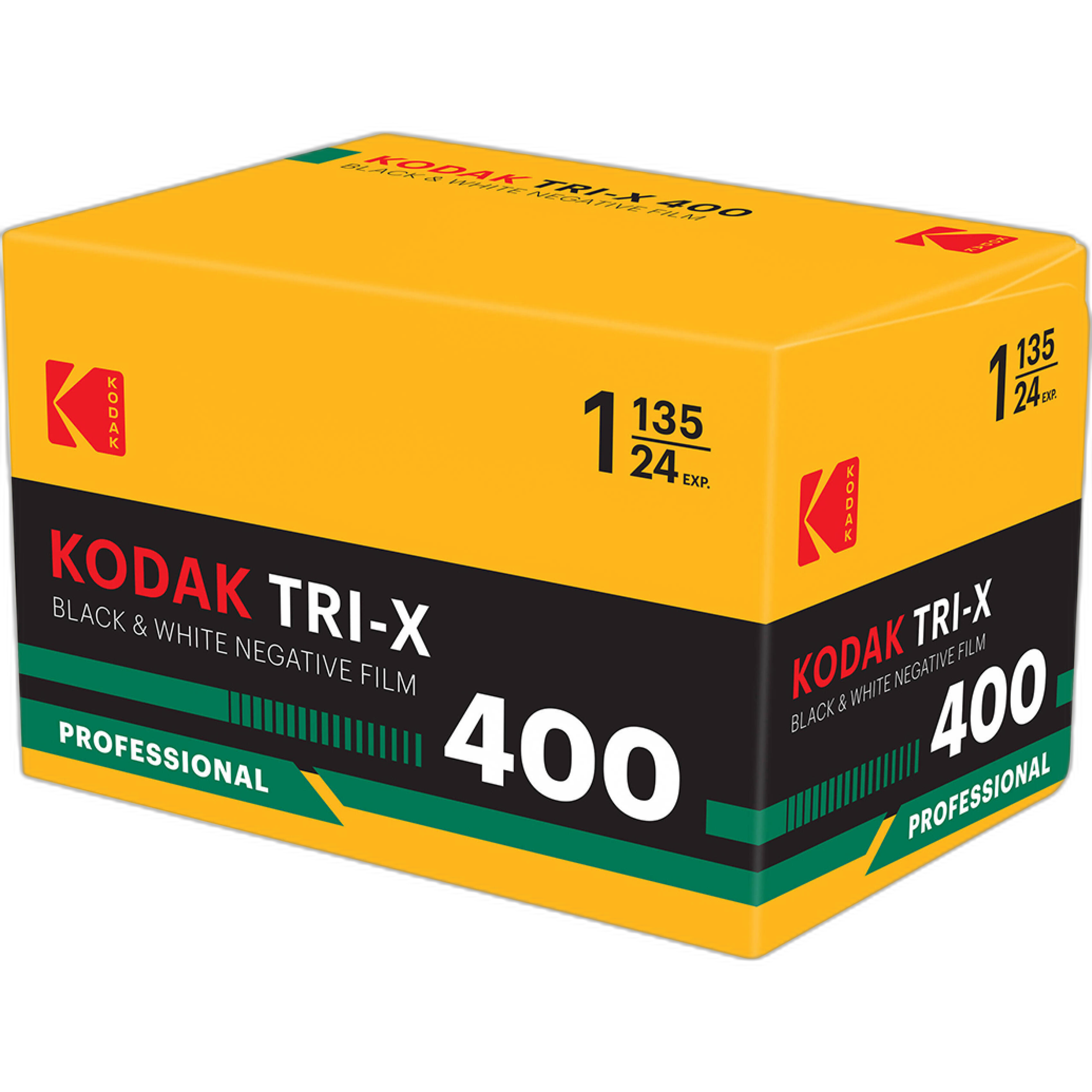
An Emulsion for the Pace of Modern Picture-Making
Every era of photography seems to produce one material that rises above the status of mere supply and becomes part of the medium’s language. In black-and-white work, Kodak Tri-X 400 earned that place. Introduced in 1954, Tri-X arrived at a moment when photographers were asking more from film than ever before: greater speed for available-light shooting, dependable negatives for press deadlines, and a look that retained the drama and bite that black-and-white imagery could uniquely deliver. In time, Tri-X would become one of the defining films of modern photography, but even at its introduction its purpose was clear. This was a fast, practical, expressive black-and-white negative film built for real-world use.
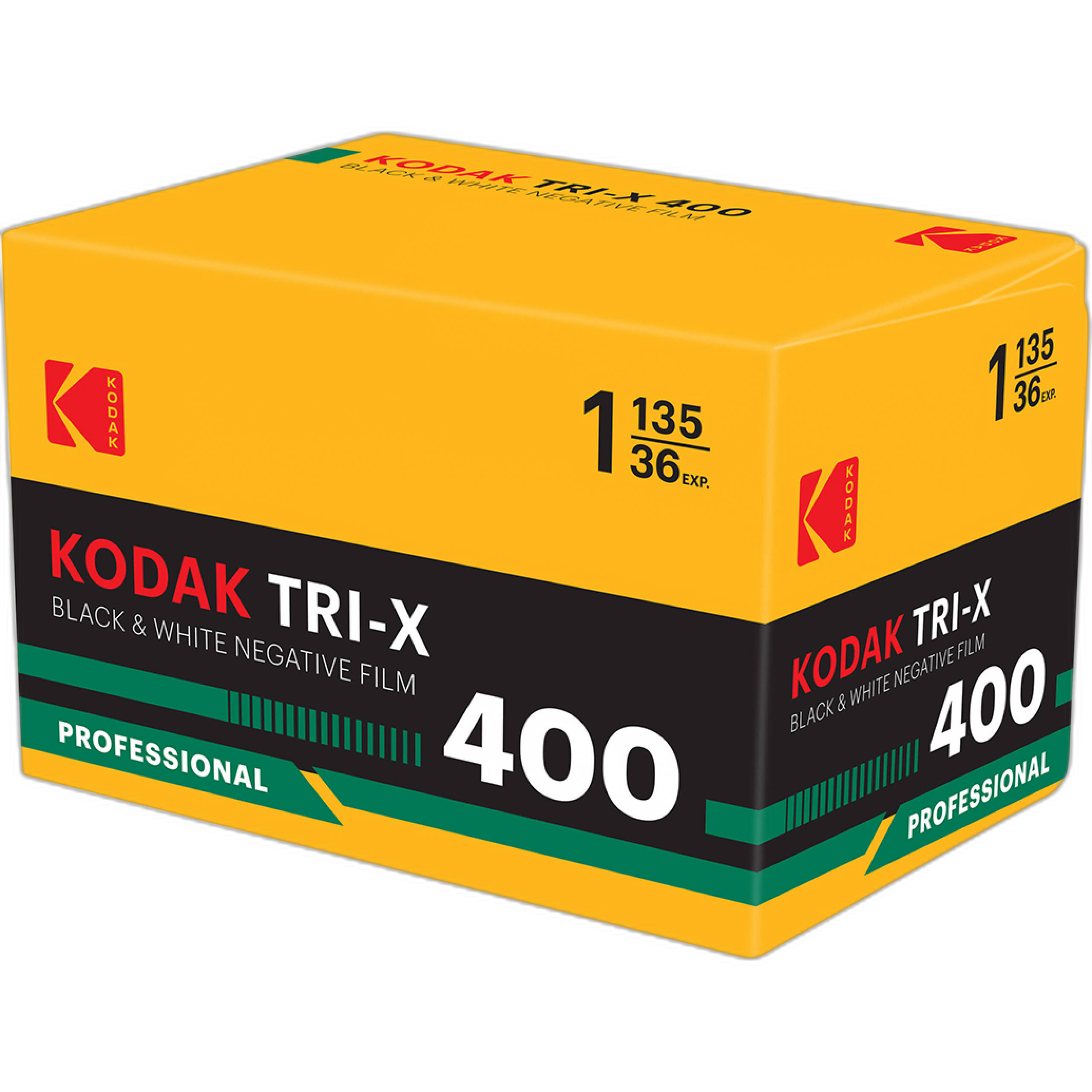
Seen from a historical vantage, Tri-X 400 stands at the intersection of utility and style. Its ISO 400 speed made it notably versatile in an age when light was often scarce and flash was not always desirable. Its rendering, described today as classic grain with a high-contrast character, gave photographs an unmistakable presence. And perhaps most importantly for working photographers, it proved highly responsive to pushing, allowing exposure in difficult situations where slower films might fail. Those traits helped make Tri-X not just a product, but a companion to generations of photojournalists, documentarians, students, artists, and committed amateurs.
What Tri-X 400 Is
Kodak Tri-X 400 is a black-and-white negative film. That simple description only begins to explain its importance. As a negative film, Tri-X was designed to offer a practical balance of speed, latitude, and printability. Negatives could be enlarged in the darkroom and interpreted through exposure and contrast controls, giving printers room to shape the final image. In that setting, Tri-X became especially valued because it could produce images with conviction: rich blacks, lively midtones, and highlights that, when properly exposed and developed, held together with a sense of clarity and force.
Its ISO 400 rating placed it in the fast-film category of its day. This was not a specialty speed reserved for unusual cases; it was a working speed, one that opened doors. Indoors, in poor weather, on city streets after dusk, or during fast-moving events, photographers could use handheld cameras with greater confidence. The practical implications were enormous. A film that offered this kind of speed while remaining manageable in development and printing naturally found an audience among people who needed to come back with pictures, not excuses.
The Look: Grain, Contrast, and Presence
Classic Grain
Tri-X is often discussed in terms of grain, and rightly so. Its grain is not an unfortunate byproduct to be minimized at all costs; it is part of the film’s visual identity. Enlarged prints from Tri-X often show a texture that contributes energy to the image. In portraits, that grain can add grit and immediacy. In street and documentary work, it can make scenes feel alive, as though the emulsion itself participated in the urgency of the moment.
Importantly, Tri-X grain does not merely announce speed. It also shapes atmosphere. Fine-grained films may appear smoother and more restrained, but Tri-X often feels more direct. The image carries a sense of eventfulness. That quality would later help define the visual grammar of magazines, newspapers, gallery prints, and personal documentary projects throughout much of the 20th century.
High Contrast Character
Tri-X is also known for a high-contrast look. Contrast in black-and-white photography is never simply technical; it is emotional. Strong contrast can separate forms, deepen mood, and simplify visual complexity. Tri-X’s rendering helped photographers make decisive pictures in situations that did not permit elaborate control. Faces emerged from dark backgrounds. Wet pavement glowed against the night. White shirts, cigarette smoke, storefront reflections, and noon-day shadows all took on an assertive graphic quality.
Used thoughtfully, that contrast made Tri-X especially effective for reportage and expressive personal work alike. It rewarded photographers who saw the world in bold tonal relationships. Yet it was also capable of nuance. In experienced hands, it could produce delicately modulated gray values while still retaining the firmness for which it became famous.
Push-Friendly by Reputation and Practice
One of the most consequential facts about Tri-X 400 is that it is push-friendly. For the working photographer of the mid-century period, this mattered enormously. Light does not wait, and neither do news events, performances, social gatherings, or changing weather. A film that could be exposed beyond its nominal rating and developed accordingly offered not just convenience but access. Pictures could be made in places and at times that would otherwise be difficult without cumbersome lighting equipment.
This pushability contributed to Tri-X’s standing as a practical standard. It was the sort of film a photographer could load before heading into uncertain conditions with some confidence that, whatever happened, the emulsion would be ready to meet the assignment. That reliability is one reason Tri-X became associated with photographers who worked close to life as it unfolded—journalists, observers of city streets, and artists drawn to unguarded moments.
Why 1954 Matters
The 1950s were a period of accelerating change in photographic culture. Smaller cameras had already altered the way images could be made, and black-and-white photography was central to newspapers, magazines, advertising, and personal expression. A fast film introduced in 1954 entered a field hungry for responsiveness. Tri-X answered that hunger. It fit the growing preference for mobility, spontaneity, and natural light. It suited the photographer who wanted to move through the world lightly and react quickly.
From a historical perspective, Tri-X belongs to the postwar expansion of modern visual culture. It aligned beautifully with the rise of candid photography and the aesthetics of immediacy. The very qualities that some might call roughness—visible grain, bold contrast, tolerance for hard use—became virtues in an age increasingly interested in authenticity, speed, and human presence. Tri-X did not merely record the century. It helped define how much of that century would look in photographs.
In the Camera and in the Darkroom
A Film for Real Conditions
What made Tri-X so enduring was not a single technical attribute in isolation, but the combination of speed, character, and practicality. In the camera, it offered room to work handheld in light that challenged slower emulsions. For available-light photography, that was transformative. It allowed ordinary rooms, streets, stations, bars, offices, and neighborhoods to become usable picture spaces without forcing them into the stiff glare of artificial illumination.
A Film Printers Could Interpret
In the darkroom, Tri-X rewarded judgment. Negative film always invites interpretation, and Tri-X gave printers a vivid starting point. Its black-and-white tonality lent itself to expressive enlargement. A printer could emphasize its strength and edge, or seek a broader scale of grays depending on exposure and development practices. That flexibility helped explain its appeal across many kinds of work, from the daily practicalities of editorial production to more personal and artistic uses.
The Cultural Legacy of Tri-X
To call Tri-X 400 “the black-and-white film that shot the 20th century” is, of course, a shorthand. No single film can claim every great image or every major photographic movement. But the phrase captures a deeper truth: Tri-X became one of the most recognizable and widely trusted black-and-white materials in photographic history. Its signature look was woven into the visual record of public life and private life alike.
It is difficult to separate Tri-X from the idea of serious black-and-white photography because for decades it represented a compelling answer to a central question: what film should one choose when the world is moving quickly and the image must still carry feeling? Again and again, photographers answered with Tri-X. They valued its speed. They accepted, even celebrated, its grain. They leaned into its contrast. And they trusted its willingness to be pushed when the light went low.
That confidence made Tri-X more than a stock item on a shelf. It made it a habit, a preference, and finally a tradition. Long after its introduction, new generations would encounter Tri-X not merely as an old film, but as a living benchmark for black-and-white expression.
Enduring Relevance
Even in an era shaped by newer materials and digital processes, Tri-X 400 remains a touchstone because it embodies a durable idea of photographic seeing. Its classic grain, high-contrast rendering, and push-friendly nature are not relics. They are reminders that technical limitations can become aesthetic strengths when matched to intention. Tri-X encourages decisiveness. It rewards engagement with light as it is found. And it preserves the beautiful tension between control and unpredictability that has always given film photography much of its power.
For photographers, students, and historians interested in the films that defined image-making in the modern age, Kodak Tri-X 400 remains essential. To buy film, explore classic photographic materials, or learn more about the history of the medium, Unique Photo is an excellent place to start.