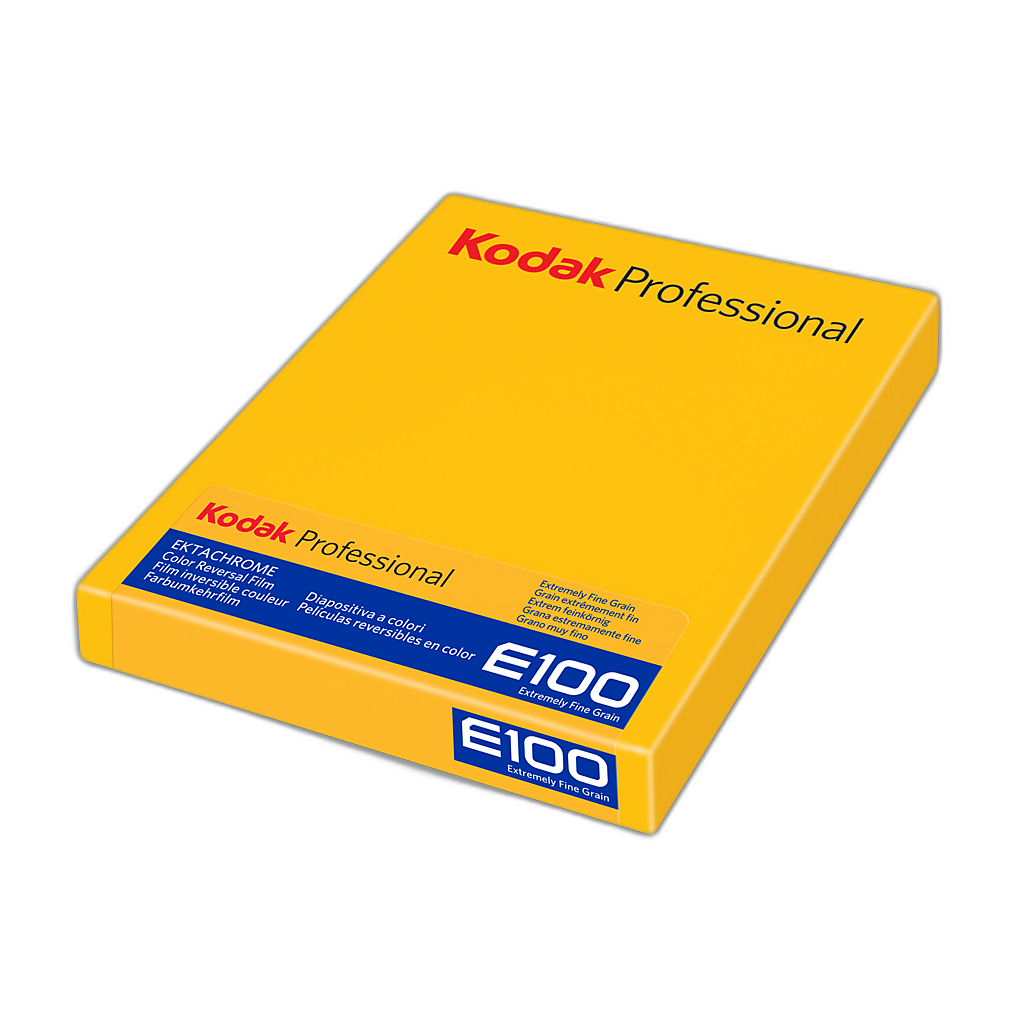
Few film announcements in recent memory have generated as much excitement as the return of Kodak Ektachrome. In 2018, Kodak brought back one of the most recognizable names in color reversal photography with Ektachrome E100, a daylight-balanced ISO 100 E-6 slide film known for its clean, neutral rendering and fine grain. For photographers who missed the luminous, projection-ready look of transparency film—and for veterans who never stopped talking about it—E100 represented more than a new emulsion. It felt like the revival of an entire way of seeing.
At a moment when most film growth was centered around black-and-white stocks and color negative emulsions, Ektachrome E100 stood apart. It asked photographers to work with precision, intention, and confidence. Slide film has always carried a certain reputation: less forgiving than color negative film, but capable of extraordinary clarity and color when exposed well. That is exactly the space E100 re-entered in 2018, and it did so under one of photography's most historic names.
A Historic Name Returns
The Ektachrome name reaches back decades in Kodak history, encompassing multiple generations of color transparency films used by amateurs, professionals, editorial photographers, educators, and travelers. For much of the 20th century, Ektachrome occupied an important place alongside Kodachrome and Fujichrome as one of the defining slide film families. While Kodachrome earned fame for its unique processing and legendary archival reputation, Ektachrome became prized for a more practical reason as well: it was processed in the far more accessible E-6 chemistry used by professional labs around the world.
That accessibility helped make Ektachrome a working photographer's slide film. It appeared in magazines, educational slide sets, commercial presentations, and projection trays in homes and classrooms. But as digital photography replaced transparency film in most professional and consumer applications, many of the classic slide stocks disappeared. By the 2010s, the loss of Ektachrome had become symbolic of film's broader contraction.
So when Kodak Alaris reintroduced Kodak Ektachrome E100 with a release date of September 25, 2018, the news mattered. This was not simply another niche film launch. It was the restoration of a major photographic format and a reassurance that color reversal film still had a place in contemporary image-making.
What Kodak Ektachrome E100 Is
Kodak Ektachrome E100 is a color reversal film, also commonly called slide film or transparency film. Unlike color negative film, which produces an inverted image that must be printed or scanned with correction, reversal film creates a positive image directly on the film itself after processing. The result is a strip of mounted or unmounted transparencies that can be viewed on a light table, held to the light, or projected.
The film's key characteristics are straightforward and important:
- Type: color reversal (E-6)
- ISO: 100
- Look: clean, neutral, fine grain
Those few traits explain much of E100's appeal. An ISO 100 rating keeps grain tight and image detail crisp. The neutral palette makes the film flexible across subjects and useful for photographers who want faithful color rather than an overtly stylized cast. And because it is an E-6 transparency film, the final image has the luminous, direct-view quality that only slide film really provides.
The E100 Look: Clean, Controlled, and Precise
In an era when many photographers celebrate heavy color shifts, visible grain, and the unpredictability of expired stocks, Ektachrome E100 offers something different. Its signature look is refined rather than exaggerated. Colors are rendered with clarity and balance. Grain stays restrained. The image feels polished, crisp, and highly legible.
That neutral character is one of the reasons Ektachrome has long appealed to photographers who want the scene itself to carry the picture. Landscapes benefit from the film's ability to separate tones cleanly. Travel and documentary work gains a sense of realism without looking flat. Product, editorial, and nature shooters often appreciate a transparency film that does not impose an overwhelming color bias on every frame.
Fine grain is equally central to the E100 profile. Slide film has historically been associated with detail, and E100 continues that tradition. On a light table or high-quality scan, the film can produce images that feel crisp and elegant, especially when paired with good lenses and careful metering. It rewards deliberate technique.
Why Slide Film Still Matters
To understand why Ektachrome's return drew such strong reactions, it helps to remember what slide film means to photographers. Transparency film is not just another capture medium. It changes the workflow and, often, the mindset.
Because reversal film yields a positive image, there is a special immediacy to the result. A well-exposed slide can be appreciated as an object in its own right. On a light box, the image glows with a jewel-like density and color separation that is difficult to replicate exactly in digital capture or negative film scans. Projection, too, remains part of the romance and the history of the format. A mounted slide on a screen has a presence all its own.
There is also the discipline. Photographers often describe slide film as a teacher. Exposure tends to matter more because transparency stocks traditionally allow less latitude than color negative films. That reputation is part of the appeal. E100 encourages careful metering, attention to highlights, and thoughtful composition. In return, it offers a direct and beautiful final object.
Who Ektachrome E100 Was For in 2018
When E100 returned in 2018, it arrived for several audiences at once. First were long-time film photographers who remembered Ektachrome from earlier eras and wanted a current, fresh reversal film from Kodak once again. For them, E100 was partly practical and partly emotional: a familiar tool restored to the market.
Second were younger film photographers who had come of age during the analog resurgence but had little or no experience with slide film. Many had shot color negative film extensively and knew transparency film mostly through reputation. E100 offered an accessible way to experience E-6 shooting firsthand through a newly manufactured stock rather than scarce freezer finds.
Third were hybrid shooters—photographers who scan film rather than project it—interested in the particular color and tonal behavior of reversal film. Even in a scanning workflow, Ektachrome E100 brings a distinct character. Its neutrality and fine grain can translate beautifully in high-resolution scans, producing files that feel sharp, clean, and vivid without becoming gaudy.
How to Approach Shooting E100
Although Ektachrome E100's profile is clean and approachable, it is still a slide film, and that matters. The best results generally come from working carefully and intentionally. Daylight scenes, controlled lighting, and subjects with manageable contrast tend to play to the film's strengths. Photographers accustomed to negative film often find that E100 encourages slower, more deliberate choices.
Its ISO 100 speed makes it especially comfortable in bright outdoor conditions, travel work, landscapes, and any situation where color fidelity and fine detail are priorities. The film's neutral rendering also makes it a strong candidate for photographers who want a classic, natural-looking palette rather than the warmer or cooler signatures associated with some other emulsions.
Just as importantly, E100 invites appreciation of the finished transparency itself. In 2018, that was part of the excitement. This was not only about scanning another roll. It was about once again having a modern Kodak slide film that could be held up to the light and admired in the format it was designed for.
Ektachrome's Place in the Film Revival
The return of Kodak Ektachrome E100 was one of the clearest signs that the film revival had moved beyond nostalgia and into meaningful renewal. Reintroducing a color reversal film is not a minor gesture. It acknowledges a community of photographers still interested in specialized materials, traditional processes, and distinct visual outcomes.
E100 also reminded the market that film's value is not limited to imperfection or retro aesthetics. Here was a stock celebrated for precision, restraint, and clarity. Its look was not messy or lo-fi. It was disciplined, balanced, and distinctly photographic in a classic sense.
That makes Ektachrome E100 an important release historically. It links today's film shooters with an older transparency tradition while proving that the appetite for slide film never vanished entirely. Some wanted it for projection, some for scanning, and some simply for the pleasure of shooting a medium that demands care. All of those uses are part of the story.
Final Thoughts
Kodak Ektachrome E100 arrived in 2018 as both a product launch and a cultural event in the film world. As a color reversal E-6 film rated at ISO 100, it delivers the qualities photographers hoped for: a clean, neutral image with fine grain and the unmistakable appeal of a true transparency. For anyone interested in the history and experience of slide film, E100 stands as one of the most significant film reintroductions of its era.
If you want to explore Kodak Ektachrome E100, build out a film workflow, or learn more about classic and current emulsions, Unique Photo is a great place to buy film and stay connected to the ongoing history of photography.