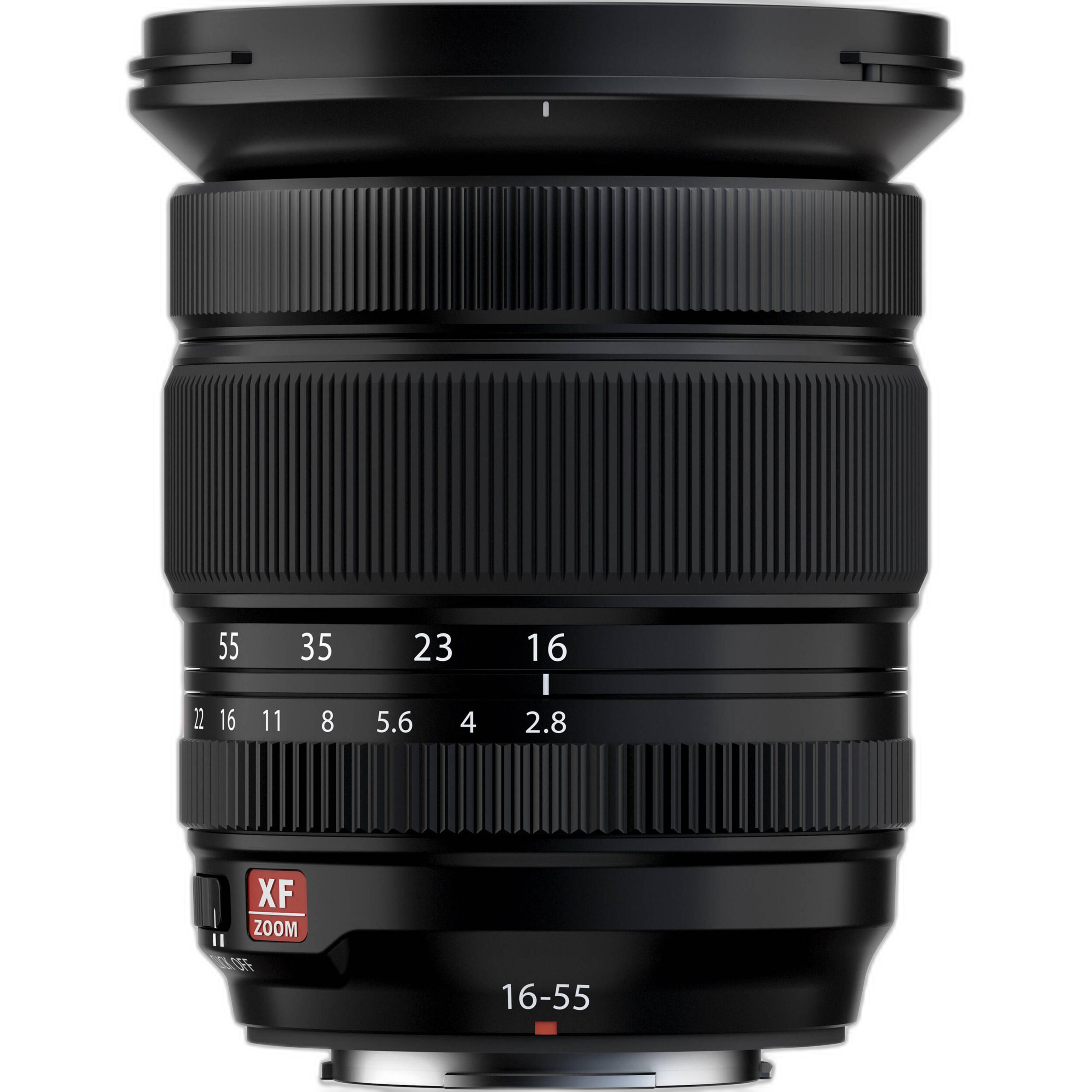
When Fujifilm introduced the Fujinon XF 16-55mm f/2.8 R LM WR in early 2015, it was more than just another zoom in the growing X Series catalog. It was a statement lens: a fast, constant-aperture standard zoom built to answer a question many working photographers had been asking since the X system's launch. Could Fujifilm deliver a true professional everyday zoom for its APS-C mirrorless platform—something with the range, speed, and durability expected of a workhorse lens? With the XF 16-55mm f/2.8, the answer was clearly yes.
Positioned as a premium optic for the Fujifilm X mount, the lens arrived with a 16-55mm focal range, equivalent to roughly 24-84mm in full-frame terms, and a constant f/2.8 maximum aperture throughout the zoom range. At a launch price of $1,199 in the U.S., it entered the market as a serious tool for serious users: wedding photographers, editorial shooters, documentary specialists, event professionals, and enthusiasts who wanted one lens that could handle a broad range of assignments without compromise.
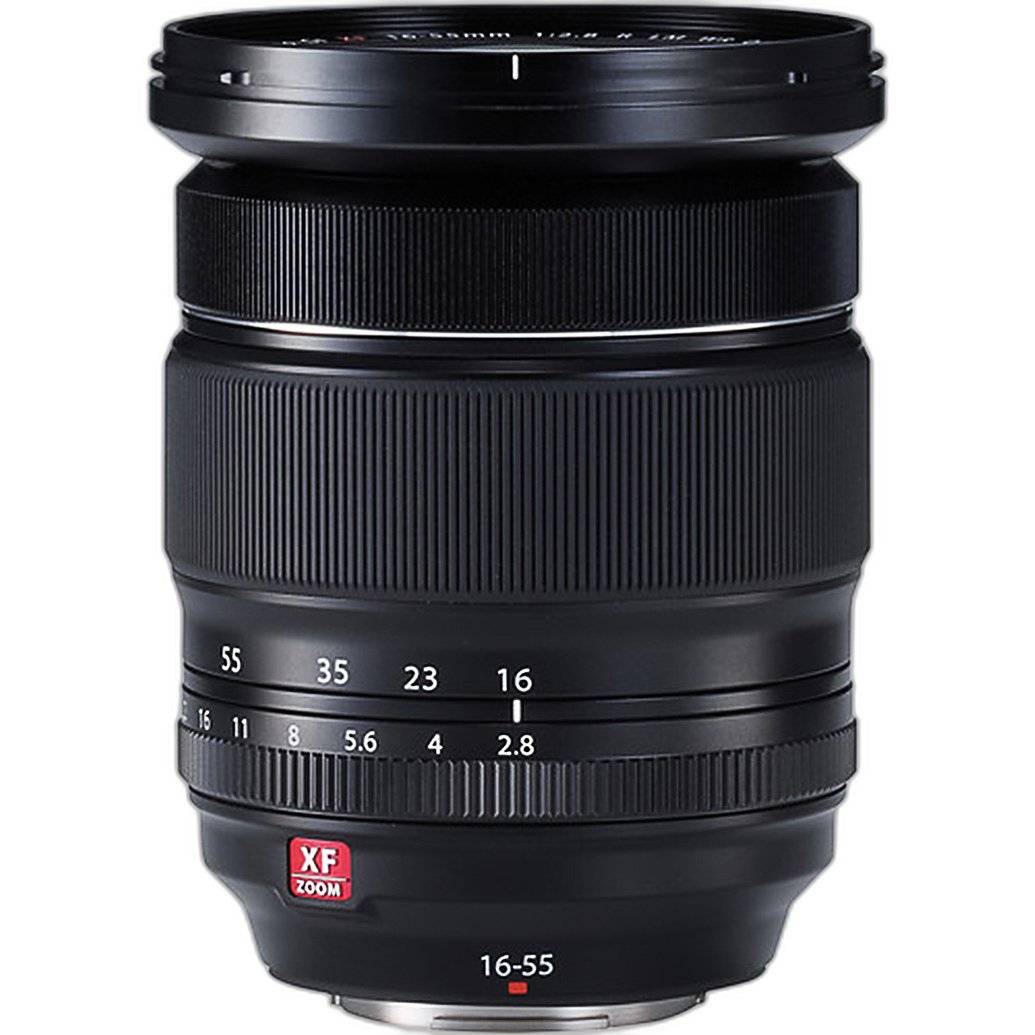
A Standard Zoom with Professional Intent
Every interchangeable-lens camera system eventually needs a lens that defines its practical center. For full-frame DSLR users, that role had long been filled by the classic 24-70mm f/2.8. In Fujifilm's APS-C X system, the XF 16-55mm f/2.8 R LM WR was designed to occupy that same space. Its 24-84mm equivalent field of view covered the broad territory that photographers rely on every day: wide enough for environmental portraits, interiors, and travel scenes, yet long enough for portraits, details, and general reportage.
The significance of the 16mm wide end should not be overlooked. By starting at a full-frame-equivalent 24mm rather than something narrower in usefulness, Fujifilm gave photographers a genuinely versatile tool. That made the lens especially appealing for event coverage and documentary work, where stepping backward is often not an option. At the same time, the 55mm telephoto end provided a flattering short-tele perspective useful for portraiture and tighter compositions.
Just as important was the constant f/2.8 aperture. For professionals, a fixed maximum aperture across the zoom range means predictable exposure behavior, dependable low-light capability, and consistent depth-of-field control. In practical terms, this made the XF 16-55mm f/2.8 a lens photographers could leave on the camera for long stretches of a job without feeling limited by changing light or framing needs.
Why This Lens Mattered in 2015
By the middle of the 2010s, Fujifilm had already earned strong praise for its prime lenses and for the image quality coming from X Series bodies. But for many photographers considering a switch from DSLR systems, one question remained central: where was the no-excuses professional standard zoom? The XF 16-55mm f/2.8 was a pivotal answer.
Its debut signaled Fujifilm's confidence in the X system as a platform not only for enthusiasts and street photographers, but also for assignment-driven professionals. This was the kind of lens that photographers compare directly with the best standard zooms in larger systems, and it arrived with the naming cues that reinforced its intended audience: R for aperture ring, LM for linear motor focusing, and WR for weather resistance. Those letters mattered because they aligned the lens with the X system's increasingly mature identity—one rooted in tactile control, modern autofocus capability, and field-ready durability.
Core Specifications at a Glance
Focal Range
The 16-55mm zoom range translates to approximately 24-84mm in full-frame terms. That puts it squarely in the classic standard zoom category, while giving Fujifilm users a slightly broader and slightly longer useful range than the traditional 24-70mm comparison might suggest.
Maximum Aperture
A constant f/2.8 aperture made this lens suitable for low-light work, subject isolation, and exposure consistency during zooming. For photographers accustomed to variable-aperture kit zooms, this represented a substantial step up in capability and intent.
Mount
Designed for the Fujifilm X mount, the lens was built specifically for the APS-C X Series ecosystem rather than adapted from another format. That mattered in both handling and system philosophy: Fujifilm was building native solutions, not interim compromises.
Launch Price
At $1,199 at launch in the U.S., the XF 16-55mm f/2.8 clearly targeted the premium end of the market. It was priced accordingly for photographers who viewed lenses as long-term investments in daily reliability and image quality.
Handling, Design, and System Philosophy
Part of what made Fujifilm's lens lineup distinctive in this era was its insistence on tactile, photography-first controls. The aperture ring on the XF 16-55mm f/2.8 fit naturally into that philosophy. For photographers who had come to appreciate the directness of Fujifilm handling, this was not merely a nostalgic flourish. It was a practical control interface that encouraged fast, intuitive adjustments while shooting.
The lens's WR designation also reflected the broader direction of the X system in 2015. Fujifilm was increasingly presenting its cameras and lenses as tools for real-world use, not just carefully managed personal projects. Weather resistance suggested confidence: this was a lens intended for travel, location work, changing conditions, and the unpredictability that accompanies professional photography.
The LM designation—Linear Motor—further underscored that intent. In the release-period context, fast and quiet autofocus performance had become crucial as mirrorless cameras moved from specialist niches into mainstream professional consideration. Fujifilm understood that a standard zoom for working photographers needed not only image quality, but also autofocus behavior that could support contemporary shooting demands.
The Lens in Real-World Use
On assignment, the XF 16-55mm f/2.8 would have been the lens many X Series users wanted mounted by default. For event and wedding shooters, its range covered room scenes, groups, candids, and portraits without requiring constant lens changes. For editorial and documentary photographers, it offered the flexibility to move quickly through different visual situations while maintaining a consistent exposure envelope. For travel and landscape users, the wide end provided a strong environmental perspective, while the longer settings made it easier to isolate details and compress scenes.
That versatility is part of why professional standard zooms so often become system anchors. They may not have the glamour of a fast portrait prime or the drama of an ultra-wide, but they are the lenses that often do the most work. In the case of the Fujinon XF 16-55mm f/2.8, Fujifilm was offering X Series users a lens that could credibly serve as the central optic in a professional kit.
A Historical View of Its Place in the XF Lineup
Seen from a historical perspective, the XF 16-55mm f/2.8 occupies an important place in the development of Fujifilm's lens strategy. Early enthusiasm for the X system was often built on compact primes, beautiful color, and tactile camera design. But to mature into a broad professional platform, the system needed foundational lenses that met conventional working requirements. This lens was one of those foundations.
It helped demonstrate that Fujifilm was not treating APS-C as a lesser format requiring lesser optics. Instead, the XF 16-55mm f/2.8 presented the X mount as worthy of serious optical investment. That message mattered in 2015, when many photographers were actively comparing emerging mirrorless systems against deeply established DSLR ecosystems.
In that sense, the lens was not just a product launch. It was part of Fujifilm's larger argument that image-making tools should be judged by performance, usability, and system cohesion—not simply by sensor-size assumptions or market tradition.
Conclusion
The Fujinon XF 16-55mm f/2.8 R LM WR arrived as the X system's long-anticipated professional standard zoom, and its purpose was immediately clear. With its 16-55mm focal range, constant f/2.8 aperture, Fujifilm X mount design, and $1,199 launch price, it stood as a flagship everyday lens for photographers who needed flexibility without stepping away from professional expectations.
As an archival look back at its release, the lens remains easy to understand: it was built to be used hard, used often, and trusted as a centerpiece of the system. For photographers researching Fujifilm lens history or looking to add a classic XF workhorse to their kit, Unique Photo is a great place to buy, compare, or learn more about the Fujinon XF 16-55mm f/2.8 and the broader Fujifilm X lineup.