Fujifilm has officially announced the X-Pro1, a new interchangeable-lens camera that does more than add another body to the mirrorless market: it establishes an entirely new system. Arriving with a new Fujifilm X mount, a 16.3MP X-Trans APS-C sensor, and the company’s distinctive hybrid optical/electronic viewfinder concept, the X-Pro1 is clearly aimed at serious photographers who want compact size without giving up a deliberate, rangefinder-inspired shooting experience.
In historical terms, this announcement matters far beyond a single product launch. The X-Pro1 stands as the starting point of the X system as photographers now know it. Fujifilm had already drawn attention with fixed-lens enthusiast cameras, but the X-Pro1 marks the moment the company committed to a broader, lens-based platform. For photographers watching the market in early 2012, this is the camera that signals Fujifilm’s long-term ambitions in premium digital imaging.
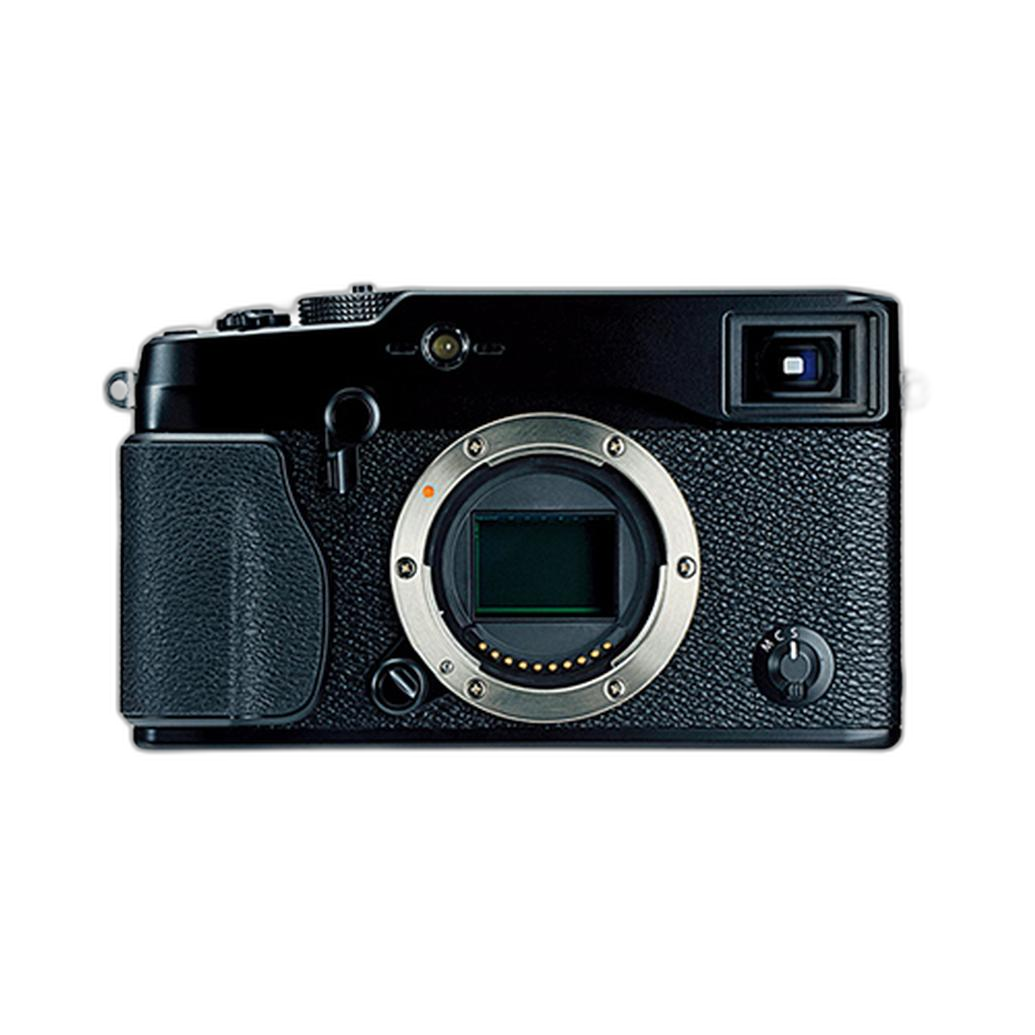
A New Flagship for a New System
The Fujifilm X-Pro1 arrives as a premium interchangeable-lens body built around the newly introduced Fujifilm X mount. That point alone makes it significant. New mounts do not appear casually; they represent a manufacturer’s design priorities, lens roadmap, and confidence in a system’s future. By launching the X-Pro1 with a fresh mount rather than adapting an existing one, Fujifilm is making a clear statement about optical design freedom and system identity.
The camera’s outward design reinforces that message. Rather than chase the look and ergonomics of a conventional DSLR, Fujifilm has leaned into a classic, viewfinder-style form factor. This makes the X-Pro1 feel distinct in a market that, in 2012, is still defining what a high-end mirrorless camera should be. The styling may evoke traditional rangefinder cameras, but the X-Pro1 is not merely nostalgic. It combines classic handling cues with a very modern sensor and finder concept.
The 16.3MP X-Trans APS-C Sensor
At the center of the X-Pro1 is a 16.3MP X-Trans APS-C sensor, one of the camera’s most notable technical features. Sensor design is often where camera makers either follow established formulas or try to differentiate themselves, and Fujifilm has clearly chosen the latter. The X-Trans name itself quickly became one of the key identifiers of the X system, and the X-Pro1 is the first camera to carry that banner.
For photographers evaluating the announcement at the time, the sensor is a major reason to pay attention. APS-C size places the X-Pro1 firmly in enthusiast and professional territory, offering a larger imaging area than the smaller sensors used in many compact cameras of the period. Combined with the 16.3MP resolution, the X-Pro1 positions itself as a camera built for image quality first. In the broader context of 2012, that matters: mirrorless cameras are increasingly being judged not just on portability, but on whether they can stand beside established larger-system cameras in actual photographic results.
The X-Pro1’s role in history is tied closely to this sensor. Fujifilm is not simply launching a new body; it is introducing an imaging philosophy that would define much of the X line that followed. Looking back, the X-Pro1’s sensor architecture helped set expectations for the brand’s approach to color, detail, and image character.
The Hybrid OVF/EVF: Fujifilm’s Signature Idea
If the sensor gives the X-Pro1 its technical foundation, the hybrid OVF/EVF gives it its personality. Fujifilm’s hybrid viewfinder concept combines an optical viewfinder with an electronic viewfinder option in one camera, allowing photographers to choose between a more direct optical shooting experience and the precision of an electronic display.
This is a striking feature in 2012, because it speaks to a real divide among serious photographers. Some prefer the immediacy and openness of an optical finder, especially for street, documentary, and observational shooting. Others value the exposure preview and information overlay possible with an electronic finder. By offering both, the X-Pro1 tries to bridge two worlds: classic photographic handling and modern digital feedback.
That duality is central to the X-Pro1’s appeal. It is not trying to be the smallest camera possible, nor the most aggressively futuristic-looking. Instead, it presents itself as a photographer’s camera, one designed around the act of seeing. In the long arc of Fujifilm history, the hybrid viewfinder became one of the clearest symbols of the X-Pro concept, and the X-Pro1 is where that identity begins in interchangeable-lens form.
A Premium Launch Position
Fujifilm has introduced the X-Pro1 at a launch price of $1,699 in the U.S., placing it firmly in premium territory. That pricing tells us a great deal about the company’s intentions. This is not an entry-level experiment. It is a statement product designed for enthusiasts, working photographers, and early adopters willing to invest in a new system from day one.
Pricing also shapes how the camera is understood historically. The X-Pro1 was announced not as a budget alternative, but as a serious camera meant to compete on quality, design, and experience. Fujifilm is asking photographers to buy into a new mount and a new vision of mirrorless photography, and the price reflects the confidence of that proposition.
Why the X-Pro1 Matters in 2012
Seen from the perspective of its release period, the X-Pro1 arrives at an important moment in the industry. Mirrorless cameras are evolving rapidly, but many photographers still view them as secondary systems or compact alternatives. The X-Pro1 challenges that assumption. Its APS-C sensor, premium construction, new lens mount, and hybrid finder all point toward something more ambitious: a complete system intended for primary-camera use.
Just as importantly, the X-Pro1 gives Fujifilm a coherent platform around which lenses and future bodies can be built. That is the real meaning of this announcement. Cameras come and go, but systems endure when they capture photographers’ trust. The X-Pro1 is the seed from which the modern X system grows.
Early Historical Perspective
Even at launch, it is possible to recognize the X-Pro1 as one of Fujifilm’s most consequential digital cameras. The company had heritage in film, color science, and imaging technology, but the X-Pro1 translates that heritage into a modern interchangeable-lens digital format with a strong, distinctive point of view. Rather than imitate the market leader’s DSLR template, Fujifilm is defining its own path.
That independent streak is part of what makes the X-Pro1 historically interesting. It enters the market with a blend of classic inspiration and technical experimentation that feels unmistakably Fujifilm. The new X mount lays the groundwork for future expansion, the 16.3MP X-Trans APS-C sensor establishes a technical signature, and the hybrid OVF/EVF creates an experience unlike most rivals.
The Beginning of the X Mount Story
For collectors, historians, and photographers looking back, the X-Pro1 is best understood as the first chapter of a much larger story. Later Fujifilm X-series cameras would refine, diversify, and expand the idea, but this is the camera that starts it all in interchangeable-lens form. It is the launch point for Fujifilm X-mount photography and one of the defining mirrorless announcements of its era.
The X-Pro1’s significance is therefore twofold. On one level, it is an appealing premium camera with a distinctive finder and a serious APS-C sensor. On another, it is a foundational object: the body that established the visual language, handling philosophy, and technological direction of the X system itself.
Conclusion
The announcement of the Fujifilm X-Pro1 on February 28, 2012 marks a pivotal moment for Fujifilm and for mirrorless photography as a whole. With its 16.3MP X-Trans APS-C sensor, new Fujifilm X mount, hybrid OVF/EVF, and $1,699 launch price, the X-Pro1 arrives not as a side project, but as a confident opening statement. It is a camera built around image quality, photographer engagement, and system potential—and in hindsight, it launched one of the most influential modern camera families.
To explore historic and current Fujifilm gear, or to learn more about landmark cameras like the X-Pro1, visit Unique Photo, where photographers can shop, compare, and connect with a team that understands the history behind the equipment.