Fujifilm Instax Mini Evo Cinema records 15-second videos and makes instax mini prints. The film-and-memory package is in stock at $409.95.
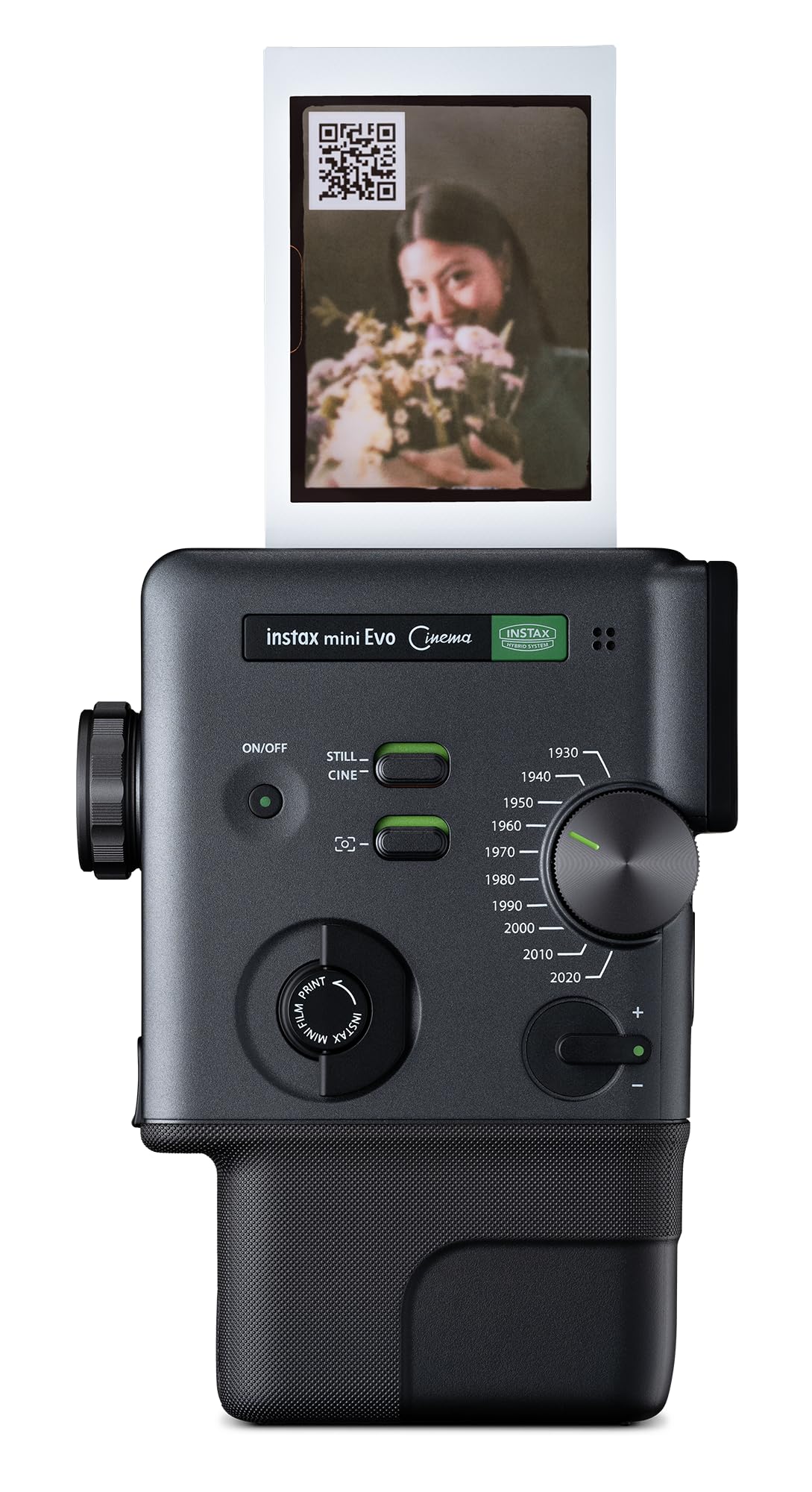
A hybrid instant camera with short-video capture
The Fujifilm Instax Mini Evo Cinema Camera with film and memory combines still photography and short-video recording with printing on instax mini film. Fujifilm takes its design cues from 1960s Super 8 cameras, including a vertical grip layout and analog-style controls. The movie-camera reference is the design inspiration; the physical prints use instax mini film.
This combination makes sense for people who want a photograph to hand someone but also want to preserve a little movement. At a family gathering, for example, a still picture and a brief spoken greeting serve different purposes. The Cinema handles both types of capture, with an app providing editing and sharing functions for the video side.
15-second clips and editing in the app
Fujifilm specifies video clips of up to 15 seconds. That limit makes this a camera for short moments, not an extended recording of an event. A quick greeting or a small piece of action fits the format. A complete speech calls for a different recording approach.
The instax mini Evo App can edit and combine those clips, and it supports cinematic titles. Combining clips gives individual recordings a role in a sequence rather than leaving each one isolated. Titles can supply context, such as an occasion or location, without requiring that information to be spoken during the short recording.
The distinction is useful: capture happens in brief pieces, while the app supplies tools for working with those pieces afterward. The 15-second specification describes the camera’s individual clips.
Instax mini prints that connect to video
The Cinema can turn a video memory into an instax mini print carrying a scannable QR code for online playback. The print becomes a physical way to share access to a moving image. Scanning the code leads to the video; the photograph itself remains an instant print, not a display.
That gives the video function a connection to the camera’s printing function. A recipient can keep the physical photograph and use its code to reach the associated recording. The distinction from a conventional still print is the access to sound and movement through online playback, rather than through the film itself.
The camera also functions as a mobile photo printer through Bluetooth connectivity. That means a print does not have to begin with a photograph taken on the Cinema. A phone photograph can also become an instax mini print.
The Gen Dial offers 10 visual effects
The integrated Gen Dial provides 10 retro, decade-inspired visual effects. It gives the camera a dedicated physical control for choosing a visual treatment, alongside its analog-style controls. For someone drawn to the Super 8-inspired design, the effects extend that retro approach beyond the shape of the body.
These are visual effects, not a change in the camera’s physical print format. The Cinema still uses instax mini film. The useful distinction is between choosing an image treatment with the Gen Dial and editing or combining video clips in the app. Those are separate creative tasks, with a different control for each.
Vertical handling, a small LCD and a print lever
The body has a built-in 1.54-inch LCD screen and a detachable viewfinder. The screen is a small display, so its size is worth considering alongside the camera’s physical controls. Fujifilm also includes an attachable handgrip, giving the vertical-grip body an additional handling component.
The detachable viewfinder and attachable handgrip make those parts of the setup removable rather than permanently fixed to the body. They are handling features, separate from the camera’s film format or video functions. The vertical layout is also part of what gives the Cinema its Super 8-inspired shape.
A tactile print lever provides a physical control for printing. Together with the Gen Dial, it gives specific operations their own controls rather than making the LCD the only point of interaction. That is a practical part of the analog-style design, not just a surface finish.
Flash, continuous LED and self-portrait tools
The Cinema includes both a built-in flash and a continuous LED light for photo and video capture. Those lights serve different needs. A flash supplies a brief burst for a still photograph; continuous illumination matters for video because the subject needs light while the recording is running.
Having both gives the camera a built-in lighting option for its two capture modes. It does not make the surrounding light irrelevant, but it means the Cinema is not entirely dependent on the light already in the room.
A selfie mirror helps with framing when the camera faces its owner. The self-timer addresses a different problem: it delays capture so the person starting the shot can get into position. Both are useful additions for self-portraits or photographs that include the person operating the camera.
Film-and-memory package: $409.95, in stock
The Fujifilm Instax Mini Evo Cinema Camera with film and memory package costs $409.95 and is in stock at Unique Photo. That price is for the camera package with film and memory.
For additional instant prints, the film format to look for is instax mini. It is the same format used for the Cinema’s QR-code video prints and its mobile photo-printing function.
Prices at Unique Photo
Prices as of October 13, 2026. Browse more: Fujifilm Instax MINI, Fujifilm at Unique Photo.
Frequently asked questions
How much does the Fujifilm Instax Mini Evo Cinema cost?
The Fujifilm Instax Mini Evo Cinema Camera with film and memory package costs $409.95 and is in stock at Unique Photo.
Can the Fujifilm Instax Mini Evo Cinema record video?
Yes. It records clips up to 15 seconds long, which can be edited, combined or customized with cinematic titles in the instax mini Evo App.
What film does the Fujifilm Instax Mini Evo Cinema use?
It uses instax mini film. It can also make prints featuring scannable QR codes that link to online video playback.
Can the Fujifilm Instax Mini Evo Cinema print phone photos?
Yes. It functions as a mobile photo printer through Bluetooth connectivity.
How many effects does the Fujifilm Instax Mini Evo Cinema have?
Its integrated Gen Dial offers 10 retro, decade-inspired visual effects.