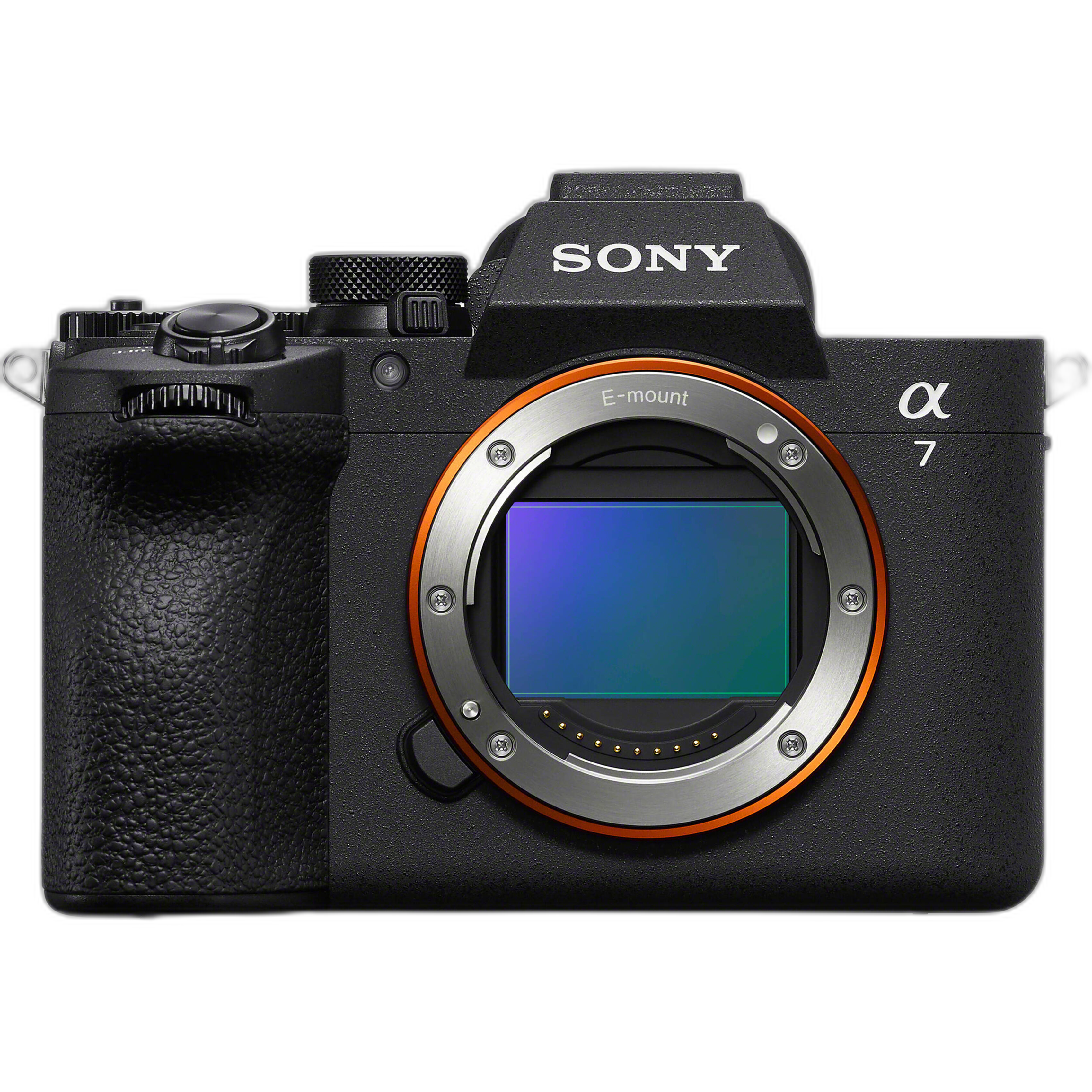
Sony has officially announced the a7, a camera that immediately stands out as one of the most important introductions of 2013. With a 24.3MP full-frame sensor, a compact mirrorless body, and the Sony E mount, the new model marks a major turning point in the evolution of interchangeable-lens cameras. Most notably, the a7 arrives as the first full-frame mirrorless camera, a milestone that gives this launch significance well beyond a single product cycle.
For photographers who have been watching the rapid rise of mirrorless systems, Sony’s announcement feels like the next logical leap. Mirrorless cameras had already proven that smaller bodies could deliver serious image quality, but full-frame performance remained largely tied to larger DSLR designs. The a7 challenges that assumption directly. It brings the larger sensor format associated with professional and enthusiast imaging into a body that is notably more compact than traditional full-frame options, while still maintaining the flexibility of an interchangeable-lens system.
A Landmark Announcement for Mirrorless Photography
In historical terms, the Sony a7 is not simply another camera launch. It represents a meaningful shift in how manufacturers and photographers alike may define the future of the full-frame category. Until this point, photographers looking for a full-frame camera generally expected the bulk, optical viewfinder design, and handling conventions of a DSLR. Sony’s a7 proposes a different path: full-frame image capture without the mirror box.
That distinction matters. Removing the mirror mechanism can allow for a more compact camera body and a different approach to system design. It also reflects Sony’s broader strategy in the early 2010s, as the company increasingly pushed mirrorless technology forward while many of its competitors remained more conservative in the category. The a7 announcement makes clear that Sony is not merely experimenting at the edges of the market. It is making a direct statement about where advanced camera design is heading.
24.3MP Full-Frame Sensor in a Smaller Body
At the heart of the Sony a7 is its 24.3-megapixel full-frame sensor. That specification alone would have been enough to draw attention, but paired with a mirrorless form factor, it becomes especially compelling. Full-frame sensors have long been prized for their balance of image quality, dynamic potential, and control over depth of field. By placing a 24.3MP full-frame sensor into the a7, Sony is aiming squarely at enthusiasts and professionals who want serious imaging capability without committing to a traditionally large camera system.
The 24.3MP resolution places the a7 in a very attractive middle ground. It is high enough to satisfy photographers who need substantial detail for landscape, portrait, editorial, and general-purpose use, while still remaining broad in its appeal. Rather than chasing extremes, Sony appears to have targeted a versatile resolution for a wide range of photographic applications.
The Importance of the Sony E Mount
The a7 uses the Sony E mount, a decision with major implications for the system’s future. By building its full-frame mirrorless camera around the E mount, Sony connects this new flagship-level concept to an already established mirrorless platform. That creates a strong foundation for lens development and system expansion, both of which are essential if full-frame mirrorless is to become more than a technical curiosity.
From a historical perspective, the mount choice is one of the most consequential aspects of the a7 announcement. Camera bodies generate headlines, but lenses define systems. The move to full-frame within the E-mount ecosystem signals that Sony intends to grow mirrorless upward, not just maintain it as an alternative to larger formats. For photographers considering long-term investment, that kind of commitment matters as much as the camera itself.
Price and Market Position
Sony has announced the a7 with a launch price of $1,699. That figure is central to understanding why this camera is generating so much excitement. Full-frame cameras have historically occupied a premium tier, often putting them out of reach for many photographers who might otherwise benefit from the format. At $1,699, the a7 positions itself as a notably aggressive entry point into full-frame photography, especially considering the significance of its mirrorless design.
The price suggests Sony is aiming to broaden the conversation around full-frame ownership. Rather than treating the format as an exclusive professional domain, the a7 seems designed to attract advanced enthusiasts, early adopters, travel photographers, and working shooters looking for a smaller secondary body. It is, in other words, a camera that may expand the full-frame market as much as compete within it.
Why the a7 Matters in 2013
Seen from the vantage point of its announcement, the Sony a7 feels like one of those rare products that can influence the direction of an entire category. The camera arrives at a time when mirrorless technology is no longer a novelty, but still has room to prove itself at the highest levels of photographic practice. By introducing the first full-frame mirrorless camera, Sony is testing whether photographers are ready to embrace a future in which image quality and portability no longer sit so far apart.
That question has strategic importance for the industry. If the a7 succeeds, it could accelerate lens development, push competing manufacturers to rethink their own roadmaps, and encourage a broader reevaluation of what a professional or enthusiast camera needs to be. In that sense, this is not merely a Sony product announcement. It is a challenge to the prevailing assumptions of the market.
Design Philosophy and System Ambition
Even without turning this launch into a full technical breakdown, the concept behind the a7 is clear. Sony is marrying a large sensor with a smaller interchangeable-lens body in a way that emphasizes modern system thinking. The appeal is obvious: photographers increasingly want capable cameras they can carry more often, use more flexibly, and integrate into a wider range of shooting situations. The a7 speaks directly to that demand.
Historically, some of the most influential cameras have not been those with the most dramatic specifications on paper, but those that arrive at the right moment with the right combination of technology, price, and usability. The a7 announcement has that kind of energy around it. It takes the established desirability of full-frame capture and places it into a form factor aligned with where much of the industry has been moving.
An Archival View of the Sony a7 Introduction
Looking back at the announcement from an archival perspective, the Sony a7 stands as a watershed model. Its importance lies not only in its 24.3MP full-frame sensor, its Sony E mount, or its $1,699 launch price, but in the fact that it broke a barrier. It gave the full-frame category a new shape and helped redefine what mirrorless cameras could be.
For photographers reading about it in late 2013, the message is straightforward: Sony is taking mirrorless seriously enough to build it around one of the most coveted sensor formats in photography. That is an ambitious move, and one that gives the a7 immediate historical significance.
Final Thoughts
The Sony a7 arrives as more than a new model number. It is a bold statement about the future of full-frame photography, and one of the defining camera announcements of 2013. As the first full-frame mirrorless camera, it opens a new chapter for the industry and creates exciting possibilities for photographers who want high image quality in a more compact system.
If you want to follow the latest camera history, explore current Sony gear, or learn more about landmark releases like the a7, Unique Photo is a great place to buy, compare, and stay connected to the evolution of photography.