At CES 2020, Nikon officially introduced the Nikon D780, a new full-frame DSLR that immediately stood out for blending traditional optical-viewfinder shooting with a number of technologies that felt distinctly informed by Nikon’s newer mirrorless direction. Positioned in the company’s long-running enthusiast and professional-minded FX DSLR line, the D780 arrived as a camera for photographers who still valued the handling, battery life, and familiarity of a Nikon F-mount body, but wanted more modern live view and video performance than earlier generations had offered.
With a 24.5MP full-frame sensor, 4K30 video, Nikon F mount compatibility, and a launch price of $2,299, the D780 was announced as a versatile hybrid camera for stills and motion work alike. In many ways, it represented Nikon’s effort to show that the DSLR was not standing still, even as the industry’s momentum increasingly shifted toward mirrorless systems.
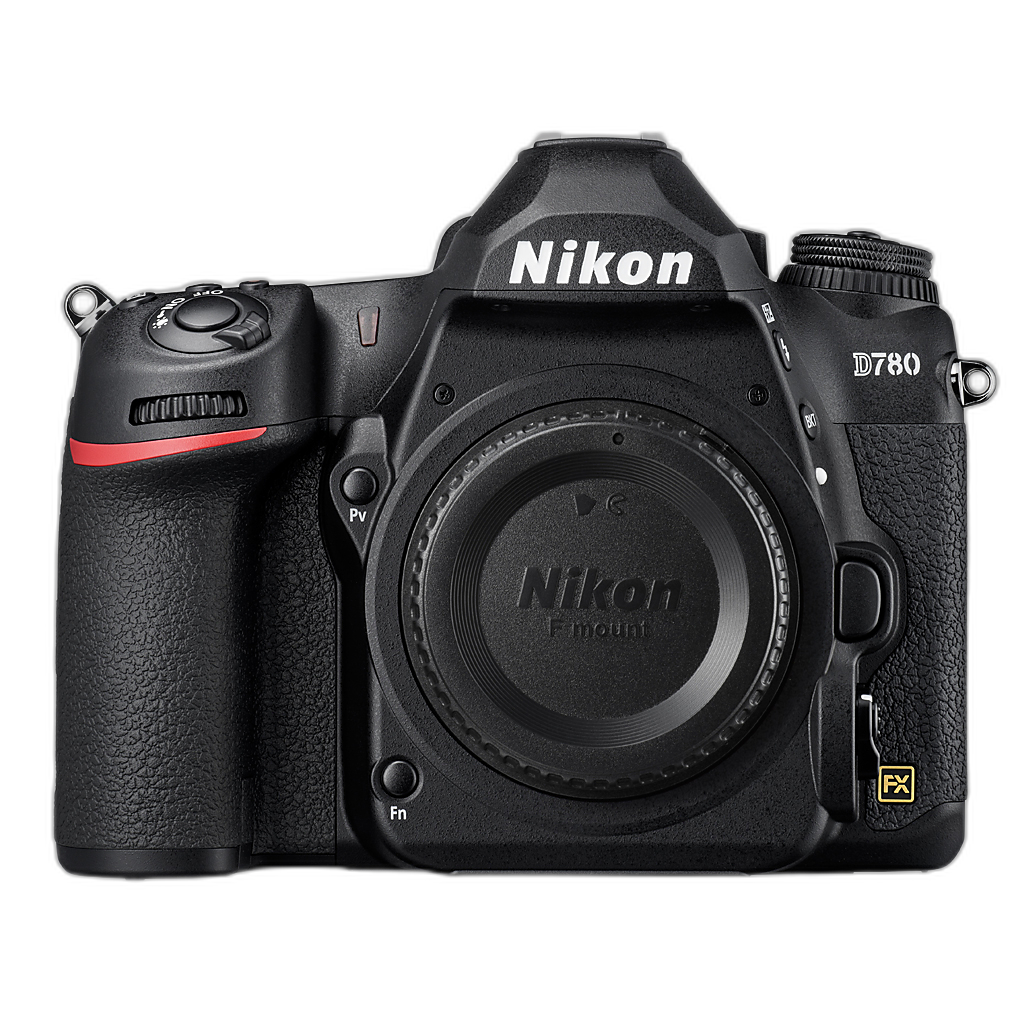
A New Chapter in Nikon’s Midrange Full-Frame DSLR Line
The Nikon D780 followed a well-regarded lineage of full-frame Nikon DSLRs that had long appealed to advanced enthusiasts, event photographers, travel shooters, and working professionals seeking a durable, capable all-around camera without moving into the flagship category. Historically, this segment has been especially important to Nikon: cameras in this class often delivered a balanced combination of image quality, speed, ergonomics, and value.
What made the D780 especially interesting at launch was not simply that it updated a familiar DSLR formula. It was that Nikon appeared to be rethinking what a DSLR could be in 2020. Rather than offering only incremental refinements, the company presented the D780 as a camera that could satisfy photographers in two different modes of operation. Through the optical viewfinder, it remained recognizably a Nikon DSLR. In live view, however, it was designed to behave more like a modern mirrorless camera, particularly in focusing and video-oriented use.
The Core Specifications
Nikon built the D780 around a 24.5-megapixel full-frame sensor, a resolution that sits in a practical sweet spot for many photographers. For archival and release-period context, that spec signaled a camera meant to prioritize versatility over sheer pixel count. A 24.5MP sensor offers enough resolution for editorial, wedding, commercial, portrait, and general-purpose professional work while also helping keep file sizes manageable and supporting strong all-around performance.
On the video side, the D780’s 4K30 capability was one of the headline features of the announcement. By early 2020, serious video capability had become an expected part of higher-end hybrid cameras, and Nikon clearly wanted the D780 to be seen as competitive in that environment. For still photographers moving into motion, content creators who preferred DSLR handling, and Nikon users with existing F-mount lenses, this was an important step forward.
The camera retained the Nikon F mount, one of the most significant and historically enduring lens mounts in photography. That decision anchored the D780 firmly in Nikon’s DSLR ecosystem and made it immediately attractive to existing Nikon users with established lens kits. In historical terms, that mattered greatly. Even as Nikon was expanding its newer mirrorless platform, the D780 reaffirmed that the F-mount system still had life and relevance for photographers deeply invested in it.
Nikon announced the D780 at a launch price of $2,299 in the United States, placing it in a serious enthusiast/professional bracket. That pricing reflected both its full-frame status and its ambition as a premium hybrid DSLR rather than an entry point into the format.
A DSLR That Borrowed from Mirrorless Thinking
The phrase “a DSLR with mirrorless brains” captures the central idea behind the D780. By 2020, mirrorless cameras had changed user expectations around autofocus in live view, silent shooting options, video usability, and overall responsiveness when using the rear screen. Traditional DSLRs often remained excellent through the optical finder, but their live view operation could feel comparatively dated.
The D780 arrived as Nikon’s answer to that divide. The announcement made clear that this was not only a camera for photographers who shoot conventionally through a finder, but also for those who frequently compose on the LCD, work from a tripod, record video, or need a more fluid transition between stills and motion. In that sense, the D780 was less about defending the DSLR on nostalgic terms and more about modernizing it with lessons learned from the mirrorless era.
That positioning was significant historically. The camera did not reject the DSLR’s strengths. It embraced them: robust ergonomics, familiar controls, an optical viewfinder experience, and access to a mature lens catalog. But it also acknowledged that users in 2020 expected more from live view and video than previous DSLR generations had consistently delivered.
Who the Nikon D780 Was For
At launch, the D780 was easy to understand as a camera for several overlapping groups of photographers. First were long-time Nikon DSLR users who wanted a modern full-frame body without changing systems. For them, the D780 offered continuity. Existing F-mount lenses remained relevant, and the camera’s basic form factor and operational logic stayed rooted in Nikon’s DSLR tradition.
Second were hybrid shooters—photographers who increasingly needed both stills and video from the same body. The inclusion of 4K30 made the D780 more compelling in this role than older DSLRs that felt more stills-first in execution. Whether for weddings, events, branded content, interviews, or travel storytelling, the D780 was announced into a market that increasingly rewarded flexibility.
Third were photographers who still preferred an optical viewfinder. Even in 2020, that preference remained meaningful. For many shooters, the immediacy and clarity of an OVF, combined with the handling of a substantial DSLR body, remained a real advantage. Nikon’s message with the D780 was not that mirrorless had won every argument, but that the DSLR could evolve intelligently.
The Importance of the Nikon F Mount
No discussion of the D780 is complete without recognizing the importance of the Nikon F mount. Introduced decades earlier, the F mount had become one of the defining pillars of Nikon photography. Its lens ecosystem spanned generations of NIKKOR optics and supported an enormous range of photographic genres, from portraiture and landscape to sports, wildlife, macro, and studio work.
By keeping the D780 in the F-mount family, Nikon preserved a major advantage for its installed base. For many photographers, especially those with years of investment in Nikon glass, a camera body is part of a broader system decision. The D780 allowed users to continue building on that system rather than replacing it outright.
In historical perspective, this was one reason the D780 mattered. It was not simply a new body; it was also a reaffirmation that the DSLR ecosystem still had practical value at a time when many photographers were deciding how quickly to transition to mirrorless platforms.
A 2020 Announcement with Broader Industry Meaning
The Nikon D780 was announced during a period of genuine transition in the camera industry. Mirrorless development was accelerating across the market, but DSLRs remained important tools for a large number of photographers. The D780 therefore occupies an interesting place in Nikon history: it was both a continuation of a proven DSLR line and a sign of how strongly mirrorless design priorities were beginning to influence all camera development.
That is why the D780 was so compelling at launch. It was not a radical break with the past, nor was it merely a conservative update. Instead, it represented a pragmatic synthesis. Nikon took a familiar DSLR platform and infused it with more modern expectations around hybrid shooting. For photographers not yet ready to leave the optical-viewfinder experience—or simply not interested in doing so—the D780 stood as one of the clearest examples of a DSLR adapting to the times.
Final Thoughts
Seen from its release-period context, the Nikon D780 was a thoughtful and strategically important announcement. Its 24.5MP full-frame sensor, 4K30 video capability, Nikon F mount, and $2,299 launch price positioned it as a serious tool for photographers who wanted modern hybrid performance without giving up the DSLR form. More than that, it showed Nikon’s determination to keep the DSLR relevant by borrowing intelligently from mirrorless innovation.
As a historical piece, the D780 remains notable for exactly that reason: it was a camera that bridged two eras of design thinking. For photographers interested in Nikon history, full-frame DSLR development, or the evolution of hybrid stills/video tools, it is an especially meaningful model. To learn more about Nikon cameras, lenses, and the broader history of photographic equipment—or to shop current gear—visit Unique Photo.