Compare DJI Mic 3 (1TX + 1RX), DJI Mic 3 Transmitter and Azden SMX-15 by price, pickup pattern and how each fits a video recording setup.
What the three prices actually buy
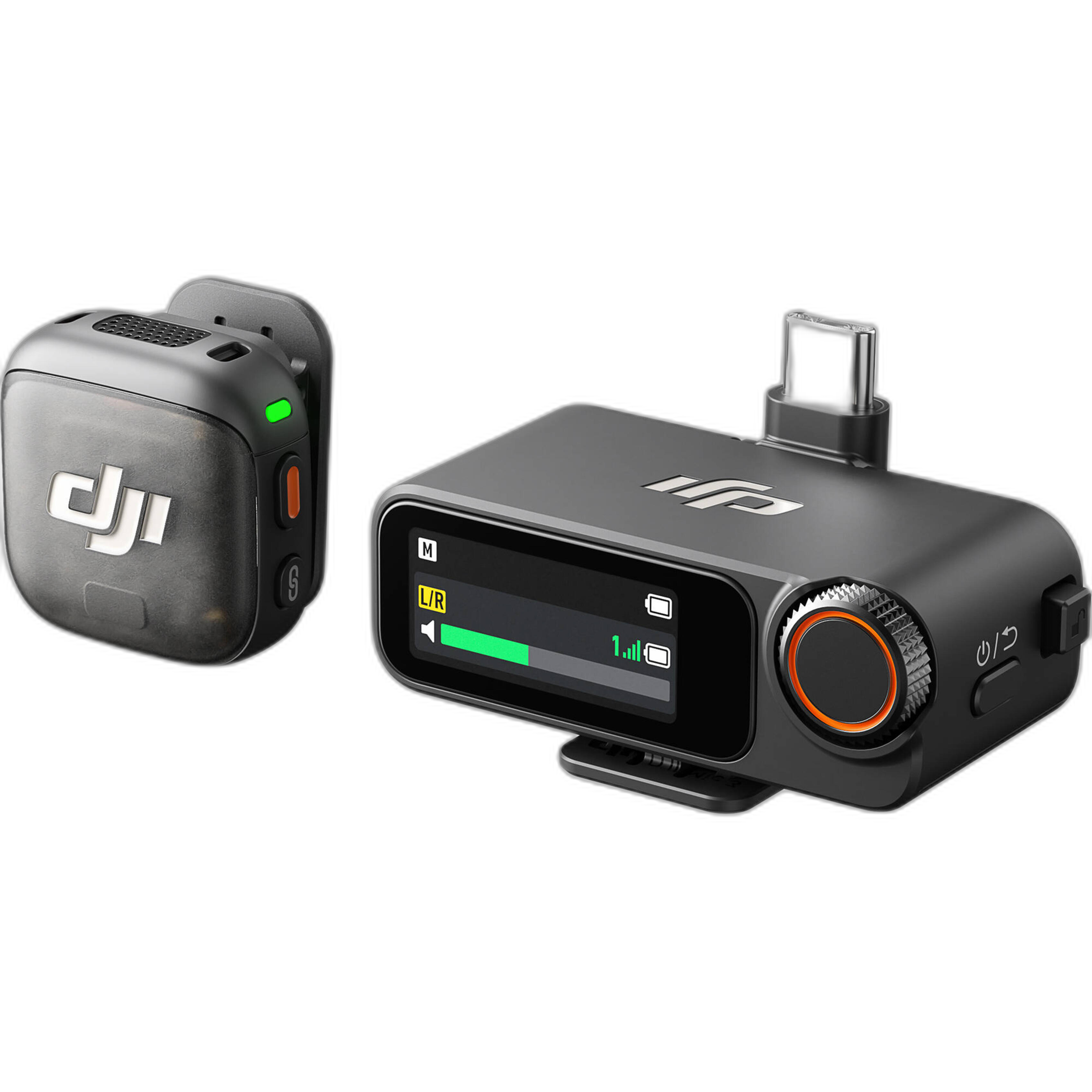
The DJI Mic 3 (1TX + 1RX) costs $169 and pairs one transmitter with one receiver. The DJI Mic 3 Transmitter costs $84 and is the transmitter-only option. The buying distinction is the receiver, not a different set of transmitter recording features.
The Azden SMX-15 Powered Shotgun Video Microphone costs $139.95. It takes a different approach: a directional shotgun microphone with a 3.5 mm output and an integrated shock-absorbing shoe mount, rather than a clip-on transmitter worn by the speaker.
All three are in stock at Unique Photo. Start this comparison with microphone placement and the equipment already in the bag. Those decisions matter more here than the price order.
Shared specifications compared
The DJI dimensions and weights below refer to the transmitter, not the combined transmitter-and-receiver package. These rows compare specifications available for all three products.
| Specification | DJI Mic 3 (1TX + 1RX) | DJI Mic 3 Transmitter | Azden SMX-15 |
|---|---|---|---|
| Microphone type | Built-in microphone in clip-on transmitter | Built-in microphone in clip-on transmitter | Shotgun microphone |
| Polar pattern | Omnidirectional | Omnidirectional | Super-cardioid |
| Frequency response | 20 Hz to 24 kHz | 20 Hz to 24 kHz | 40 Hz to 20 kHz |
| Power requirements | Battery | Battery | Two AA batteries |
| Microphone weight | 16 g, transmitter | 16 g, transmitter | Approximately 135 g |
| Microphone dimensions | 28.8 x 28.3 x 16.4 mm, transmitter | 28.8 x 28.3 x 16.4 mm, transmitter | 47 x 98 x 145 mm |
The frequency-response figures describe the stated frequency span, not how much room sound each microphone will capture. For spoken audio, the difference between an omnidirectional microphone close to a speaker and a directional microphone on the camera is more useful to consider than the upper frequency limit alone.
Clip-on placement versus directional pickup
Both DJI options use an omnidirectional transmitter microphone. That pattern picks up sound from around the microphone, so close placement matters. Clipped to clothing, the microphone stays with the speaker as camera framing changes. It does not become isolated from nearby noise just because it is being worn.
DJI supports magnetic and clip-on attachment. The detachable clip rotates, allowing the transmitter to be positioned sideways or inverted. At 16 g, the transmitter also puts considerably less weight on its mounting point than the approximately 135 g Azden, although they are intended for different mounting jobs.
The Azden uses a super-cardioid pattern with off-axis rejection to favor sound in the direction it is aimed. Its integrated shock-absorbing shoe mount helps isolate camera motor and handling noise. A bottom 1/4-20 thread also allows mounting on a boom pole or other accessory.
Directionality does not replace proximity. Move a camera-mounted shotgun farther from a speaker and the microphone moves farther away too. The DJI clip-on arrangement avoids that particular change in microphone distance.
Internal recording, level control and low-cut filtering
Both DJI options support dual-file 32-bit float internal recording. Recording internally puts audio on the transmitter rather than relying only on transmission to a receiver. The 32-bit float format gives more room to adjust recorded levels during editing, but it does not remove the microphone's acoustic input limit. DJI specifies a maximum SPL of 126 dB.
Adaptive Gain Control addresses changing volume during capture. DJI says its Automatic mode helps prevent audio clipping. Both options also provide three voice tone presets and two-level noise cancelling. Those controls change the recording approach without changing the transmitter's omnidirectional pickup pattern.
Integrated timecode helps align audio and video in an editing workflow that supports timecode. DJI also specifies dual-band anti-interference and lossless audio transmission for both options. Buying the standalone transmitter does not mean stepping down to a different internal recording format.
The Azden provides a selectable 120 Hz low-cut filter. That is useful for reducing low-frequency content such as rumble; it is not the same thing as general noise cancellation. Its directional pattern and low-cut switch address different parts of unwanted sound.
Connections, monitoring and battery planning
The DJI 1TX + 1RX package provides a 3.5 mm TRS unbalanced audio output and a separate 3.5 mm TRS headphone output. That headphone connection gives a place to monitor audio. The package supports shoe mounting with included hardware and USB-C plug-in mounting with the included adapter. The receiver weighs 25.1 g.
DJI rates approximate transmitter battery life at eight hours and receiver battery life at ten hours. For a setup that needs both running, plan around the transmitter's shorter rating rather than treating ten hours as the system runtime. The standalone transmitter carries the same eight-hour rating. DJI also lists fast charging for both options.
The Azden uses a 3.5 mm stereo mini plug for its audio output and runs on two AA batteries. A battery-indicator LED provides a power-status reference. That changes the preparation: the Azden calls for AA batteries, while the DJI equipment requires charging. Check the camera's audio connection before choosing a microphone around its mounting arrangement alone.
Who should choose the kit, transmitter or shotgun
Choose the DJI Mic 3 (1TX + 1RX) for a one-speaker setup that needs a receiver. It makes sense for an interview where the microphone should remain on the speaker while the camera changes position. The separate headphone output gives monitoring a dedicated connection, and internal recording adds a recording path on the transmitter.
Choose the DJI Mic 3 Transmitter to add to or replace a transmitter in a Mic 3 setup. Someone who already has the receiver avoids buying another one while retaining dual-file 32-bit float recording and timecode. DJI specifies 4TX + 8RX capability and four-channel output for the system; those expansion capabilities do not turn either purchase into a four-transmitter package.
Choose the Azden SMX-15 for directional capture without attaching a transmitter to the subject. Its shoe mount suits camera-mounted recording aimed toward the action, while the 1/4-20 thread allows a boom-mounted approach when closer placement is possible. It is also the choice here for AA power and a dedicated 120 Hz low-cut filter. Keep microphone distance in the decision, particularly for dialogue.
Prices at Unique Photo
- DJI Mic 3 (1TX + 1RX): $169.00
- DJI Mic 3 Transmitter: $84.00
- Azden SMX-15 Powered Shotgun Video Microphone: $139.95
Prices as of October 24, 2026. Browse more: Microphones, DJI at Unique Photo.
Frequently asked questions
What is the difference between DJI Mic 3 (1TX + 1RX) and DJI Mic 3 Transmitter?
The $169 DJI Mic 3 (1TX + 1RX) pairs one transmitter with one receiver. The $84 DJI Mic 3 Transmitter is the transmitter-only option; both support dual-file 32-bit float internal recording and integrated timecode.
How long does the DJI Mic 3 battery last?
DJI rates approximate transmitter battery life at eight hours and receiver battery life at ten hours. The standalone transmitter also has an eight-hour rating.
What batteries and connection does the Azden SMX-15 use?
The Azden SMX-15 runs on two AA batteries and has a battery-indicator LED. Its audio output is a 3.5 mm stereo mini plug.