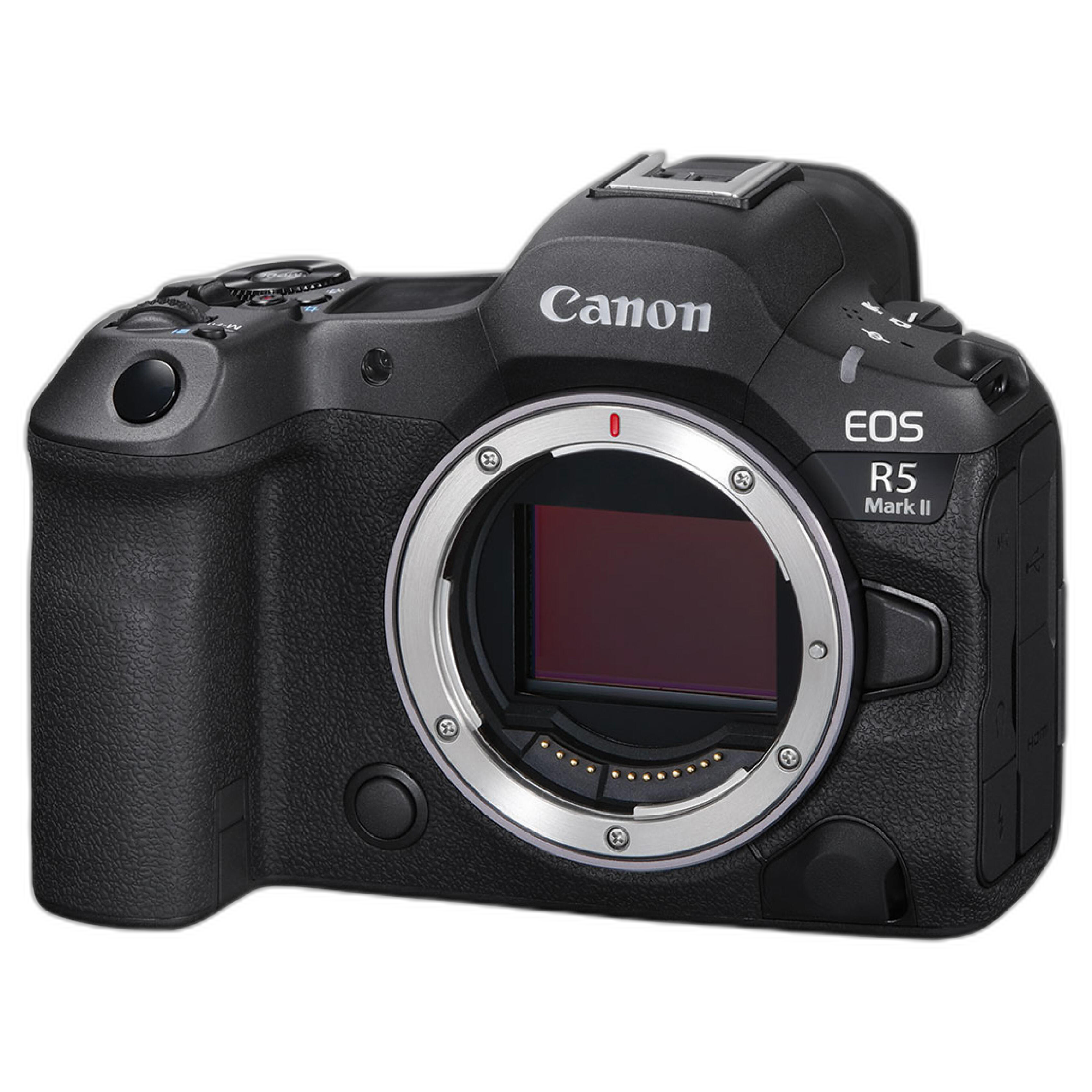
Canon’s July 2024 announcement of the EOS R5 Mark II marked one of the most closely watched camera launches of the year. Positioned in the heart of Canon’s full-frame mirrorless lineup, the new body arrived as a major update to the original EOS R5 formula, bringing a 45MP stacked full-frame sensor, 30 fps burst shooting, and 8K60 RAW video capture to the Canon RF mount. At a U.S. launch price of $4,299, the R5 Mark II was clearly aimed at advanced hybrid creators, working professionals, and enthusiasts looking for a high-resolution camera that could also deliver flagship-level speed.
From a historical perspective, the EOS R5 Mark II is significant because it shows how quickly Canon’s EOS R system matured in the first half of the 2020s. The original R5 helped establish Canon as a serious force in high-end mirrorless. The Mark II announcement built on that reputation with a more ambitious sensor design and a feature set that reflected the industry’s shift toward cameras expected to excel in both stills and motion.
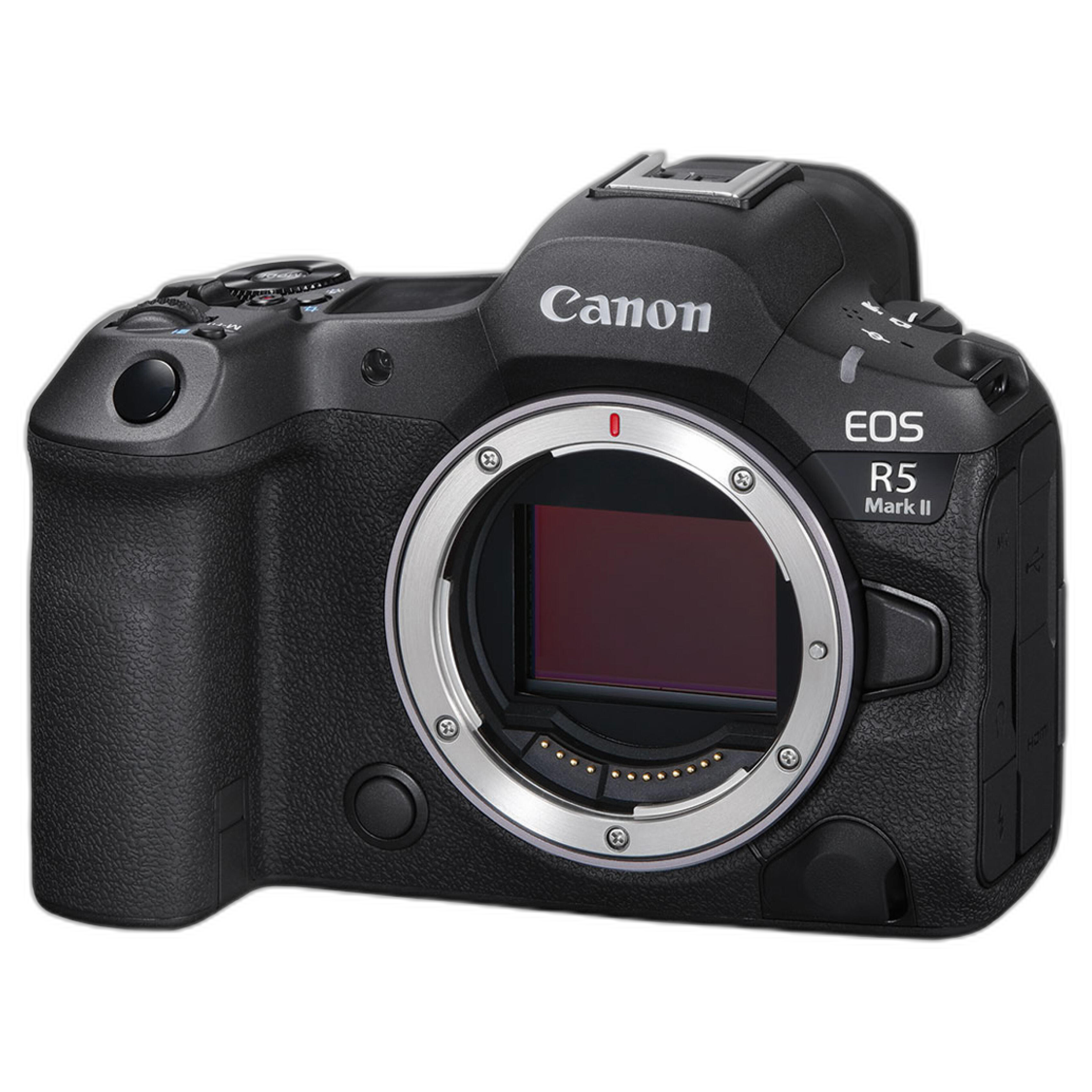
A New Chapter for the EOS R5 Line
The EOS R5 name already carried substantial weight by 2024. For many photographers, the original model had become one of the defining cameras of the early RF era: high resolution, advanced autofocus, and serious video capability in a relatively compact full-frame body. The R5 Mark II announcement signaled that Canon did not intend to treat the line as static. Instead, it used the second-generation model to push performance upward in a way that was immediately legible from the headline specifications alone.
The most important phrase in the launch materials was arguably stacked full-frame sensor. In the camera market, “stacked” had by this point become associated with faster readout, better responsiveness, and improved suitability for action, wildlife, sports, and high-end video use. By pairing a 45-megapixel resolution with stacked sensor architecture, Canon positioned the R5 Mark II as a hybrid tool that aimed to narrow the old divide between high-resolution cameras and speed-focused cameras.
The 45MP Stacked Full-Frame Sensor
Resolution remained central to the EOS R5 identity, and Canon preserved that with a 45MP full-frame sensor. That pixel count kept the camera attractive to photographers who need room to crop, produce large prints, or deliver detailed commercial files. Landscape shooters, studio photographers, event professionals, and wildlife specialists all tend to value this level of resolution for different reasons.
What changed the historical meaning of the camera was the move to a stacked design. In practical terms, stacked sensors are associated with faster data readout than more conventional designs. That matters because readout speed influences the feel of the camera in use, especially when shooting fast bursts or high-end video. It also matters for autofocus performance and for the camera’s ability to support demanding recording formats. For an archival look back at the launch, this was one of the clearest signs that Canon intended the EOS R5 Mark II to be more than a simple refresh.
30 fps Burst Shooting and the Speed Question
Canon also emphasized speed with a headline burst rate of 30 fps. That specification placed the camera in especially interesting territory. Historically, high-resolution cameras were often treated as tools for deliberate shooting, while speed-centric cameras tended to sacrifice resolution in pursuit of responsiveness. The EOS R5 Mark II represented the continued erosion of that old distinction.
For photographers covering sports, wildlife, action, weddings, or fast-moving documentary work, 30 frames per second suggested a camera capable of capturing subtle changes in expression, gesture, and peak movement. In the context of the 2024 market, this helped define the R5 Mark II not simply as a successor to a popular model, but as part of a broader generation of mirrorless cameras that were collapsing multiple professional use cases into a single body.
Just as importantly, burst speed on its own no longer told the whole story by 2024. Buyers also looked at autofocus sophistication, viewfinder behavior, buffer performance, and rolling shutter characteristics. Canon’s inclusion of Eye-Control AF in the launch headline reinforced the idea that the company was thinking about the complete shooting experience, not just a single benchmark number.
Eye-Control AF Returns in a Modern Mirrorless Flagship
One of the most historically resonant aspects of the EOS R5 Mark II announcement was the return of Eye-Control AF. For longtime Canon observers, that phrase carried immediate echoes of the company’s film-era experimentation, when eye-controlled focus selection stood out as one of Canon’s most memorable technological ideas. Its reappearance in a high-end mirrorless body was more than a specification update; it was a reminder of Canon’s longstanding interest in making cameras more intuitive to operate.
In the release-period conversation around the R5 Mark II, Eye-Control AF helped distinguish the camera from competitors in a crowded premium mirrorless field. It suggested a shooting method designed to reduce friction between seeing a subject and directing focus toward it. Historically, this feature also fit the broader trajectory of 2020s camera design, where manufacturers were increasingly trying to combine AI-assisted subject recognition, refined user interfaces, and more personalized control systems.
8K60 RAW and Canon’s Hybrid Ambitions
Video remained a central pillar of the EOS R5 story, and Canon made that unmistakable with 8K60 RAW. Even by the standards of the mid-2020s, that was an attention-grabbing capability. It signaled that the EOS R5 Mark II was not merely a stills camera with strong video on the side, but a genuinely hybrid machine aimed at creators who expected one body to cover demanding assignments across media formats.
RAW video recording at 8K60 positioned the camera squarely in professional and advanced enthusiast conversations. For filmmakers and content producers, RAW workflows offer latitude and flexibility in post-production, while 8K acquisition can support high-end finishing, reframing, or oversampled delivery pipelines. The frame rate was equally important. Sixty frames per second at 8K indicated serious processing power and underscored why the stacked sensor mattered so much to the camera’s overall identity.
In historical terms, Canon’s decision to push the EOS R5 Mark II this aggressively reflected a period when camera makers were responding to a transformed creator market. Photographers increasingly needed polished video capabilities, and videographers increasingly wanted cameras that were equally comfortable shooting high-quality stills. The R5 Mark II was announced into exactly that environment.
The RF Mount Context
The EOS R5 Mark II was built for the Canon RF mount, and by 2024 that mount had become the foundation of Canon’s future-facing interchangeable-lens system. The importance of this cannot be overstated in any historical discussion of the camera. A body like the R5 Mark II only makes full sense when seen as part of a maturing ecosystem of RF lenses, accessories, and professional support.
Canon’s RF strategy had, by this point, expanded far beyond a tentative mirrorless transition. The mount hosted lenses for general users, portrait specialists, sports photographers, wildlife shooters, and serious video creators. The R5 Mark II therefore arrived not as a technological orphan, but as a flagship-level body with a growing native lens system behind it. That system context helped justify its premium positioning and made it especially attractive to photographers already invested in Canon or considering a move into high-end full-frame mirrorless.
Launch Price and Market Position
At a launch price of $4,299 in the U.S., the EOS R5 Mark II entered the market as a premium camera, but not an unexpected one given its specifications and intended audience. Canon was clearly targeting users who wanted a versatile do-it-all body without stepping all the way into the company’s most specialized flagship categories.
The pricing also reflected the camera’s attempt to bridge multiple segments at once. For still photographers, the 45MP sensor promised detail and flexibility. For action-oriented shooters, 30 fps and a stacked sensor implied speed. For hybrid creators, 8K60 RAW elevated the model into serious video territory. Seen from the standpoint of its release period, the R5 Mark II was a camera designed to justify its price by promising fewer compromises.
Why the EOS R5 Mark II Announcement Mattered
Looking back, the announcement of the Canon EOS R5 Mark II stands as an important moment in the evolution of Canon mirrorless. It showed the company refining one of its most important modern camera lines while also embracing several larger industry themes: stacked-sensor performance, increasingly sophisticated autofocus interaction, and truly advanced hybrid video capability.
The camera’s headline combination—45MP stacked full-frame, 30 fps, Eye-Control AF, and 8K60 RAW—made the message clear at launch. Canon was not simply updating the EOS R5; it was redefining what buyers should expect from a high-resolution all-around professional mirrorless camera in 2024.
For photographers and filmmakers following the RF system, the EOS R5 Mark II arrived as one of the year’s most consequential releases. And for those interested in Canon history, it represented another milestone in the company’s long path from EOS film SLR innovation to a mature, high-performance mirrorless ecosystem. To learn more about Canon cameras or to shop current gear, Unique Photo remains a great place to buy, compare, and stay informed.