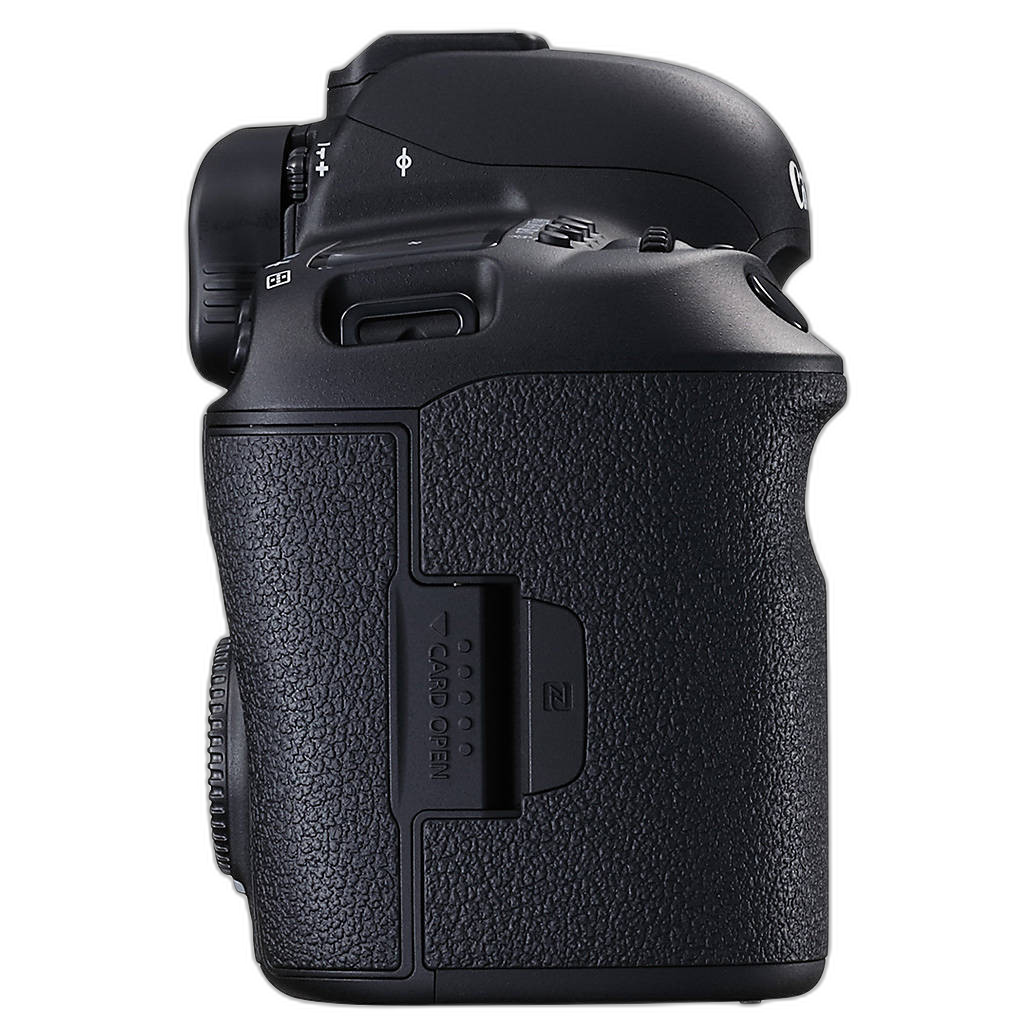
Canon’s EOS 5D Mark II arrives at a fascinating moment in digital imaging. For working photographers, advanced enthusiasts, and the wider imaging industry, the original EOS 5D had already established the idea that a relatively compact, comparatively attainable full-frame DSLR could be a serious creative tool. With the 5D Mark II, introduced on September 17, 2008, Canon builds on that formula in a way that feels both evolutionary and unexpectedly disruptive. On paper, it is a high-resolution full-frame DSLR with a 21.1MP sensor and Canon’s well-established EF lens mount. In practice, it is also the camera that brings 1080p video into the DSLR world in a way that is impossible to ignore.
That combination is what makes the EOS 5D Mark II historically significant. It is not simply a successor to a respected still camera. It is a model that would quickly reshape expectations for what a DSLR could be, both for photographers and for filmmakers looking for a new visual language from compact equipment.
A New Chapter for Full-Frame DSLR Photography
At launch, the Canon EOS 5D Mark II enters the market with a $2,699 price in the U.S., placing it squarely in serious enthusiast and professional territory while still remaining notably more accessible than many flagship bodies. The headline still-image specification is its 21.1MP full-frame sensor, a figure that immediately signals Canon’s ambitions for photographers who need detail, flexibility, and the imaging character associated with the 35mm format.
In 2008, full-frame capture still carries a particular weight. It suggests not only resolution, but also a field of view that fully leverages Canon EF lenses as many photographers had long known them from film SLRs. Wide-angle photography remains truly wide without crop-factor reinterpretation, while portrait and documentary shooters can take advantage of the depth-of-field characteristics that have helped define the appeal of larger formats. For Canon users already invested in the EOS system, the EOS 5D Mark II is therefore more than a body update; it is a reaffirmation of the EF ecosystem as a serious platform for high-end digital image-making.
The 21.1MP Full-Frame Sensor and the Promise of Detail
The move to a 21.1MP full-frame sensor is one of the 5D Mark II’s clearest statements of intent. Resolution at this level makes the camera especially compelling for studio work, landscape photography, editorial assignments, wedding coverage, and any application where cropping latitude and print potential matter. It is a specification that places the camera in conversation with much more expensive professional tools, while preserving the 5D line’s identity as a body that can move across genres.
For photographers coming from earlier-generation DSLRs, the practical benefit is easy to understand: more detail on the subject, more room to crop when composition needs adjustment, and more confidence when making larger prints. Just as importantly, the full-frame sensor helps preserve the familiar rendering many photographers value in Canon’s EF lenses. The camera’s appeal is not only technical; it is also aesthetic. The promise is one of high resolution without abandoning the tonal and spatial qualities photographers associate with the format.
The First DSLR with 1080p Video
If the still-image story makes the EOS 5D Mark II a major launch, the video story makes it a landmark. Canon’s inclusion of 1080p video gives the camera a distinction that will likely define its place in history: it is the first DSLR to offer 1080p recording. That fact alone makes this release feel larger than a normal model update.
From the vantage point of late 2008, it is difficult to overstate how surprising this is. DSLRs have been understood primarily as still cameras, even when live view and other digital-era features have gradually changed expectations. Video at 1080p changes the conversation entirely. Suddenly, a full-frame interchangeable-lens camera can be discussed not only in terms of photojournalism, weddings, portraits, and commercial stills, but also in terms of motion capture, multimedia storytelling, and cinematic experimentation.
The implications are immediate. Canon EF lens owners gain access to shallow depth of field and lens variety in a package that, while still clearly a DSLR, opens creative doors previously associated with much more specialized motion-picture equipment. For news organizations, wedding studios, independent creators, and commercial producers, the EOS 5D Mark II suggests a new hybrid future. Even for buyers who initially see video as an occasional extra, the feature introduces a level of versatility that changes the value proposition of the camera.
Why the EOS 5D Mark II Mattered So Much So Quickly
Many cameras become influential gradually. The EOS 5D Mark II feels different because its significance is visible from the start. Canon is not merely refining autofocus points, adjusting body ergonomics, or adding pixels, although iterative improvements are always part of any generational update. It is redefining category boundaries. The phrase “DSLR video” is likely to become part of the industry vocabulary because of cameras like this one, and especially because of this one.
That impact stems from the combination of features rather than any single spec in isolation. A 21.1MP full-frame sensor would already make the camera notable. Canon EF mount compatibility would already make it practical for a wide community of existing users. A launch price of $2,699 would already make it an important value discussion in the higher-end DSLR market. But when those qualities are joined by 1080p video, the result is something larger than a specification sheet. It becomes a tool that invites new users into the EOS system and encourages established users to imagine different kinds of work.
The Canon EF Mount Advantage
The EOS 5D Mark II uses Canon’s EF mount, and that matters a great deal in understanding the camera’s reception. By 2008, the EF lens system is already broad, mature, and deeply trusted by professionals and enthusiasts alike. A new body is never judged only on its sensor or processor; it is judged on the system around it. Here, Canon benefits from years of lens development across focal lengths and use cases.
For archival purposes, this is one reason the EOS 5D Mark II resonates so strongly in period. Buyers are not being asked to enter an experimental mount or a narrow lens lineup. They are being offered a body that can sit at the center of an extensive photographic system. For stills, that means continuity and confidence. For video, it means something even more exciting: access to a large range of optics that can shape the visual character of motion work in new ways.
An Archival View of Its Place in Camera History
Looking back historically, the Canon EOS 5D Mark II stands as one of the defining camera announcements of its era. It occupies a rare position: a camera that mattered deeply to photographers while also altering the trajectory of video production. Some cameras are remembered for image quality, others for ergonomics, and others for market success. The 5D Mark II is remembered because it shifted culture. It helped bring large-sensor, interchangeable-lens HD video into mainstream conversation and, in doing so, influenced not just the camera market but visual storytelling itself.
That should not overshadow its core identity as a still camera. The 21.1MP full-frame sensor remains foundational to its appeal, and the 5D lineage’s reputation for delivering full-frame image quality to a broad professional audience is a major part of the story. But the reason this model is still discussed with such intensity is that it bridged worlds. It linked photography and filmmaking in a way that, in 2008, felt startlingly fresh.
Conclusion
The Canon EOS 5D Mark II arrives in 2008 as more than a new DSLR. It is a pivotal release: a 21.1MP full-frame Canon EF-mount camera with a launch price of $2,699, and the first DSLR to record 1080p video. Those facts alone explain why it immediately captured so much attention. In the years that followed, its influence would only grow, but even at launch the significance was clear. This was a camera that expanded expectations for both stills and motion in one body.
For collectors, historians, Canon fans, and photographers researching one of the most important digital cameras of its generation, the EOS 5D Mark II remains an essential chapter in camera history. To explore historic Canon gear, shop current equipment, or learn more, visit Unique Photo.