Find the Right Sony Lens Faster—With Smarter Comparisons
If you shoot Sony full-frame and you’re torn between a do‑everything zoom for portraits and travel or an ultra‑wide for sweeping landscapes, Sony’s Lens Compare Beta is your shortcut to a confident choice. This guide shows landscape and portrait shooters how to get meaningful results from the tool—and highlights two outstanding options you can compare right away.
What Sony Lens Compare Beta Does (and How to Think About It)
Sony’s Lens Compare Beta lets you place lenses side‑by‑side and evaluate essentials like focal range, maximum aperture, sharpness behavior across the frame, size/weight, and stabilization. To get the most value:
- Compare at matched settings. Use the same focal length and aperture whenever possible to make apples‑to‑apples judgments.
- Use real‑world distances. For landscapes, check infinity or long‑distance performance; for portraits, evaluate around 1–2 m subject distance.
- Balance optics and handling. Consider weight, OSS (Optical SteadyShot), and size alongside optical metrics—especially if you hike or shoot long sessions.
- Prioritize use‑case metrics. Corner performance and distortion matter more for landscapes; bokeh, subject separation, and focus breathing matter more for portraits and video.
Setups That Reveal What Matters (Landscape vs. Portrait)
Landscape best practices in Lens Compare Beta
- Pick shared focal lengths (e.g., 24 mm when comparing a 12–24 mm with a 24–105 mm). Then check the ultra‑wide’s widest setting separately for field‑of‑view advantages.
- Evaluate sharpness center vs. corners to spot edge performance and field curvature.
- Look at distortion and vignetting with and without in‑camera corrections if the tool offers both views.
- Test at f/5.6–f/8 (typical landscape apertures) and wide open for nightscape performance (coma, star-point integrity).
Portrait best practices in Lens Compare Beta
- Compare at 70–105 mm if available; that range gives flattering compression for headshots.
- Check wide‑open rendering for bokeh smoothness and cat’s-eye shapes toward the edges.
- Review focus breathing and stabilization relevance if you shoot video or handheld stills.
- Consider minimum focus distance and magnification for tight details like eyes, lashes, and jewelry.
Recommended Sony Lenses to Start Your Comparison
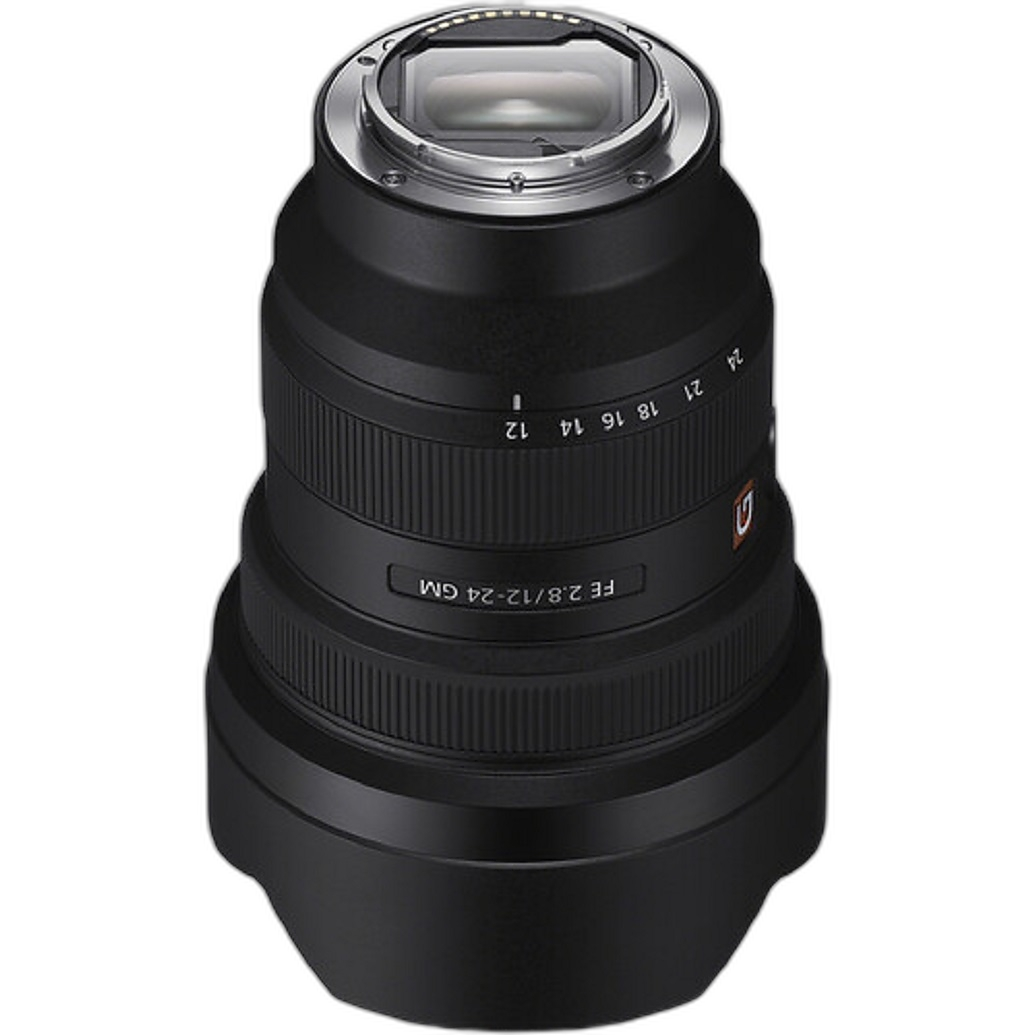
Sony FE 12–24mm f/2.8 GM
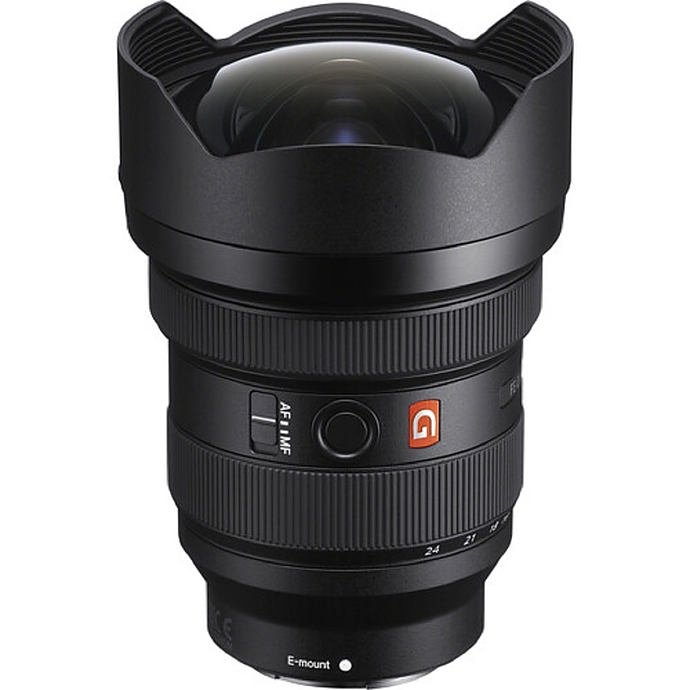
Why start here: For epic vistas, architecture, interiors, and nightscapes, this G Master ultra‑wide delivers dramatic perspective with a fast constant f/2.8 for low‑light and astro work. In Sony’s compare tool, pay special attention to corner sharpness at 12–16 mm, field curvature at 20–24 mm, and coma control wide open—crucial for pinpoint stars. Handling notes: bulbous front element means no standard screw‑in filters; plan your filter workflow accordingly. If landscapes and cityscapes dominate your portfolio, this is the lens to benchmark others against.
Sony FE 24–105mm f/4 G OSS
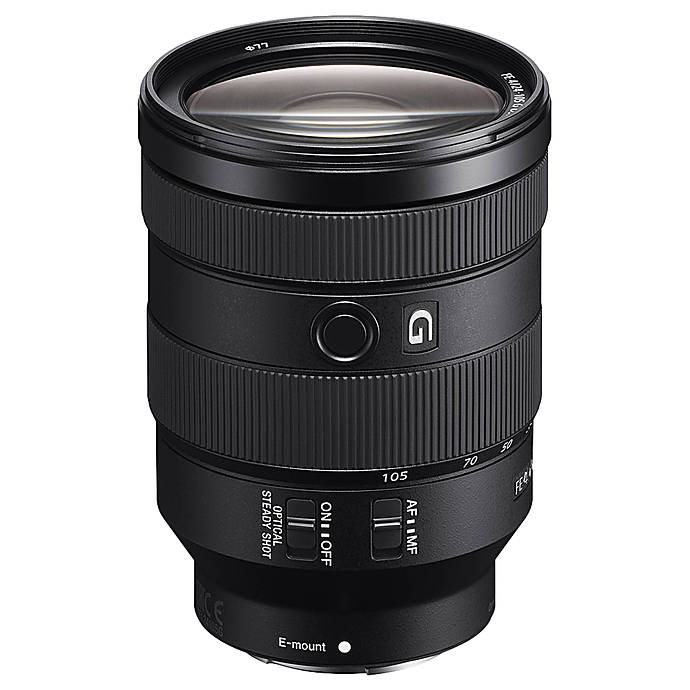
Why start here: This do‑it‑all zoom covers environmental portraits at 35–50 mm and classic head‑and‑shoulder compression at 85–105 mm—plus it’s a natural partner for travel landscapes. In Sony’s compare tool, check central sharpness versus edge consistency around 24–35 mm for scenic work, then evaluate bokeh and micro‑contrast near 85–105 mm at f/4. OSS helps keep handheld portraits sharp and stabilizes handheld landscapes at slower shutter speeds. If you want one lens that balances portraits, travel, and everyday shooting, this is your baseline.
Side‑by‑Side at a Glance
| Feature | Sony FE 12–24mm f/2.8 GM | Sony FE 24–105mm f/4 G OSS |
|---|---|---|
| Focal range | 12–24 mm ultra‑wide | 24–105 mm standard‑to‑tele |
| Max aperture | Constant f/2.8 | Constant f/4 |
| Stabilization | None (relies on IBIS if present) | Optical SteadyShot (OSS) |
| Landscape strengths | Massive field of view; excellent corner potential; nightscape‑friendly | Versatile framing for travel; good edge performance; lighter carry |
| Portrait strengths | Environmental portraits with dramatic perspective | Flattering 85–105 mm range with stabilization |
| Best for | Vistas, architecture, interiors, astro | Travel, family, events, general portraiture |
Pro Tips to Get More From Lens Compare Beta
- Anchor your comparison at shared focal lengths (e.g., 24 mm) and matched apertures, then explore each lens’s extremes (12 mm or 105 mm) to see its signature strengths.
- Check both wide‑open and the working apertures you’ll actually use: f/2.8 for astro/indoor work; f/4–f/8 for landscapes; f/4 at 85–105 mm for portraits.
- Don’t ignore handling. If the tool shows size/weight, factor that into your hiking kit or all‑day portrait sessions.
- Consider your camera body. If your body lacks IBIS, OSS on the 24–105 mm can be a decisive advantage for handheld work.
- Look beyond sharpness. Distortion profiles, vignetting behavior, and bokeh character often matter more to the final look.
Putting It All Together
Use Sony’s Lens Compare Beta to evaluate what matters for your style: corner integrity and wide‑angle reach for landscapes, or focal flexibility, OSS, and portrait‑friendly rendering for people work. Then handle the lenses in person and see how they balance on your camera.
Ready to upgrade? Shop the Sony FE 12–24mm f/2.8 GM and Sony FE 24–105mm f/4 G OSS at Unique Photo—our experts can walk you through real‑world tradeoffs, let you try before you buy in‑store, and help you build a kit that fits your shooting goals.