Hello, Natural Light!
Believe it or not, natural light scores over artificial light – no matter how technically advanced the latter may be. And you don't need to fret over bulky equipment, hiring costs and other expenditure where natural light is concerned. It is readily available from sunrise to sunset and is at your disposal as and when you need it. In fact, it's difficult for even the most proficient lighting experts to recreate the temperature and impact of natural light, even if they use the costliest and most high-end lighting equipment. Depending on the type of shoot and the concept to be conveyed, you could either choose a sunny, cloudy, or rainy day for creating the desired effect.
Practical Lighting Tips
If you’re on a professional shoot at a restaurant always attempt to occupy the window seat. If needed, book a window seat way in advance as such a position ensures the best scenario for capturing beautiful pictures of your meal. For those restaurants without any windows, seek an outdoor region for shooting your food. Certain professional photographers enjoy the effect of direct sunlight on their meals, but be absolutely sure about the kind of results you want to produce before adopting this method, as this could make your photographs appear unduly harsh.

Photo Credits - Taylor Young
Zoom In – Way In
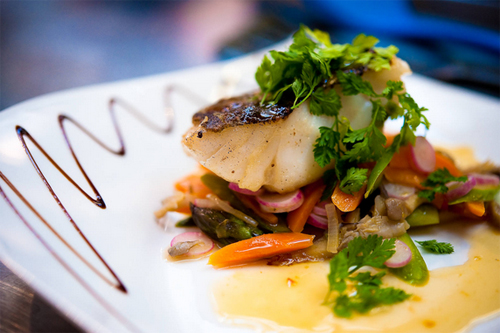
The old adage of not zooming in too close to your subject is a total misconception. Use a macro lens such as a 100mm f/2.8. These allow you to get very close to capture fine details of your delicious dishes. Even most digital point-and-shoot cameras nowadays come with a macro function – generally the small flower symbol on the display screen – that is ideal for focusing even on the minutest of details, including herbs garnished atop a pasta dish, or lumps of rock salt over a pretzel. Just like while cooking delicate flavor detailing enhances a meal, likewise during food photography, fine visual detailing improves image quality.
Don't Center Your Subject
Since, it's grub that you're photographing and not something like darts, try experimenting to shoot your subject off-center for a dash of creativity, instead of sticking to the conventional and soporific bull's eye method. A composition that is inherently off-kilter is liable to instantaneously augment the beauty of regular aerial pictures that encapsulate the entire plate.

Photo Credit - Micheal Micheals
To Use or Not to Use the Flash
Ambient and artificial lights have their own benefits. Some consider ambient the best way of successful food photography since it’s the way one would see it through the naked eyes. Getting flash to look natural is not easy, but when accomplished can look the part. Plus you have better control over lighting without having to be dependent on the sun’s position. In case a restaurant is engulfed in faint lighting, flash can definitely come in handy.
A white colored menu booklet or a white napkin or even a white colored plate could just as easily function as a reflector. If the light conditions are completely awful, just pack up your camera, enjoy your meal, and wait for a better opportunity next time.
Featured Image - Photo Credits - Kang Leong